
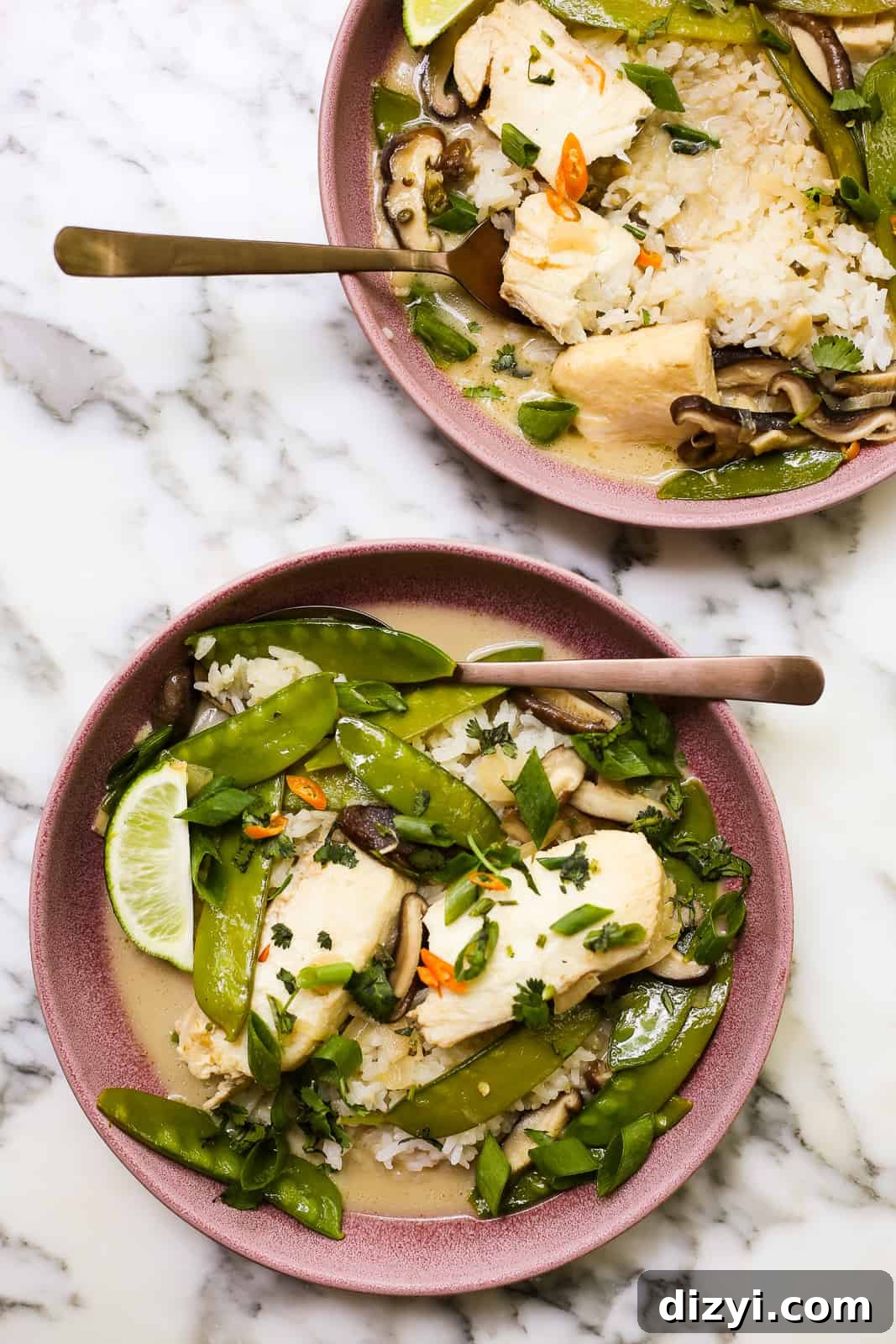
Here is a simple, flavorful way to cook fish at home: Poached Halibut in a Thai-Inspired Coconut Broth. This recipe highlights gentle poaching so the halibut stays moist and tender while absorbing aromatic Thai-inspired flavors. It’s quick enough for a weeknight dinner but special enough for guests.
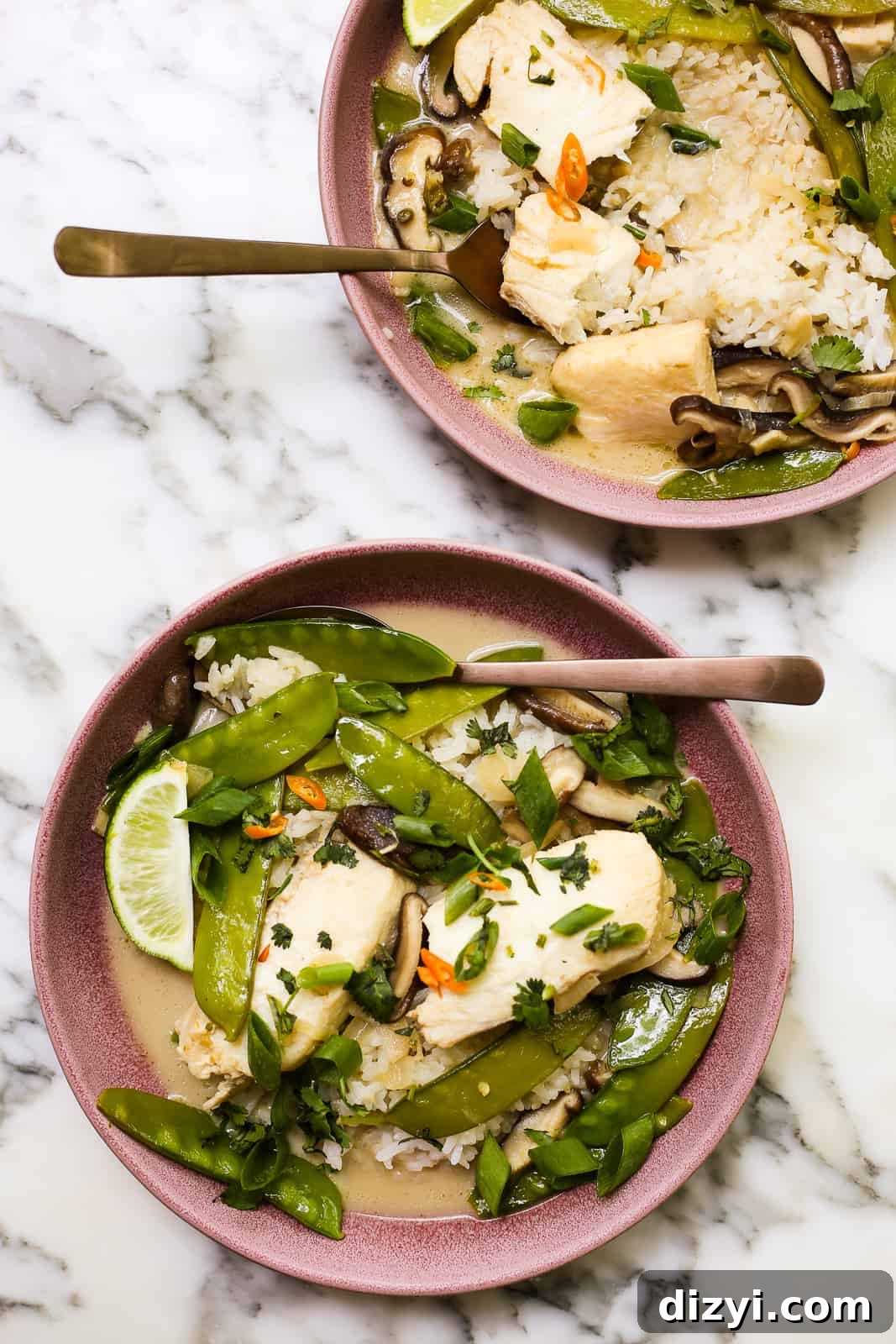
Poaching is a moist-heat cooking method that cooks delicate proteins at a gentle temperature by submerging them in a flavorful liquid. For this dish, full-fat coconut milk provides body and richness while carrying aromatics—shallot, garlic, ginger and Thai chiles—deep into the fish. The broth is lightly sweet, tangy, slightly salty and carries a pleasant heat.
Looking for even more fish recipes? Try these
Sheet Pan Miso-Marinated Cod with Broccolini • Green Curry Fish Parcels • Sheet Pan Gochujang Glazed Salmon
Poached Halibut in a Thai-Inspired Coconut Broth
Cook time: 30 mins • Servings: 2 people
Ingredients
- 2 tbsp avocado oil
- 1 large shallot, loosely chopped
- 2 cloves garlic, minced
- 1″ knob ginger, peeled and minced
- Salt, to taste
- 1 (13 oz) can full-fat coconut milk
- 1 cup seafood stock
- 1 tbsp fish sauce
- 1 tbsp coconut aminos
- Zest of ½ lime
- Juice of 1 lime (about 2 tbsp)
- 1 tbsp coconut sugar
- 3 Thai chiles, thinly sliced (adjust to taste)
- ¼ tsp dried coriander
- 4 oz shiitake mushrooms, thinly sliced
- 2 cups snow peas
- 12 oz halibut, cut into 2-inch strips
- Steamed white rice, for serving
- Fresh cilantro, chopped, for garnish
- Thinly sliced scallions (green parts only), for garnish
Instructions
- Heat the avocado oil in a skillet with tall sides over medium heat. Add the shallot, garlic, ginger and a pinch of salt. Sauté for about 3 minutes, until the shallot is softened and the aromatics are fragrant.
- Pour in the coconut milk and seafood stock, then stir in fish sauce, coconut aminos, lime zest, lime juice, coconut sugar, Thai chiles and dried coriander. Whisk the mixture until it is smooth and bring it to a gentle simmer.
- Add the sliced shiitake mushrooms and snow peas to the simmering broth. Let them warm through for a minute or two so they remain tender-crisp.
- Gently nestle the halibut strips into the simmering broth. Maintain a low simmer—do not boil. Cook until the halibut is just opaque and flakes easily with a fork, about 5–7 minutes depending on thickness.
- Adjust seasoning with salt or a splash more fish sauce or lime juice if needed. Serve the poached halibut and vegetables over steamed rice, and garnish with chopped cilantro and sliced scallions.
Tips and Variations
– For an extra aromatic boost, add bruised lemongrass stalks to the broth while simmering and remove before serving.
– If you prefer less heat, reduce the number of Thai chiles or remove the seeds before slicing. For more heat, leave the seeds intact or add a pinch of red pepper flakes.
– White fish with firm flesh works best for poaching. If halibut is not available, cod, tilapia or similar firm white fish are excellent substitutes. Adjust cooking time to the thickness of the fillets.
– Swap snow peas for sugar snap peas, baby bok choy, or thinly sliced bell pepper for a different texture and color.
Serving Suggestions
This poached halibut is lovely served over steamed jasmine or short-grain rice to soak up the coconut broth. For a lighter meal, serve with cauliflower rice or a simple green salad on the side. Finish the dish with fresh herbs and a wedge of lime for brightness.
Storage
Leftovers can be refrigerated in an airtight container for up to 2 days. Reheat gently on the stove over low heat to avoid overcooking the fish; if the broth thickens in the fridge, thin it with a splash of water or stock when reheating.
Nutrition Note
Nutritional information varies based on ingredient brands and portion sizes. Use any nutrition calculator or app to estimate values if desired.
Additional Info
Author: Alex Snodgrass
Servings: 2 people
Enjoyed this recipe? Leave a comment or share your variation below.