

 Here is a creamy take on scalloped potatoes adapted for those avoiding dairy. Full disclosure: a small amount of gruyere is optional in the layers—use it if you tolerate dairy, or substitute a dairy-free alternative to keep this fully dairy-free and Whole30-friendly. Either way, the recipe relies on dairy-free creamer and a starch (tapioca or arrowroot) to create a rich, silky sauce without heavy cream.
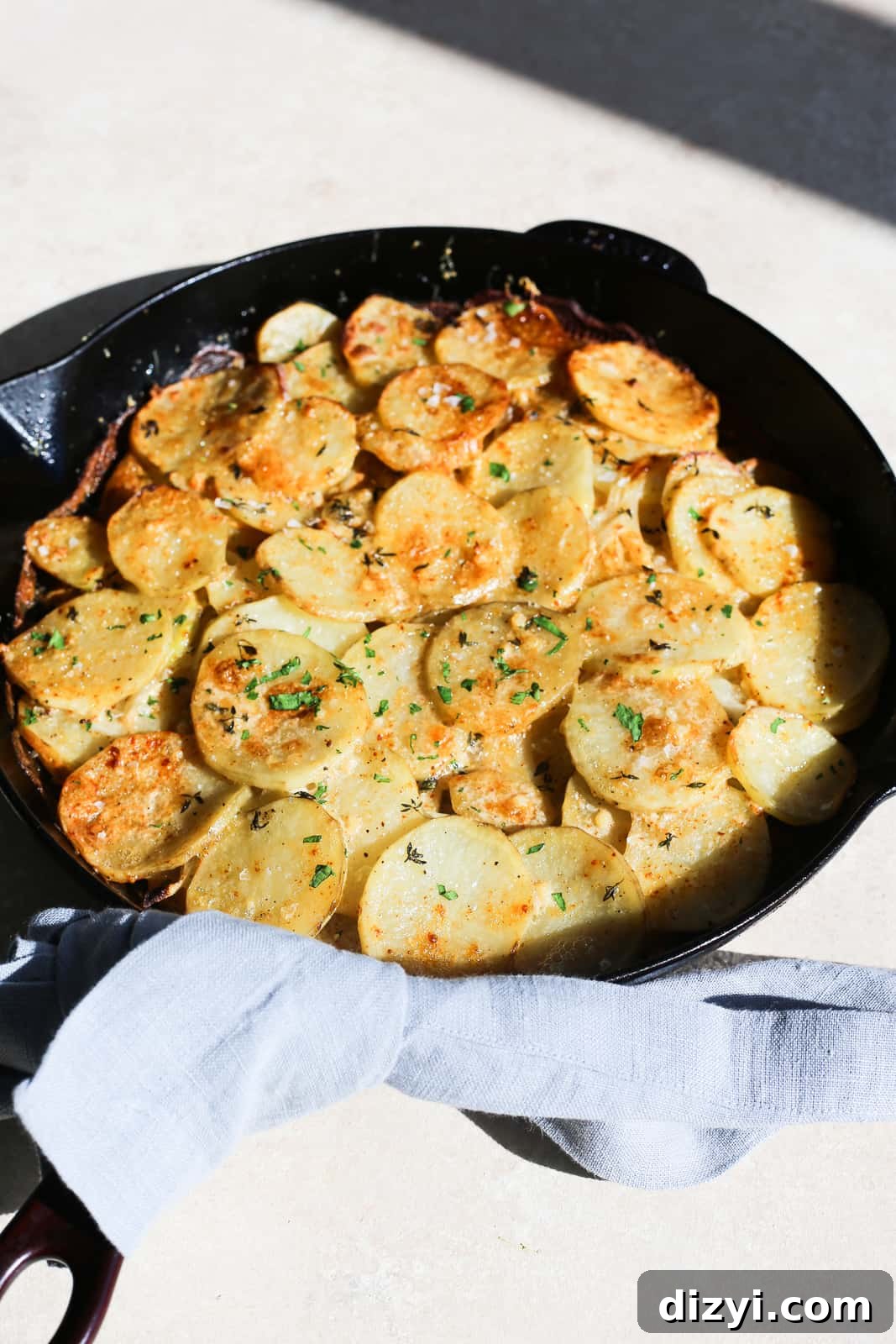
Scalloped potatoes are a classic casserole of thinly sliced potatoes baked in a creamy sauce until tender and golden on top. This version preserves the comforting texture while offering a lighter, dairy-free option that still feels indulgent. It’s a great side for holiday meals, weeknight dinners, or any time you want a cozy, make-ahead dish. If you enjoy variety, consider trying scalloped sweet potatoes for a different flavor profile.
{Almost} Dairy-Free Scalloped Potatoes
Prep: 10 mins | Cook: 55 mins | Serves: 8
Ingredients
- 6 cups peeled and thinly sliced russet potatoes (about 4 medium potatoes), sliced 1/8-inch thick
- 3 tbsp extra virgin olive oil
- 2 tsp kosher salt
- 1 tsp freshly cracked black pepper
- 1½ tbsp tapioca flour (arrowroot works as a one-to-one substitute)
- ½ cup very thinly sliced yellow onion (about 1/4 medium onion)
- 1/3 cup finely grated gruyere cheese (optional—omit or substitute a dairy-free cheese to keep fully dairy-free)
- 1 tsp fresh thyme leaves
- 3/4 cup unsweetened dairy-free creamer (such as an unsweetened almond or coconut creamer) — you may substitute heavy cream if not avoiding dairy
- 3 cloves garlic, minced
- 1/4 tsp ground nutmeg
- 1/8 tsp cayenne pepper (optional, for a mild heat)
- 1/2 tsp paprika
- 1 tbsp finely chopped parsley, for garnish (optional)
- Flaky salt (such as Maldon), for finishing (optional)
Instructions
- Preheat your oven to 400°F (200°C). Grease a 12-inch cast-iron skillet or a 9×13-inch baking dish lightly with nonstick spray or oil.
- In a large bowl, combine the thinly sliced potatoes with the extra virgin olive oil, kosher salt, cracked black pepper, and tapioca flour or arrowroot. Toss thoroughly so each slice is evenly coated and there are no clumps of starch.
- Spread half of the seasoned potato slices in an even layer across the prepared skillet or baking dish. Scatter all of the thinly sliced onion evenly over this first layer. Sprinkle half of the optional grated gruyere and half of the fresh thyme over the onions.
- Layer the remaining potato slices on top of the onions and press them gently to create an even surface.
- In a medium bowl, whisk together the dairy-free creamer, minced garlic, ground nutmeg, cayenne (if using), and paprika until smooth and fully combined. Taste and adjust seasoning if needed—remember the potatoes will also absorb some salt during baking.
- Pour the creamer mixture evenly over the layered potatoes, allowing the liquid to settle between the slices. If using, top with the remaining grated gruyere and the rest of the thyme.
- Tightly cover the dish with aluminum foil. With a knife, carefully cut a one-inch slit in the center of the foil to allow steam to vent during baking. Place the covered dish in the preheated oven and bake until the potatoes are tender when pierced with a knife, about 45 minutes.
- Remove the foil and return the dish to the oven. Continue baking until the top is golden and, if using cheese, it becomes brown and bubbly—about 8–12 additional minutes. Watch closely to avoid burning.
- Take the casserole out of the oven and let it rest for 5–10 minutes. This short resting time helps the sauce set so the potatoes hold together when served. Garnish with finely chopped parsley and a light sprinkle of flaky salt if desired. Serve warm and enjoy.
Tips and Variations
– For even cooking, slice potatoes uniformly using a mandoline or a sharp knife. 1/8-inch slices work well to achieve tenderness without falling apart.
– If you prefer a richer texture and are not avoiding dairy, replace the dairy-free creamer with heavy cream. For a fully dairy-free result, choose an unsweetened, neutral-flavored plant creamer.
– Tapioca flour and arrowroot both thicken the sauce without changing flavor—use whichever you have on hand. Cornstarch can be used in a pinch but may yield a slightly different mouthfeel.
– Make ahead: assemble the casserole up to the point of baking, cover, and refrigerate for several hours or overnight. Bring to room temperature for 20–30 minutes before baking and then follow the bake times.
Storage and Reheating
Store leftovers covered in the refrigerator for up to 3–4 days. Reheat individual portions in the microwave or warm the whole dish in a 350°F (175°C) oven until heated through, covering loosely with foil to prevent the top from over-browning. If the casserole seems dry after refrigeration, add a tablespoon or two of cream or creamer before reheating.
Additional Info
Author: Alex Snodgrass
Servings: 8 people