
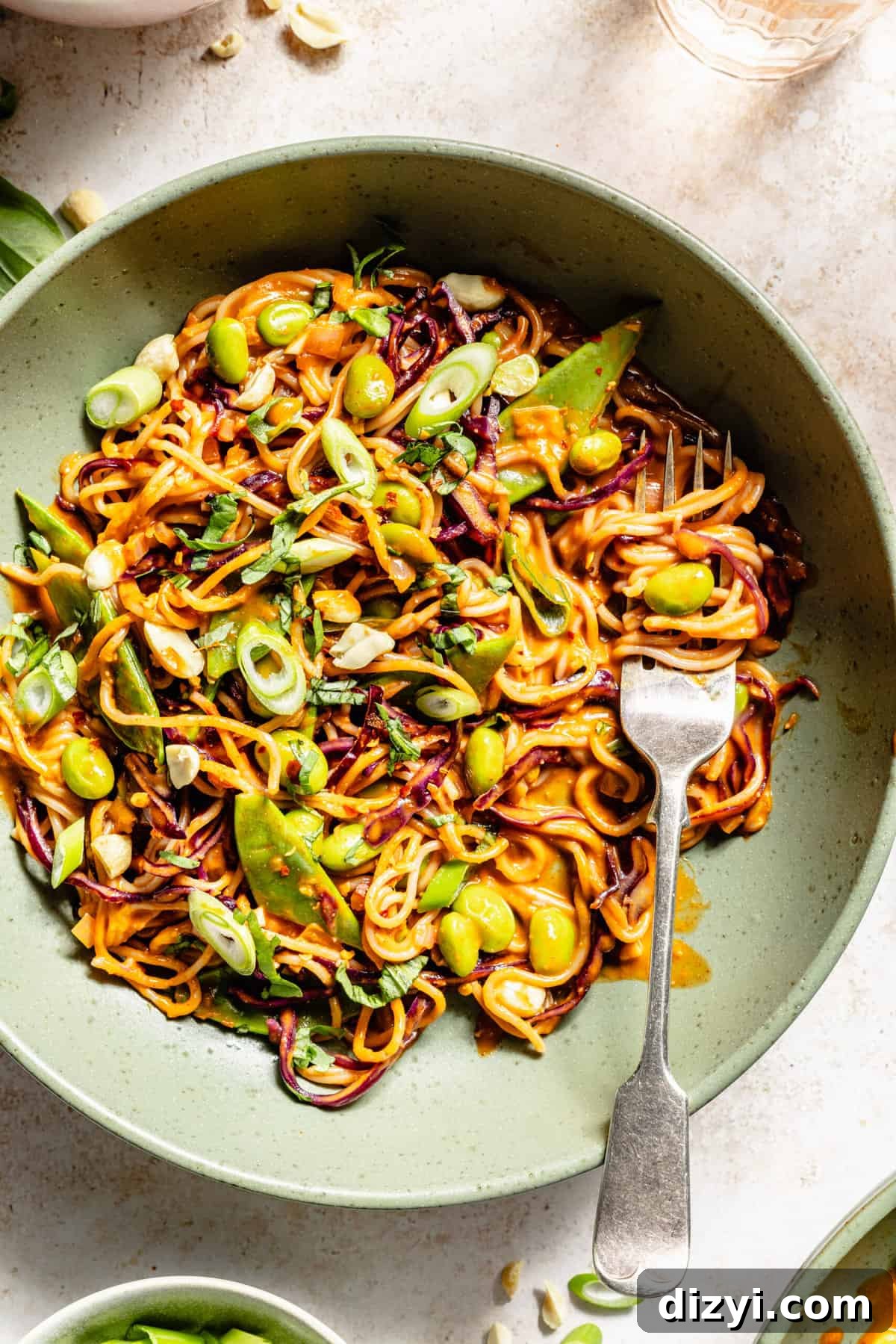
These Gochujang Peanut Veggie Noodles come together in under 30 minutes and deliver bold, satisfying flavor for an easy weeknight dinner.
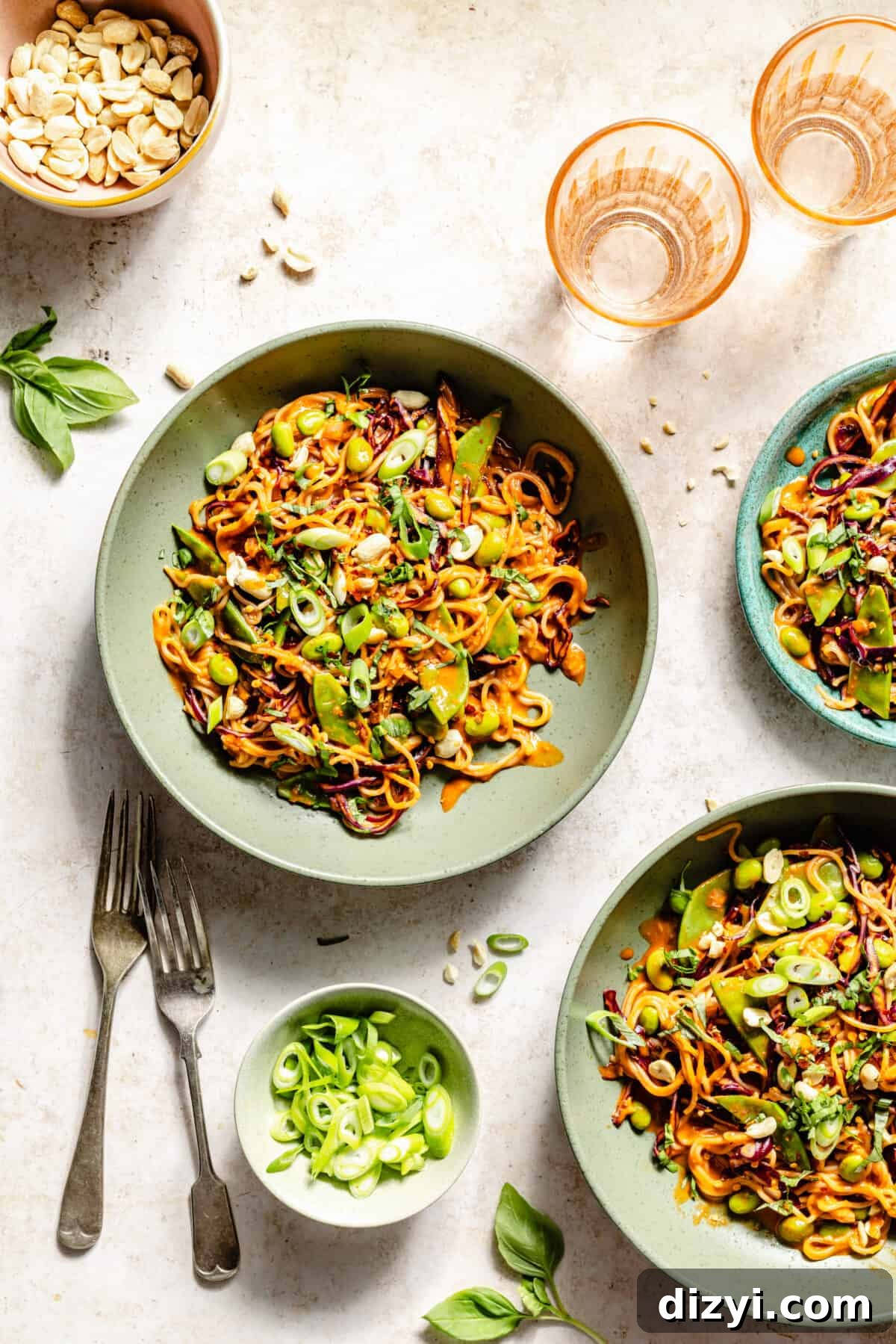
If you own my cookbook Dinner Tonight, you know I’m obsessed with gochujang — the fermented Korean chile paste that adds deep, savory heat and umami to so many dishes. In this recipe, gochujang combines with pantry staples and a few fresh ingredients to create a creamy, tangy peanut sauce that clings to noodles and bright, crunchy vegetables.
The method is simple: whisk the sauce, sauté aromatics, simmer the sauce briefly, cook the noodles, then toss everything together with a splash of reserved pasta water until glossy. I include notes below on the best noodle choices and substitutions to make this recipe work for various dietary needs.
Ingredients
- 1/4 cup coconut aminos
- 1/4 cup creamy peanut butter (or cashew butter to substitute)
- 2 tablespoons coconut sugar
- 1 teaspoon toasted sesame oil
- 3 tablespoons gochujang
- 1 tablespoon fresh lime juice
- 1 tablespoon rice vinegar
- 1/2 cup low-sodium vegetable broth
- 2 tablespoons avocado oil
- 1 large shallot, minced
- 4 garlic cloves, minced
- 1 tablespoon grated fresh ginger
- 1 teaspoon kosher salt
- 6 ounces brown rice ramen noodles (see note)
- 2 cups thinly sliced red cabbage
- 2 cups snow peas, sliced on the diagonal
- 1 cup shelled edamame
- 1/2 cup roasted unsalted peanuts, roughly chopped
- 1/2 cup julienned Thai basil
- 4 scallions, thinly sliced
- Crushed red pepper flakes (optional)
Step-by-Step
Step One: Make the Sauce Base
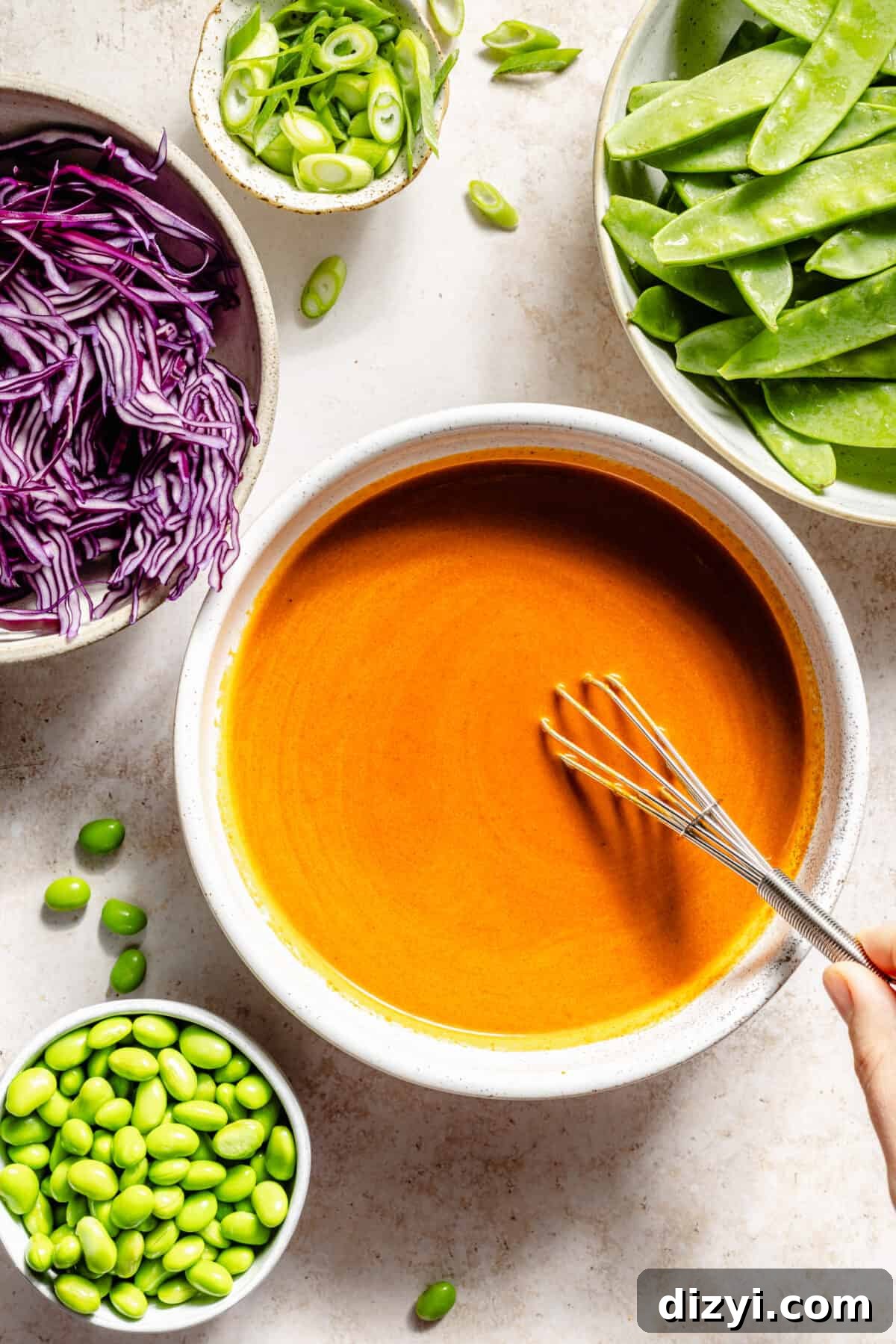
In a small bowl, whisk together the coconut aminos, peanut butter (or cashew butter), coconut sugar, toasted sesame oil, gochujang, lime juice, rice vinegar, and vegetable broth until smooth. Set the sauce aside.
Step Two: Finish the Sauce
Heat the avocado oil in a large skillet over medium heat. Add the shallot, garlic, and ginger and sauté until fragrant, about 2 minutes. Pour in the prepared gochujang-peanut sauce and stir to combine. Bring the sauce to a gentle simmer and cook for 2 minutes, then reduce the heat to low and keep the sauce warm while you cook the noodles.
Step Three: Cook the Ramen Noodles
Cook the noodles according to package directions until al dente. Reserve 1 cup of the cooking water before draining. Add the drained noodles directly to the skillet with the sauce and increase the heat to medium. Use tongs to toss the noodles rapidly in the sauce, adding reserved pasta water in 1/4-cup increments until the sauce becomes glossy and evenly coats the noodles.
Step Four: Add the Veggies
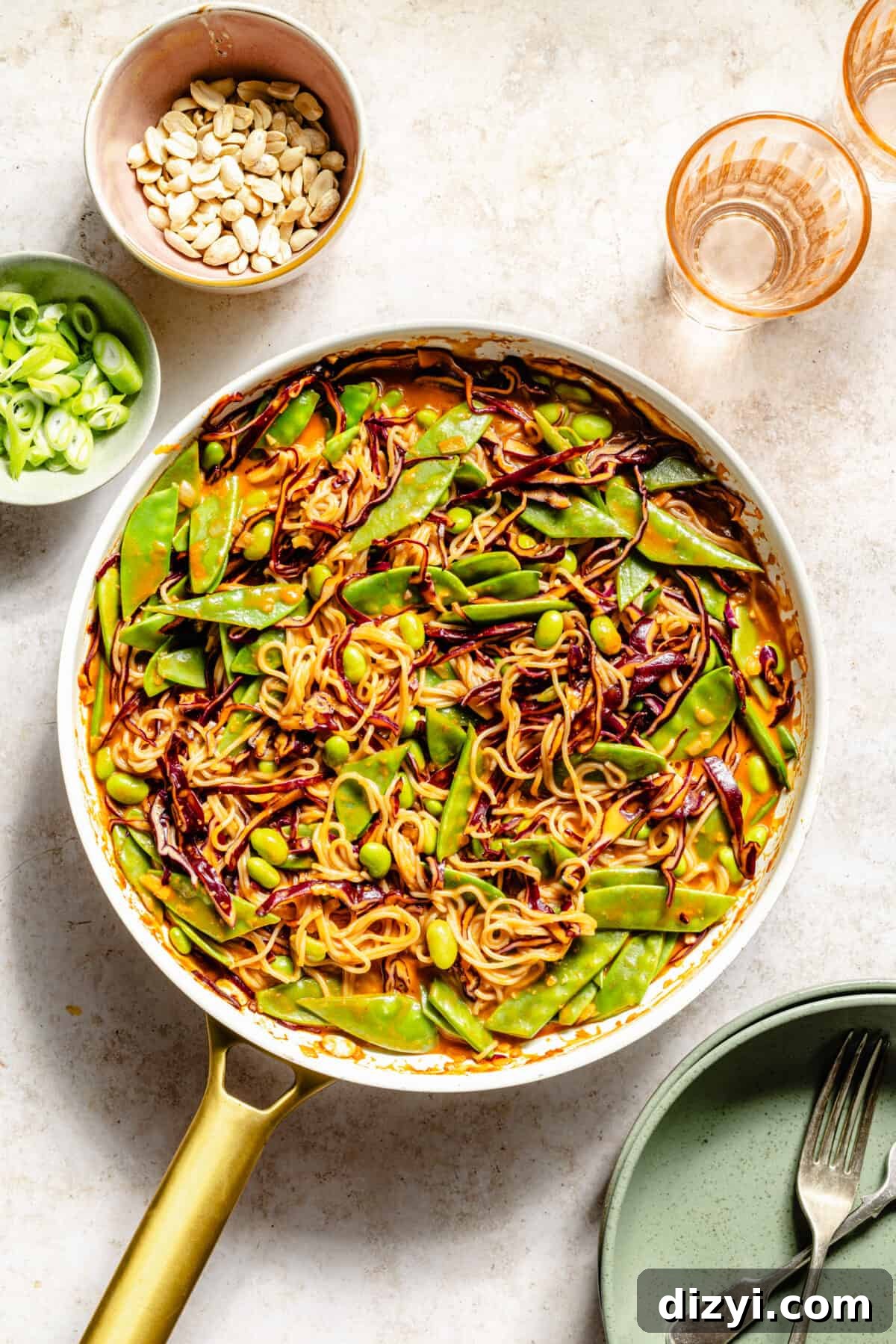
Add the shredded red cabbage, snow peas, and edamame to the pan. Toss everything together, adding more pasta water if needed, until the vegetables are warmed through and well combined. The steam from the noodles will cook the veggies just enough to keep a pleasant crunch.
Step Five: Serve
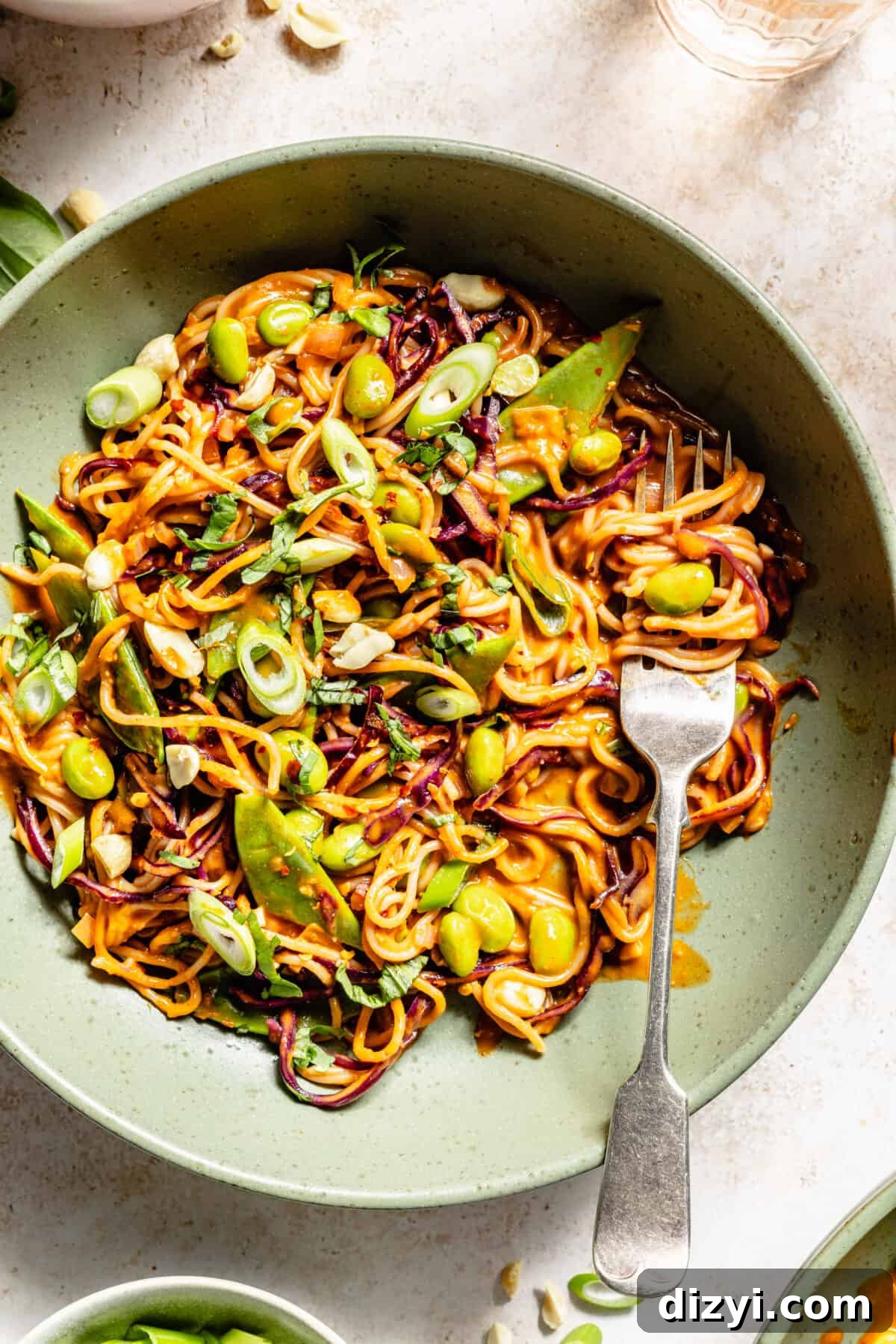
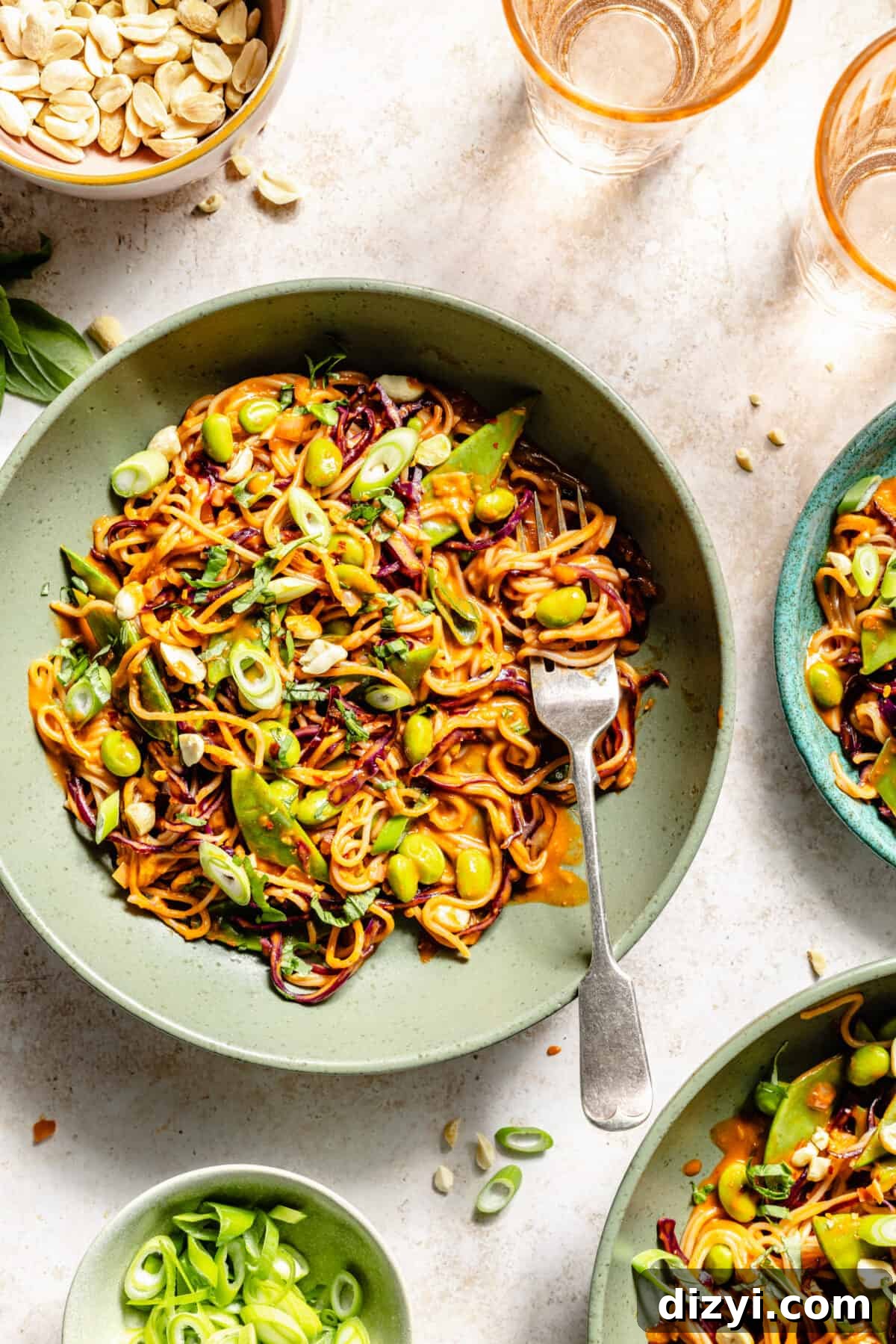
Divide the noodles among bowls and top with chopped roasted peanuts, julienned Thai basil, sliced scallions, and a pinch of crushed red pepper flakes if you like extra heat. Serve immediately and enjoy.
Recipe FAQs
Yes—swap in cashew butter for a similar creamy texture and neutral flavor.
Gochujang is a fermented Korean chili paste that brings savory heat and umami to recipes. Some brands contain a small amount of wheat, so look for gluten-free labeled varieties if needed.
We tested several ramen types and found brown rice ramen performs best for this sauce. Standard instant ramen tends to absorb more sauce and can leave the dish dry. Aim for about 6 ounces total (two 3-ounce pucks if using packaged rice ramen), but check the package size for best results.
Notes
Noodle note: Ramen varieties vary widely in how much sauce they soak up. Brown rice ramen generally gives the best texture and sauce balance. If using a different noodle, reserve extra pasta water and add it slowly to achieve a glossy, saucy finish.
Nutrition (per serving)
- Calories: 570 kcal
- Carbohydrates: 68 g
- Protein: 18 g
- Fat: 27 g
- Sodium: 1108 mg
- Fiber: 10 g
Nutrition information is automatically calculated and should be used as an approximation.
Additional Info
- Author: Alex Snodgrass
- Course: Main Course
- Servings: 4
- Prep time: 10 mins | Cook time: 15 mins | Total time: 25 mins
- Dietary: Gluten-Free option possible, Vegetarian, Vegan
Like this recipe? Leave a comment below and let me know how it turned out.
Photography credit: Eat Love Eats.