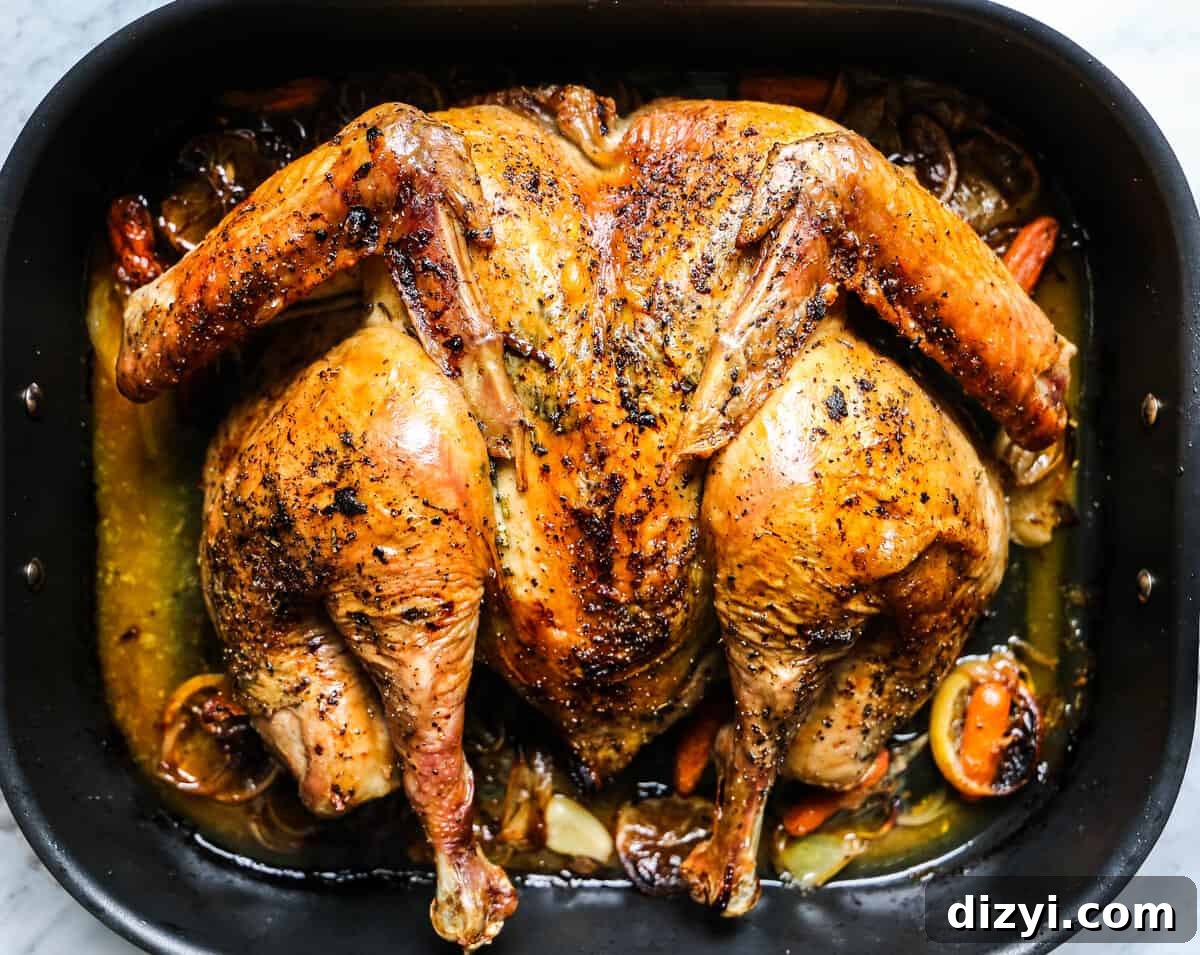
Whole30 Spatchcocked Turkey with Homemade Turkey Gravy
Thanksgiving is just a week away — where did the time go? If you’re planning the menu, consider a popular roasting method that’s both faster and yields crispier skin: spatchcocking. The term might make you smile, but spatchcocking is a simple technique that can transform your holiday turkey. Below you’ll find a clear explanation of the method, reasons to try it, and two Whole30-friendly recipes: a spatchcock roasted turkey and a complementary turkey gravy.
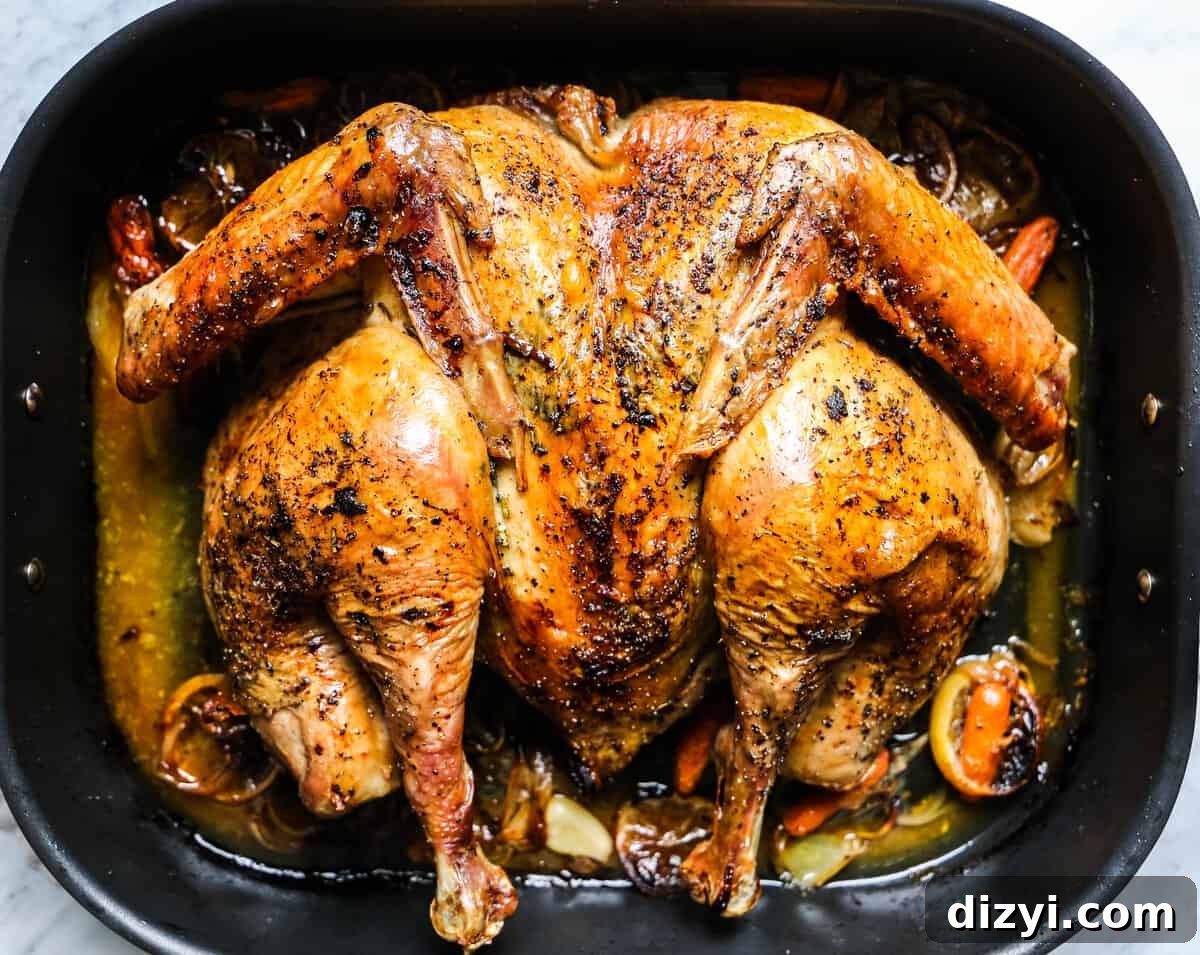
Spatchcocking means removing the backbone from a whole chicken or turkey and flattening the bird so it cooks evenly and quickly. It may sound intimidating, but it’s straightforward with the right tool: a good pair of poultry shears makes the job easy. Flip the bird over, cut along each side of the backbone, and remove it. After that, press down firmly on the breastbone to flatten the bird. If you prefer a visual demonstration, look up a trusted tutorial on how to spatchcock a bird to get comfortable with the steps.
Why spatchcock your turkey? There are several practical benefits:
- With the bird flattened, heat reaches the meat more uniformly, so the turkey cooks evenly.
- All the skin lays exposed on top, which promotes the crispiest, most flavorful skin.
- Spatchcocking lets you roast at higher heat and finish the turkey in significantly less time than a whole upright roast, without burning the skin first.
- Save the backbone — combined with the neck and giblets, it makes a richer, more flavorful base for gravy.
Unless you want to serve your turkey whole as a centerpiece, spatchcocking is an efficient and delicious option. Once roasted, the flattened bird is easy to carve into beautiful, evenly cooked portions.
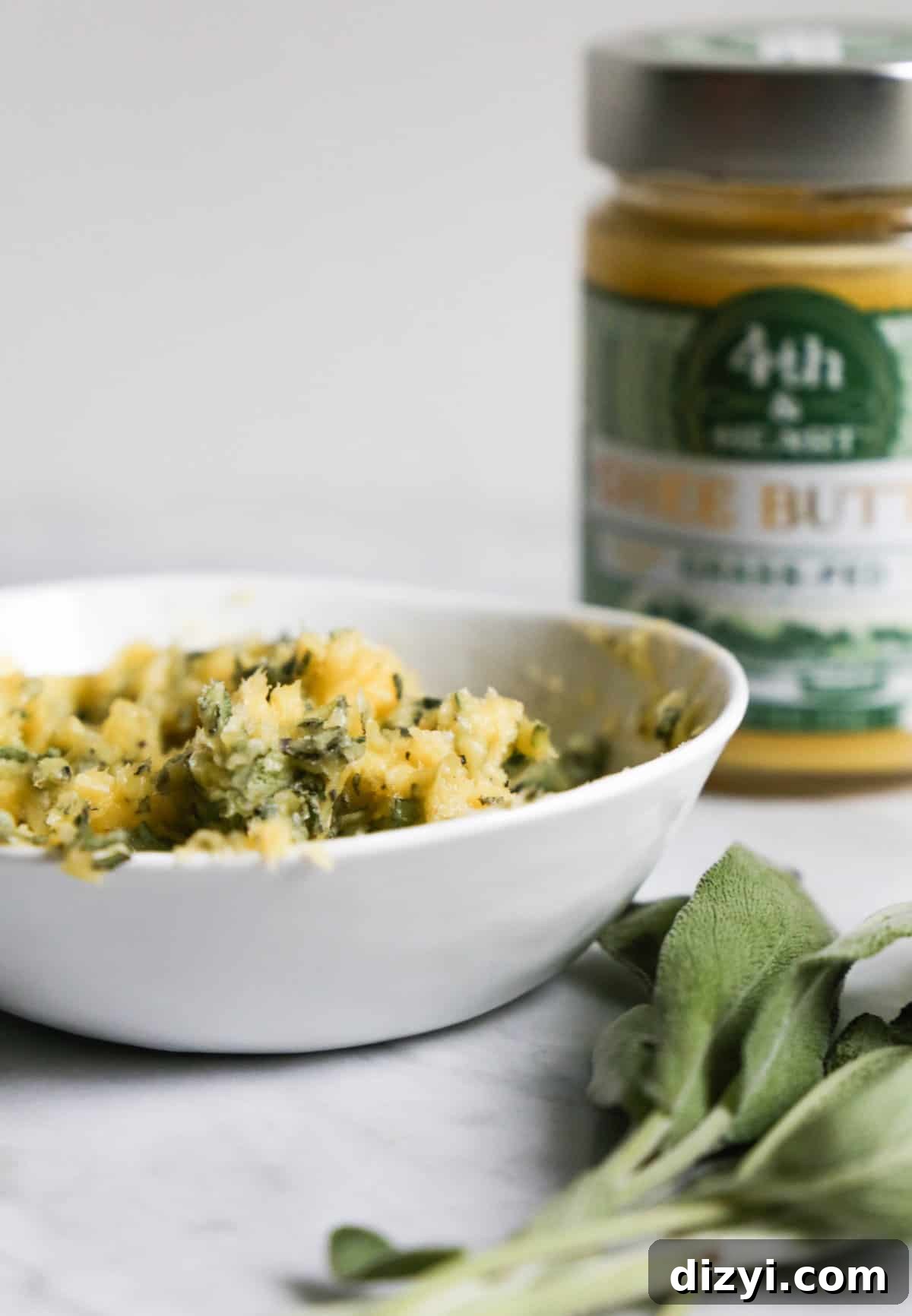
To make this Whole30- and Paleo-friendly, replace traditional butter with ghee. Ghee gives rich flavor and browning without dairy solids, and it works exceptionally well under the turkey skin. Combined with plenty of fresh herbs, ghee produces an aromatic, juicy turkey with crisp, golden skin.
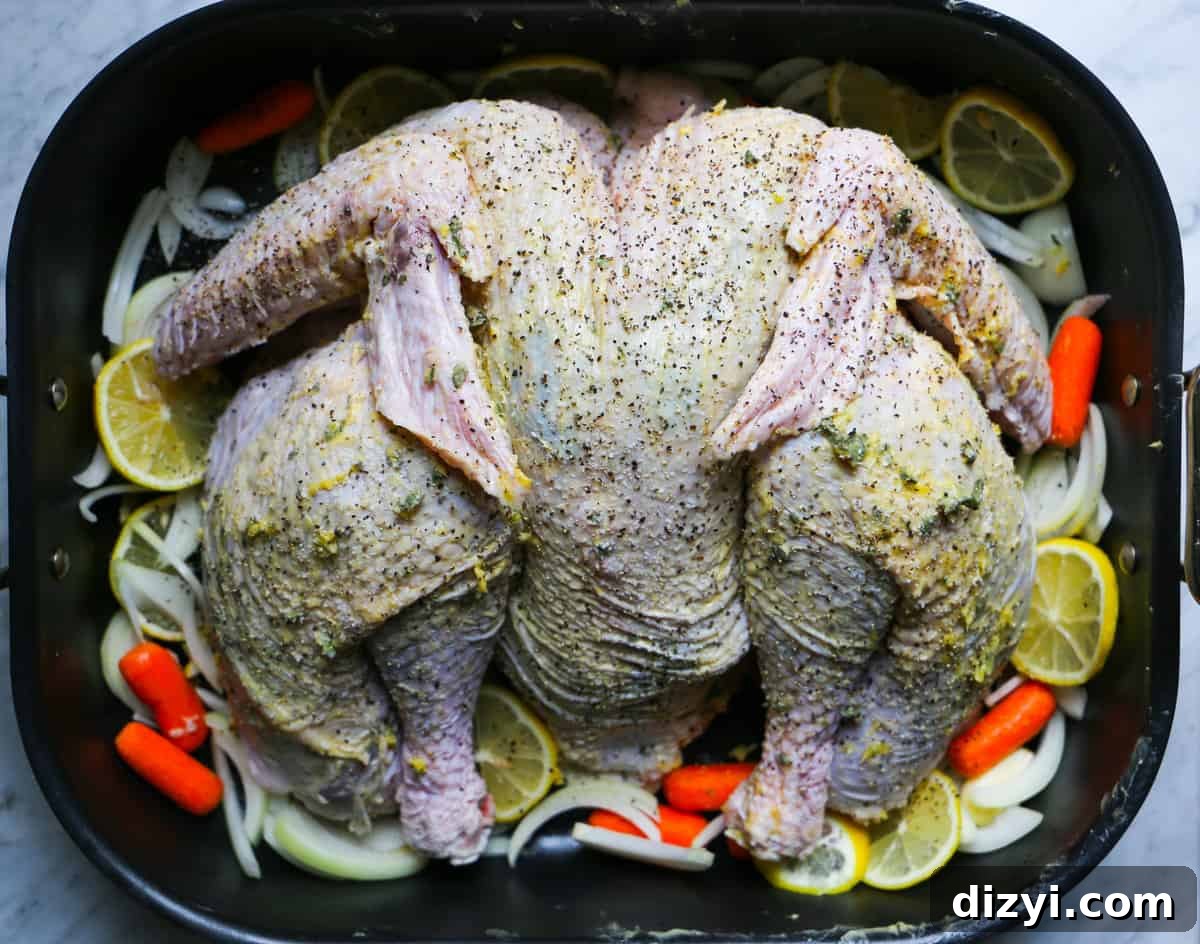
Wishing you a happy Thanksgiving filled with good food and time spent with loved ones. Below are step-by-step recipes for the spatchcock roasted turkey and a flavorful turkey gravy made from the reserved neck, backbone, and pan juices.
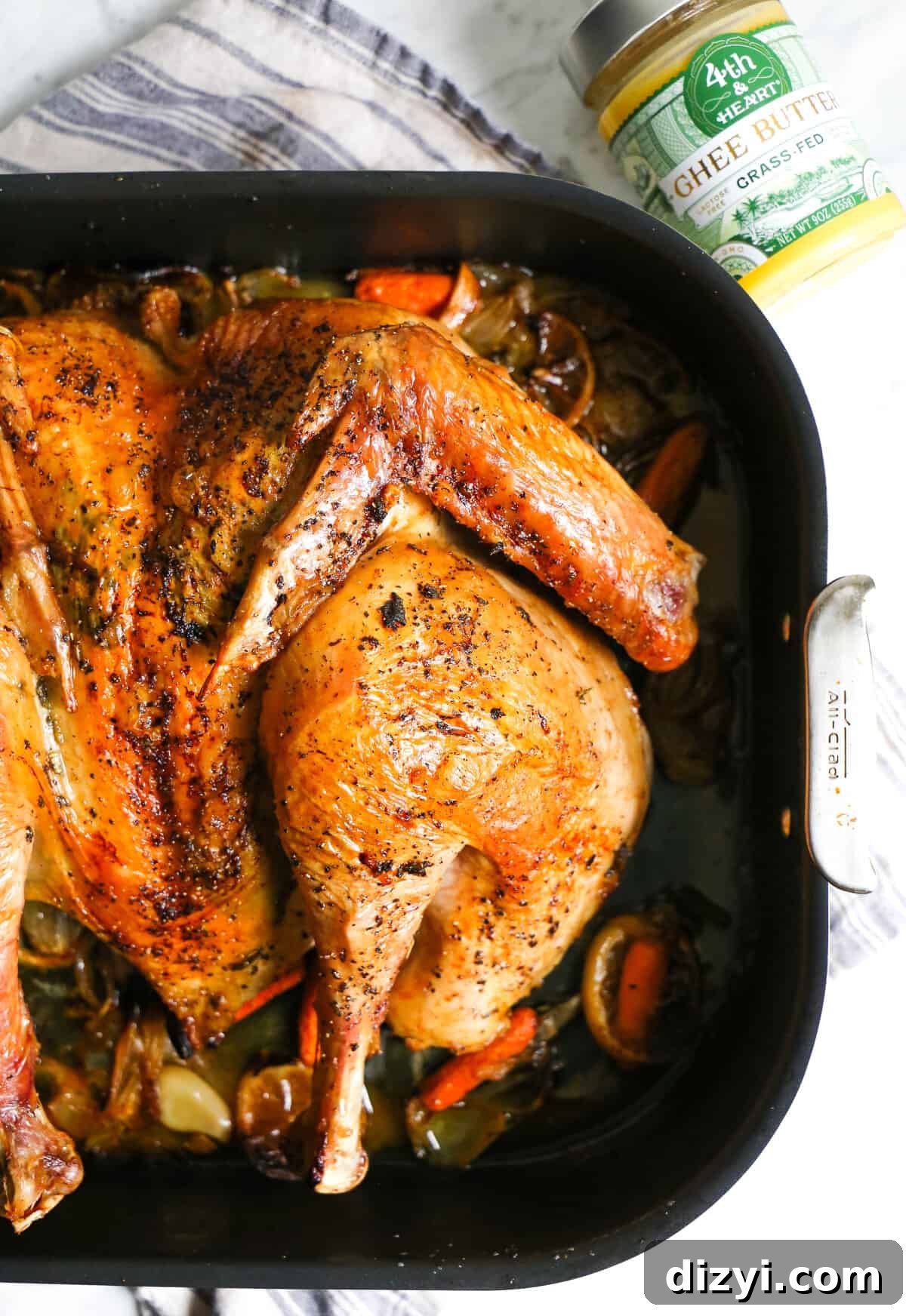
- 1 (12-14 lb) turkey, backbone removed (spatchcocked). Save the backbone for gravy.
- 1 onion, sliced
- 2 lemons, sliced
- 4 cloves garlic, smashed
- 2 cups baby carrots
- Kosher salt, to taste
- Coarse black pepper, to taste
- 5 tbsp. grass-fed ghee
- 1 tsp. kosher salt
- 1 heaping tbsp. freshly chopped sage
- 1 heaping tbsp. freshly chopped rosemary
- 1 heaping tsp. fresh thyme leaves
- Preheat the oven to 450°F (232°C).
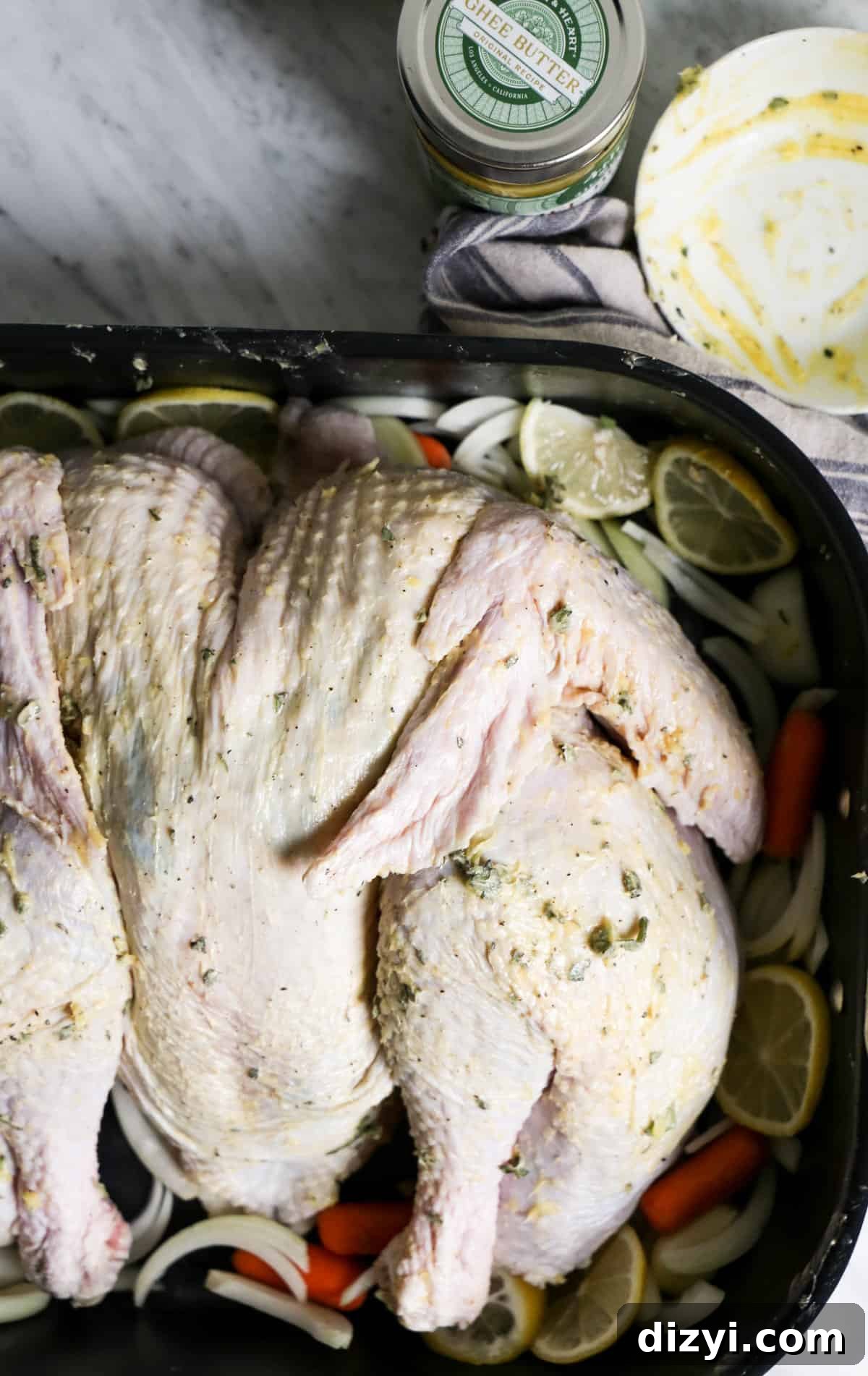
- Arrange onions, carrots, and lemon slices in the bottom of the roasting pan. These aromatics add flavor to the pan juices used for gravy.
- Lay the spatchcocked turkey over the vegetables so the cavity faces down and the breasts face up. Tuck the wing tips under the breasts to prevent burning.
- Using your hands, work the herbed ghee between the skin and the meat so the turkey stays moist and flavorful.
- Pat the top skin dry with a paper towel. Rub the remaining ghee and a little olive oil over the skin to help prevent burning. Season generously with salt and black pepper.
- Roast the turkey at 450°F for 30 minutes to begin crisping the skin.
- After 30 minutes, baste the turkey with pan juices, then reduce the oven temperature to 350°F (177°C).
- Continue roasting at 350°F, basting every 20 minutes for about an hour more, or until the thickest part of the thigh registers 175°F on a meat thermometer.
- Remove the turkey from the oven and let it rest at room temperature for 20–30 minutes before carving. Resting lets the juices redistribute for a juicier bird.
- Carve and serve with the turkey gravy and your favorite side dishes.
- Be sure to save the backbone and any giblets you remove from the cavity for the gravy.
- Turkey giblets and neck, reserved from the cavity
- Juices reserved from the roasted turkey pan
- 1 tbsp. black peppercorns
- Kosher salt, to taste
- 1 bay leaf
- Water, as needed
- 3–6 tbsp. arrowroot starch (adjust for desired thickness)
- 2 tbsp. freshly chopped sage
- 1 tbsp. fresh thyme leaves
- Black pepper, to taste
- 2 tbsp. lemon juice (or juice of 1 lemon)
- Place the neck and giblets in a saucepan and cover them with water just to submerge the parts.
- Bring to a boil, add peppercorns, two pinches of kosher salt, and a bay leaf. Reduce heat and simmer, covered, for at least 2 hours—longer is better to extract maximum flavor.
- After the turkey is roasted, strain the broth and discard the solids. Return the strained broth to the saucepan over medium heat and add the strained pan juices from the roasted turkey.
- Ladle 1½ cups of the stock into a bowl and let cool slightly. Whisk in 3 tbsp. arrowroot until dissolved to form a slurry. (If you’re short on time, you can substitute 1½ cups of store-bought chicken broth for this step.)
- While whisking the simmering saucepan, slowly pour in the arrowroot slurry. Bring the gravy to a rapid simmer and cook uncovered until it thickens. Skim off and discard any excess oil that rises to the surface.
- If the gravy needs more thickening, make additional arrowroot slurries—adding a tablespoon at a time—until you reach your preferred consistency.
- When the gravy is the desired thickness, stir in the chopped sage, thyme, and lemon juice. Taste and adjust seasoning with salt and pepper.
Please note: this post includes sponsored content and product mentions. The author works only with companies and products that align with her values. While there may be compensation involved, opinions expressed are her own.