
Whole30 Shrimp Etouffee
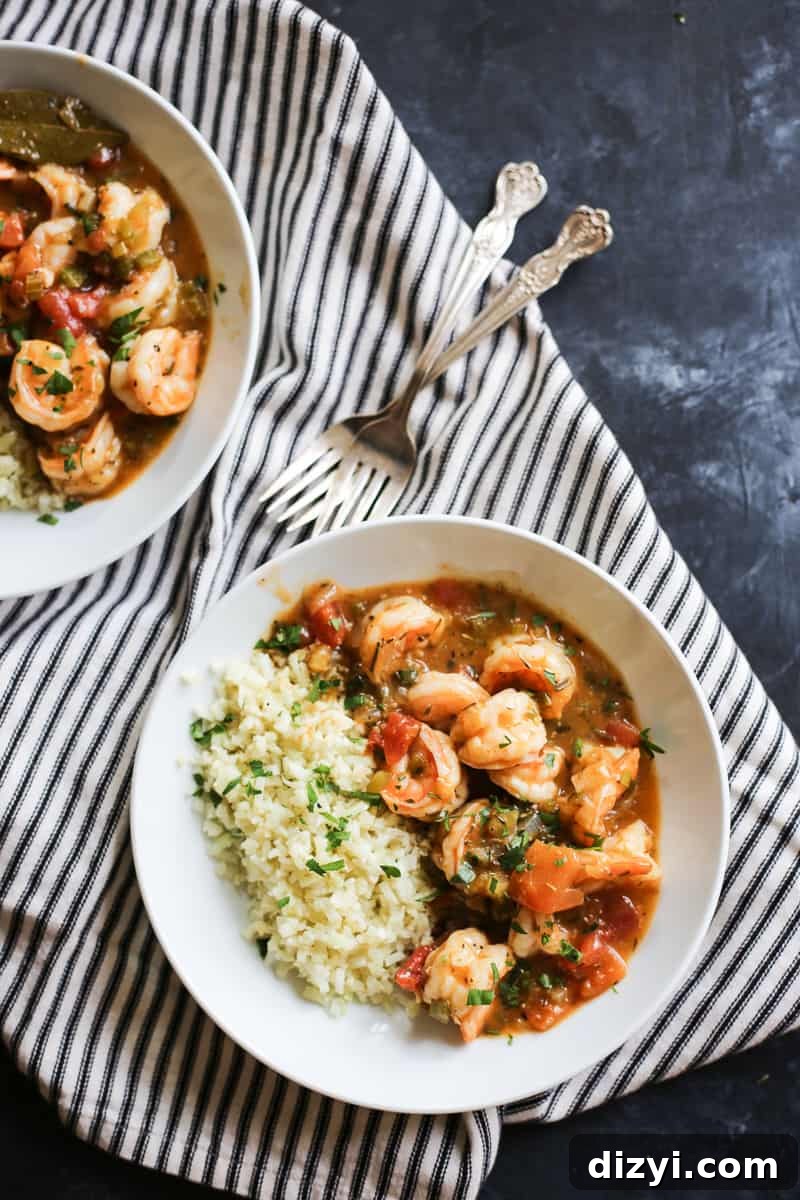
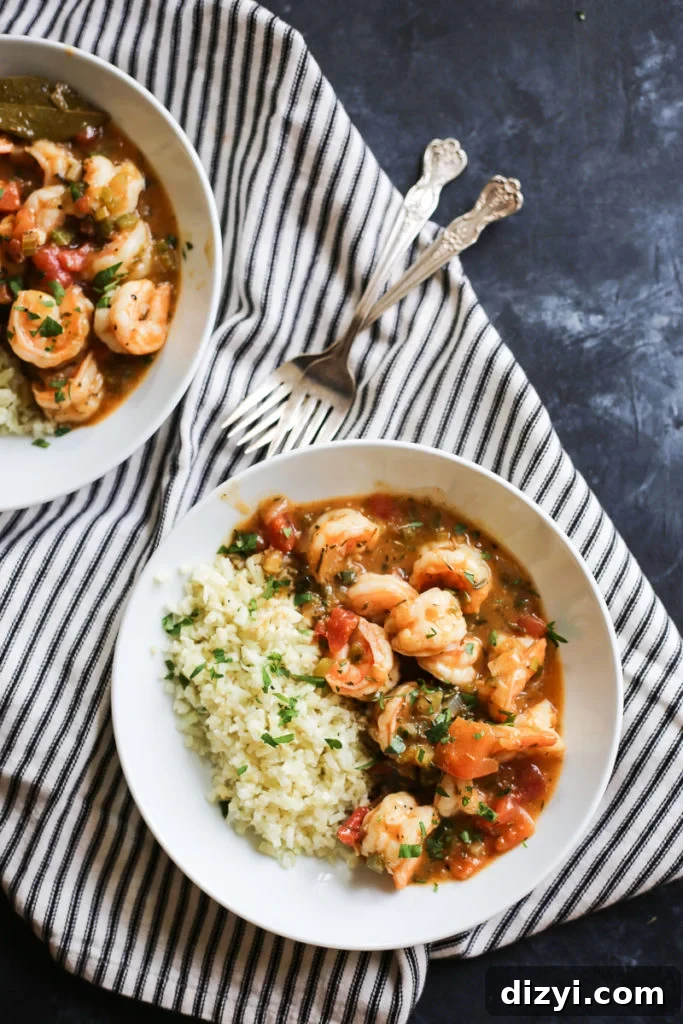
Cajun cuisine has a special place in my heart, and this Whole30 Shrimp Etouffee is my take on one of its most comforting, flavorful dishes. The recipe captures the classic layers of savory, spicy, and aromatic flavors you expect from Etouffee while keeping it compliant for Whole30 and Paleo lifestyles by replacing traditional flour-and-butter roux with ghee and arrowroot.
Growing up in the South, I enjoyed plenty of Etouffee—often made from leftover crawfish after a boil—and it became one of my favorite regional dishes alongside gumbo and po’ boys. While a truly authentic New Orleans-style Etouffee relies on a butter-and-flour roux, you can still achieve deep, rounded flavor using Whole30-friendly ingredients. This recipe leans on aromatic vegetables, bold spices, tomatoes, and a reduced broth base to create a rich sauce that clings to tender shrimp.
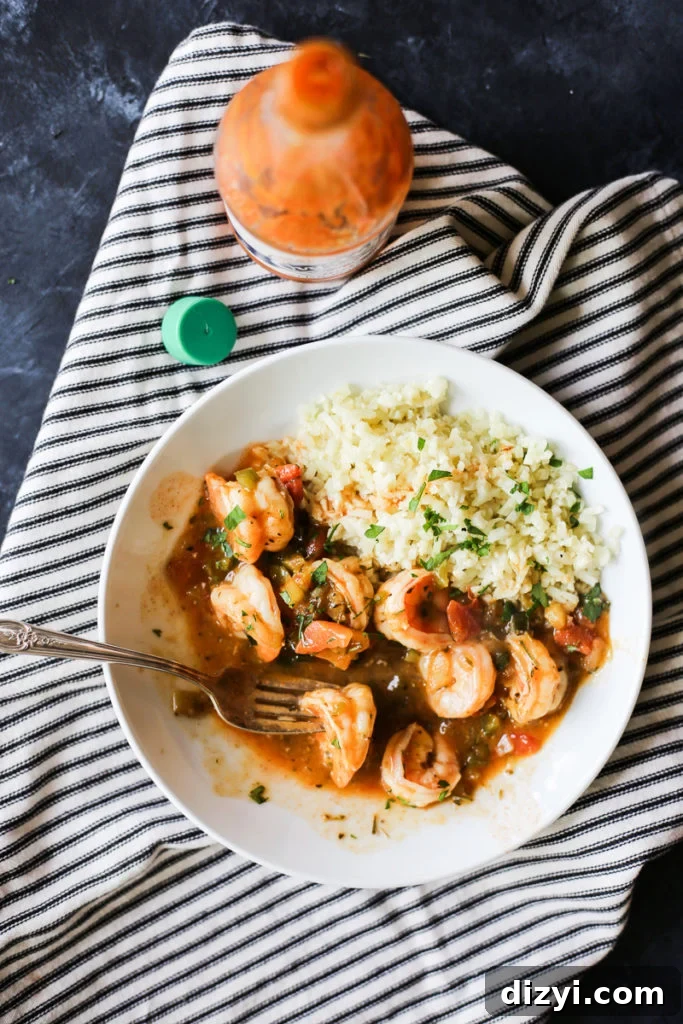
This version is not a strict replication of classic Etouffee, but it delivers all of the elements that make the dish so addictive: tender seafood, a fragrant trinity of onions, celery and bell pepper, lively spices, and a velvety sauce. Serve it over cauliflower rice for a low-carb, Whole30-friendly meal, and finish with chopped parsley and a dash of Louisiana-style hot sauce for authenticity and heat.
Why this version works
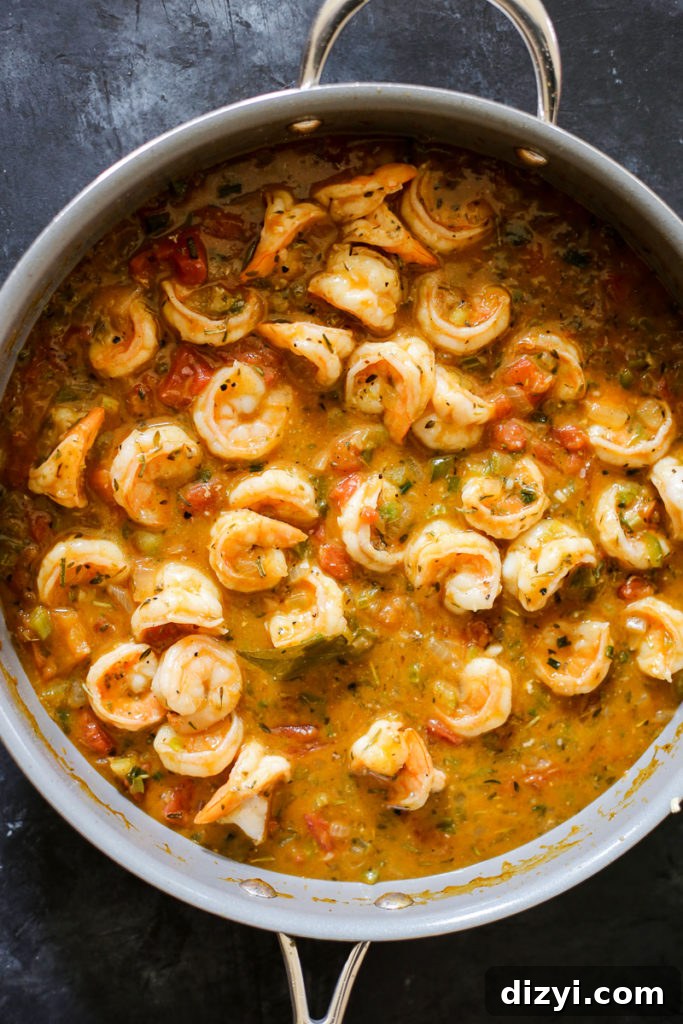
Without a traditional roux, I use ghee combined with arrowroot starch to thicken the sauce and create a lightly glossy finish. The method here focuses on building flavor through browning aromatics and spices, then deglazing and reducing the liquid so the sauce becomes concentrated and silky. Fish sauce adds a subtle umami depth without making the dish taste fishy, and drained diced tomatoes contribute acidity and texture.
Serving suggestions
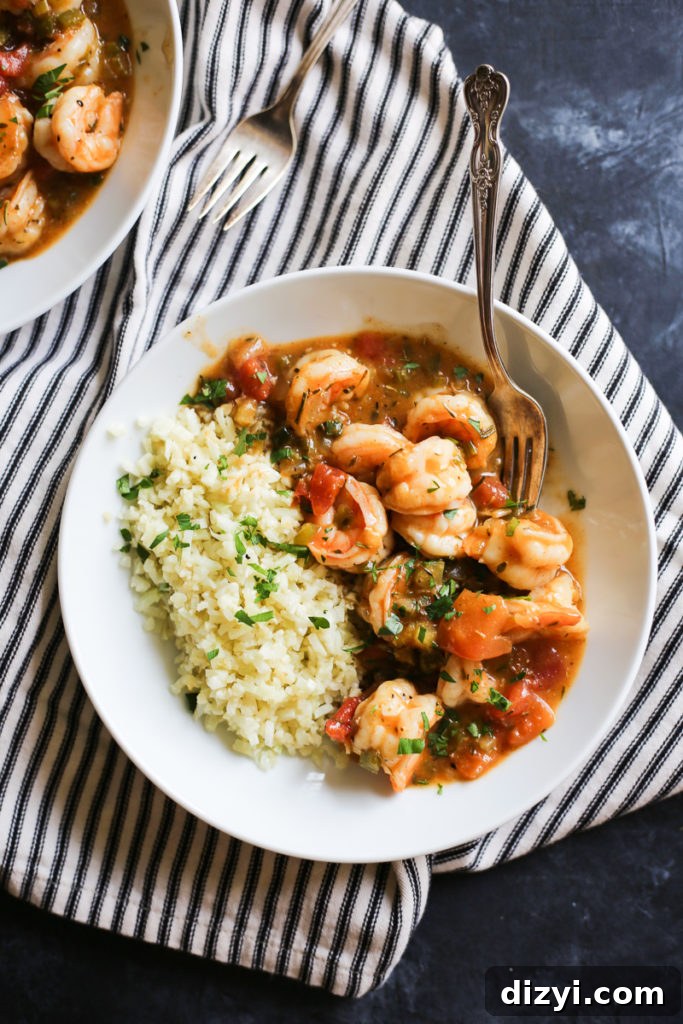
- Serve over steamed or riced cauliflower to keep the meal Whole30- and Paleo-friendly.
- Garnish with chopped parsley and sliced green onion for freshness and color.
- Add a few dashes of Louisiana-style hot sauce (Crystal’s is a classic choice) right at the table for extra heat.
- For extra flavor, substitute low-sodium seafood stock for the chicken broth or use a mix of both.
Ingredients
- 1.5 pounds shrimp, peeled and deveined
- 2 tablespoons avocado oil
- 1 teaspoon kosher salt, or more to taste
- 1/2 teaspoon black pepper
- 2 tablespoons ghee
- 2 tablespoons arrowroot starch (or arrowroot flour)
- 1 cup yellow onion, finely diced (about 1/2 medium onion)
- 3/4 cup chopped celery (about 1 large stalk)
- 3 green onions, thinly sliced (reserve a little for serving)
- 3/4 cup green bell pepper, finely diced (about 1/2 medium)
- 1/2 teaspoon cayenne pepper (adjust to taste)
- 1 teaspoon dried oregano
- 1 teaspoon dried thyme
- 1 teaspoon dried rosemary
- 1/4 teaspoon crushed red pepper (or more to taste)
- 1 bay leaf
- 1 teaspoon paprika
- 1 (14.5 oz) can diced tomatoes, drained
- 1 teaspoon fish sauce
- 2 cups low-sodium chicken broth
- 1/4 cup chopped parsley, for serving
- Louisiana-style hot sauce, for serving
Instructions
- Heat the avocado oil in a large non-stick or heavy skillet over medium-high heat.
- When the oil shimmers, add the shrimp in a single layer and season with salt and pepper. Cook until just opaque and cooked through, about 2–3 minutes per side depending on size. Transfer shrimp to a plate and set aside.
- Reduce heat to medium. Add the ghee to the skillet to melt, then stir in the arrowroot starch. Use the edge of a spoon to press out and break apart any clumps until the mixture is smooth.
- Add the diced onion, celery, green onions, and bell pepper to the skillet. Sprinkle in the cayenne, oregano, thyme, rosemary, crushed red pepper, bay leaf, and paprika. Cook, stirring frequently, until the vegetables are softened, about 4 minutes. The mixture may stick and brown slightly on the bottom—those browned bits add flavor.
- Add the drained diced tomatoes and fish sauce. While stirring, slowly pour in the chicken broth so the liquid incorporates evenly. Bring the mixture to a rapid simmer and stir, scraping up browned bits from the pan. Allow the sauce to reduce and thicken for about 5–7 minutes.
- Once the sauce has reached a slightly thickened consistency, reduce heat to low and return the cooked shrimp to the skillet. Stir to combine and heat through, taking care not to overcook the shrimp.
- Taste and adjust seasonings as needed. Remove the bay leaf before serving.
- Serve over prepared cauliflower rice. Garnish with chopped parsley, reserved green onion, and a few dashes of hot sauce.
Tips, storage, and variations
– To prevent overcooked shrimp, cook them only until just opaque and add them back to the sauce at the end to warm through.
– If you prefer a thicker sauce, let the simmer reduce a bit longer, or make a small slurry of arrowroot and water and stir it in at the end over low heat.
– Leftovers will keep in the refrigerator for up to 3 days. Reheat gently on the stovetop to avoid toughening the shrimp. You can freeze the cooked Etouffee in a sealed container for up to 2–3 months; thaw overnight in the refrigerator before reheating.
– For a different shellfish option, swap shrimp for crawfish tails or a mix of seafood, adjusting cooking times as needed. Use seafood stock in place of chicken broth for an even more pronounced seafood flavor.
Additional Info
Author: Alex Snodgrass
Servings: 4
Nutrition information is automatically calculated and should be used as an approximation.