
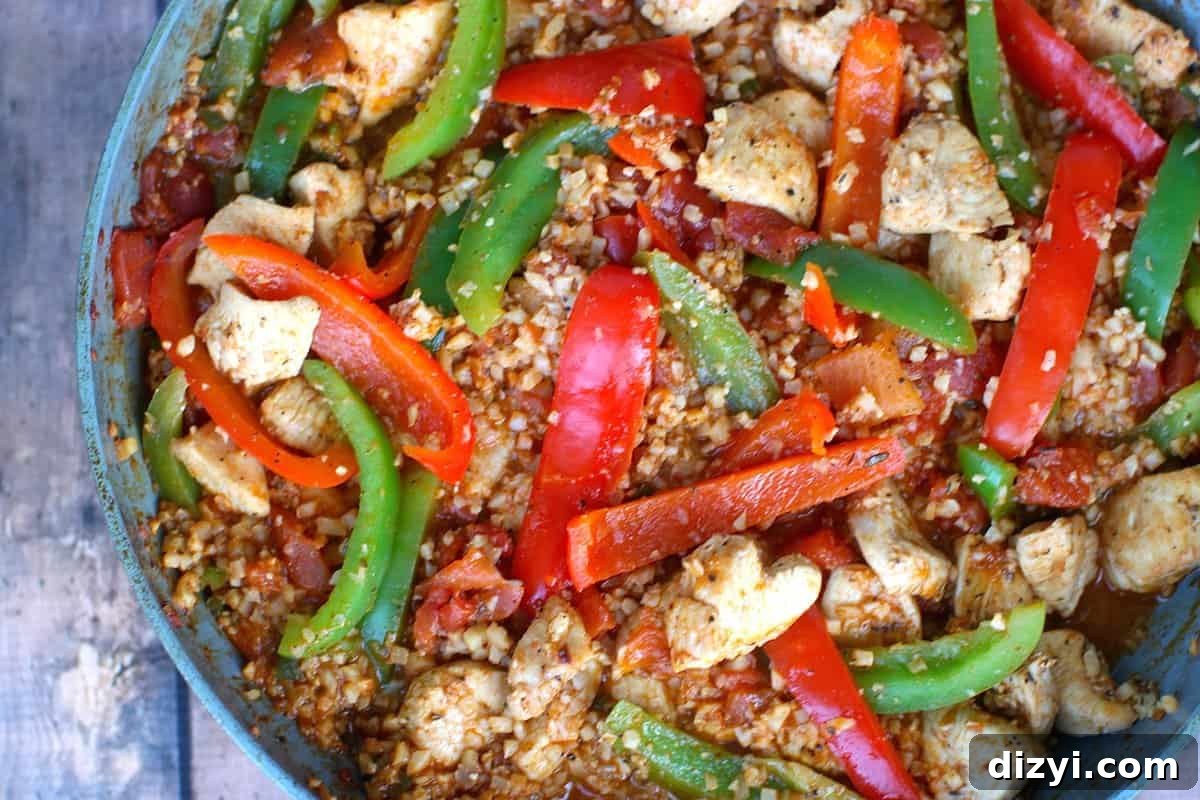
All of the bold, smoky flavor of classic Cajun rice—without the carbs. This one-pot Spicy Cajun Chicken and Cauliflower “Rice” delivers big taste in a lean, low-carb format. It’s quick to make, easy to customize, and perfect for weeknight dinners when you want something satisfying but lighter.
If you enjoy this Cajun Chicken and Cauli “Rice,” try a variation called dirty Cajun cauliflower “rice” for an even deeper, spicier flavor profile.
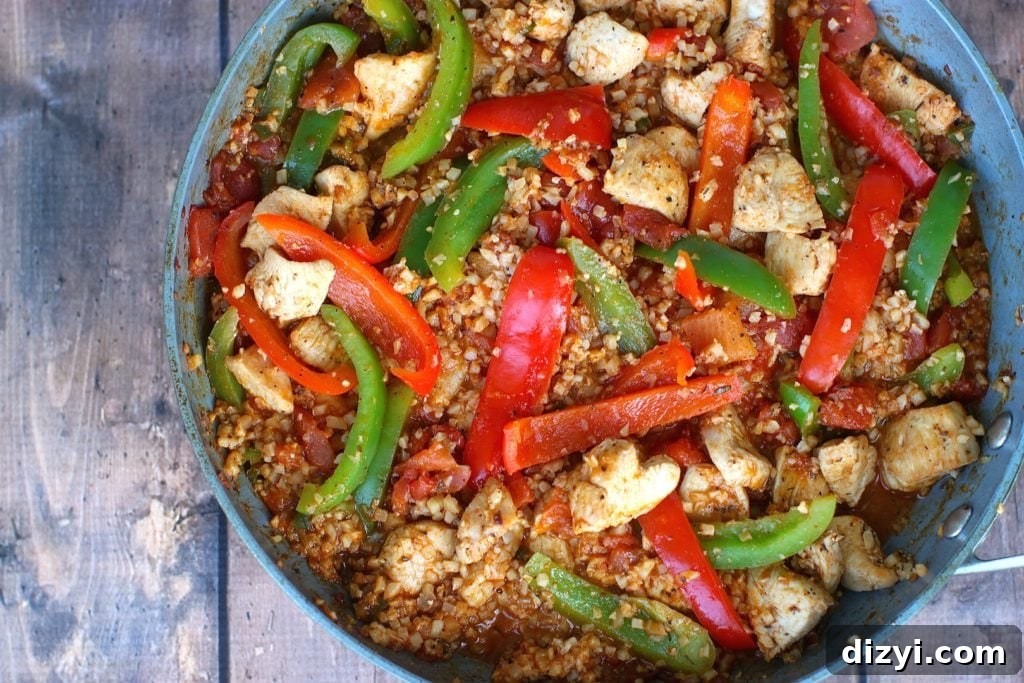
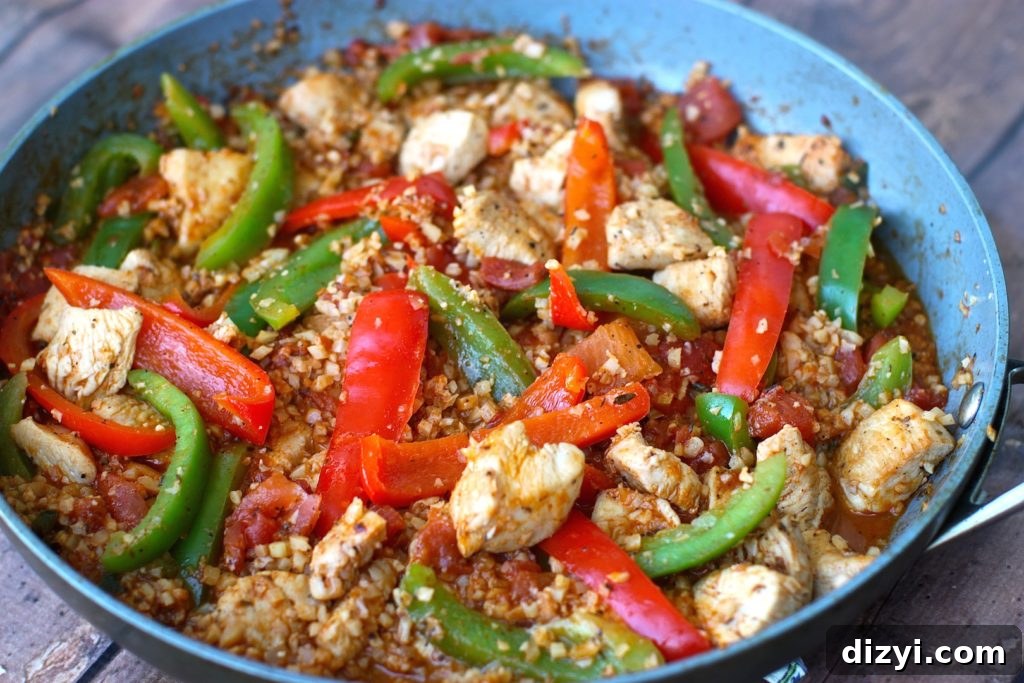
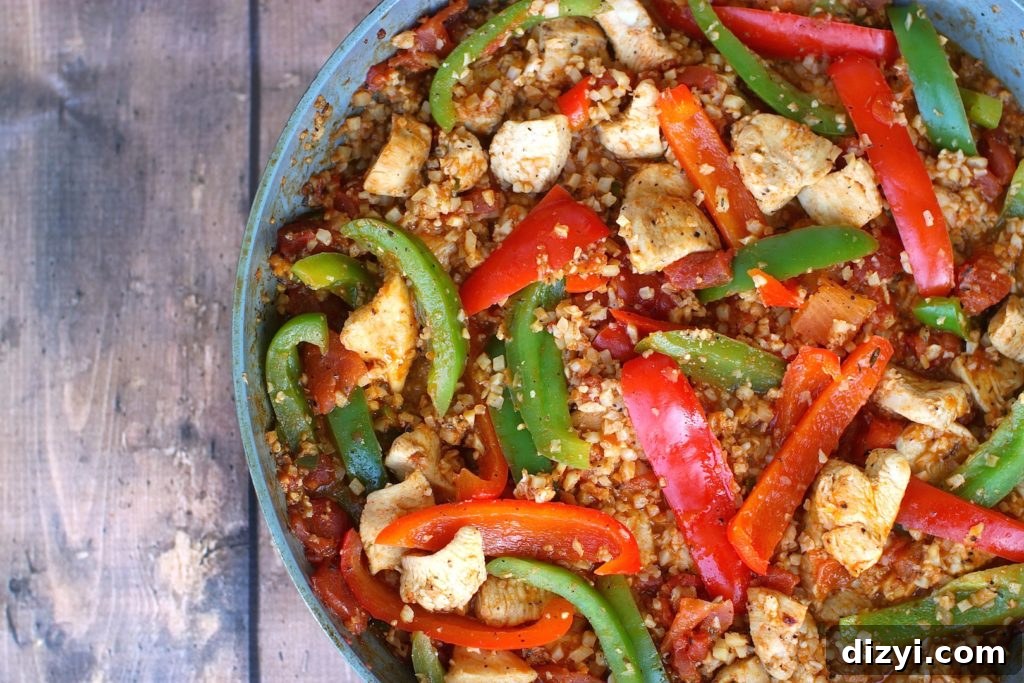
One-Pot Spicy Cajun Chicken and Cauliflower “Rice”
Prep Time: 10 minutes | Cook Time: about 15–20 minutes | Serves: 3–4
Why you’ll love it
This recipe captures the smoky, peppery kick of Cajun seasoning while keeping the dish light by substituting riced cauliflower for traditional rice. It cooks in one skillet for minimal cleanup and is easy to adjust for heat level, protein choice, or vegetable mix-ins. Use fresh riced cauliflower or frozen cauli rice to save time—the result is the same: a satisfying, flavorful meal that fits low-carb and gluten-free diets.
Ingredients
- 1 lb boneless, skinless chicken breast
- 2 tbsp olive oil or grapeseed oil
- 1/2 head cauliflower (or about 4 cups riced cauliflower; frozen works well)
- 1/2 cup chopped white onion
- 2 cloves garlic, minced
- 1 red bell pepper, sliced into 1/2-inch strips
- 1 green bell pepper, sliced into 1/2-inch strips
- 1 (10 oz) can diced tomatoes, drained
- 1/2 fresh jalapeño, seeds removed and diced (optional, for extra heat)
Seasoning mixture
- 3/4 tsp cayenne pepper (adjust to taste)
- 1/2 tsp salt
- 1/2 tsp black pepper
- 3/4 tsp paprika
- 1/4 tsp ground mustard
- 1/4 tsp dried thyme
- 1/4 tsp dried oregano
- 1/2 tsp ground cumin
Instructions
- In a small bowl, combine all seasoning ingredients and mix well. Set the Cajun spice blend aside.
- Prepare the cauliflower: break it into florets and pulse in a food processor until it resembles rice. Work in batches if needed. Alternatively, use frozen riced cauliflower and let it thaw slightly.
- Rinse and pat the chicken breasts dry, then season lightly with salt and pepper. Cut the chicken into roughly 1-inch cubes for even cooking.
- Heat a large skillet over medium-high heat and add 2 tablespoons of oil. When hot, add the cubed chicken and cook, stirring occasionally, until browned and cooked through—about 7–8 minutes depending on size. Remove the chicken to a plate and set aside.
- In the same skillet, add the chopped white onion, minced garlic, diced jalapeño (if using), drained diced tomatoes, and the sliced red and green bell peppers. Sauté for about 4–5 minutes until the onions soften and the peppers begin to tenderize.
- Add the riced cauliflower back to the pan along with the reserved seasoning mixture. Return the cooked chicken to the skillet. Stir well to combine and cook for an additional 3–5 minutes until the cauliflower is heated through and slightly tender but still has some texture.
- Taste and adjust seasoning if needed—add more cayenne for heat or more salt to brighten the flavors. Remove from heat and let sit a minute before serving.
Serving suggestions
Serve this Cajun Chicken and Cauli “Rice” straight from the skillet for a casual family meal, or plate it with a sprinkle of fresh chopped parsley or cilantro and a wedge of lime to brighten the flavors. It pairs nicely with a simple green salad or roasted vegetables.
Tips & variations
- Protein swap: Use boneless skinless chicken thighs in place of breast for richer flavor, or substitute shrimp for a quicker-cooking option.
- Make it milder by reducing the cayenne and removing the jalapeño; increase heat by adding more cayenne or a pinch of smoked paprika.
- To save time, use pre-riced cauliflower from the freezer section—no food processor required.
- Additions: sliced mushrooms, chopped celery, or a splash of chicken broth can add moisture and depth.
- For a slightly creamier texture, fold in a tablespoon of Greek yogurt or a splash of heavy cream off the heat just before serving.
By Madison Lavey
Source: The Defined Dish