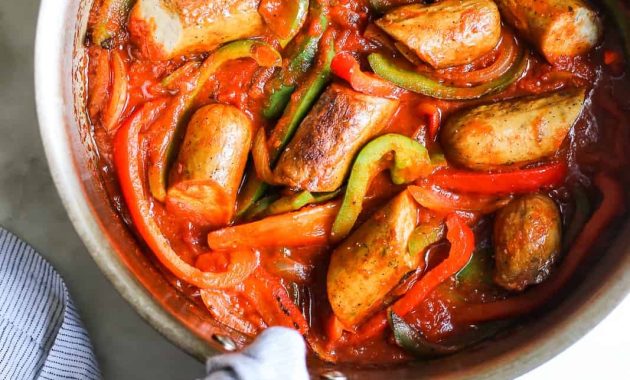
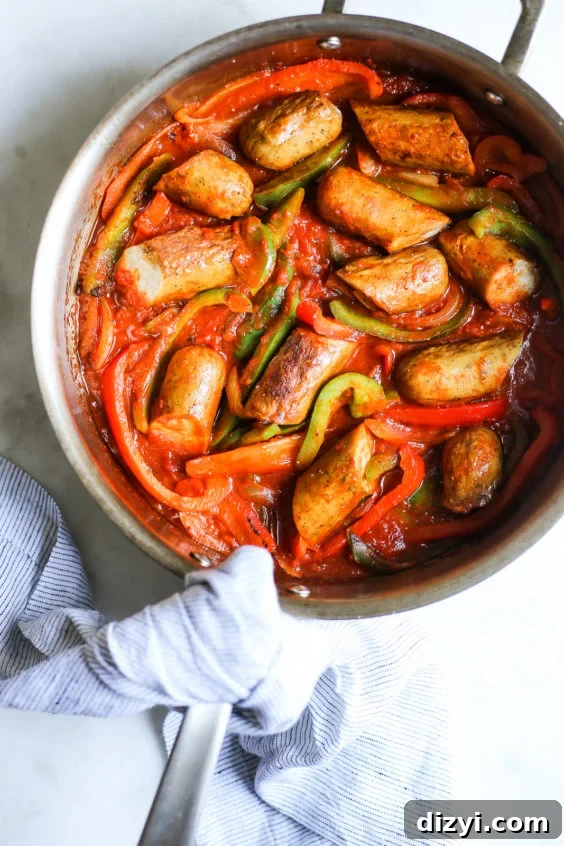
Sausage and Bell Pepper Skillet
This Sausage and Bell Pepper Skillet is a fast, flavorful 5-ingredient weeknight meal that’s ideal when you want something quick, satisfying, and low fuss. The recipe comes together in about 20 minutes and works well for busy evenings, simple family dinners, or anyone following a Whole30-style approach when using compliant ingredients.
Why this recipe works: it relies on a short ingredient list—sausage, bell peppers, onion, marinara, and arugula—yet delivers bold flavor thanks to the caramelized peppers and browned sausage. The method is straightforward: brown the sausage, sauté the vegetables, add sauce to finish. Serve over a bed of fresh arugula for a bright, peppery contrast.
Highlights: 5 ingredients • Ready in ~20 minutes • Serves 2 • Whole30-friendly if you use compliant marinara and sausage
Rating: 5 from 5 votes
Ingredients
- 2 tbsp extra virgin olive oil
- 1 lb Italian sausage, cut into 2-inch pieces
- 2 bell peppers, seeded and sliced thin (I often use one red and one green, but any colors are fine)
- 1/2 yellow onion, sliced thin
- Kosher salt, to taste
- Black pepper, to taste
- 1 cup store-bought marinara (choose a brand you trust or use homemade)
- 2 cups baby arugula, for serving
Instructions
- Heat the olive oil in a large skillet over medium-high heat.
- Add the sausage pieces and brown them on both sides, about 2–3 minutes per side. Remove the browned sausage to a plate and set aside. Browning adds texture and depth of flavor.
- Add the sliced bell peppers and onion to the skillet. Season with salt and pepper and cook, stirring occasionally, until the vegetables are tender and slightly caramelized, about 4–6 minutes.
- Pour in the marinara sauce and stir to combine with the vegetables. Nestle the sausage pieces back into the pan so they sit in the sauce. Let everything simmer just long enough to reheat the sausage and meld flavors, about 2–3 minutes.
- Serve the sausage and peppers over a bed of baby arugula so the greens wilt slightly from the heat of the skillet. Enjoy immediately.
Tips & Variations
– Swap the Italian sausage for chicken or turkey sausage for a lighter option. If you prefer a spicier dish, choose hot Italian sausage or add a pinch of red pepper flakes.
– Use different peppers for color and flavor contrast: yellow or orange peppers add sweetness; poblano adds a smoky touch.
– For a lower-sodium meal, choose a low-sodium marinara or make a quick tomato sauce with crushed tomatoes and Italian herbs.
– To make this gluten-free and low-carb, confirm your sausage and marinara are free from hidden gluten or added sugars. Serve over greens, cauliflower rice, or zucchini noodles.
Serving Suggestions
– Serve as written over arugula for a simple, light dinner. The peppery greens balance the richness of the sausage and tomato sauce.
– Pair with crusty bread or garlic bread for sopping up the sauce, or spoon over polenta or cooked pasta if you want a heartier dish.
– Leftovers reheat well—warm gently in a skillet or microwave and serve over fresh greens or grains.
Storage
Store cooled leftovers in an airtight container in the refrigerator for up to 3–4 days. Reheat gently on the stovetop over low heat, adding a splash of water if the sauce is thick. This dish can also be frozen for up to 2 months; thaw overnight in the fridge before reheating.
Notes
Nutritional information will vary based on the brands and specific ingredients you use; any automated nutrition estimates should be treated as approximations. Adjust seasoning to taste and experiment with add-ins like garlic, fresh basil, or olives if you want to expand the flavor profile.
Additional Info
Cook time: ~20 minutes
Servings: 2 people
Author: Alex Snodgrass
If you try this recipe, leave a comment below with how you served it or any tasty swaps you made—I’d love to hear what worked for you.
Images included above. Nutrition information is automatically calculated elsewhere and should be used only as an approximation.