
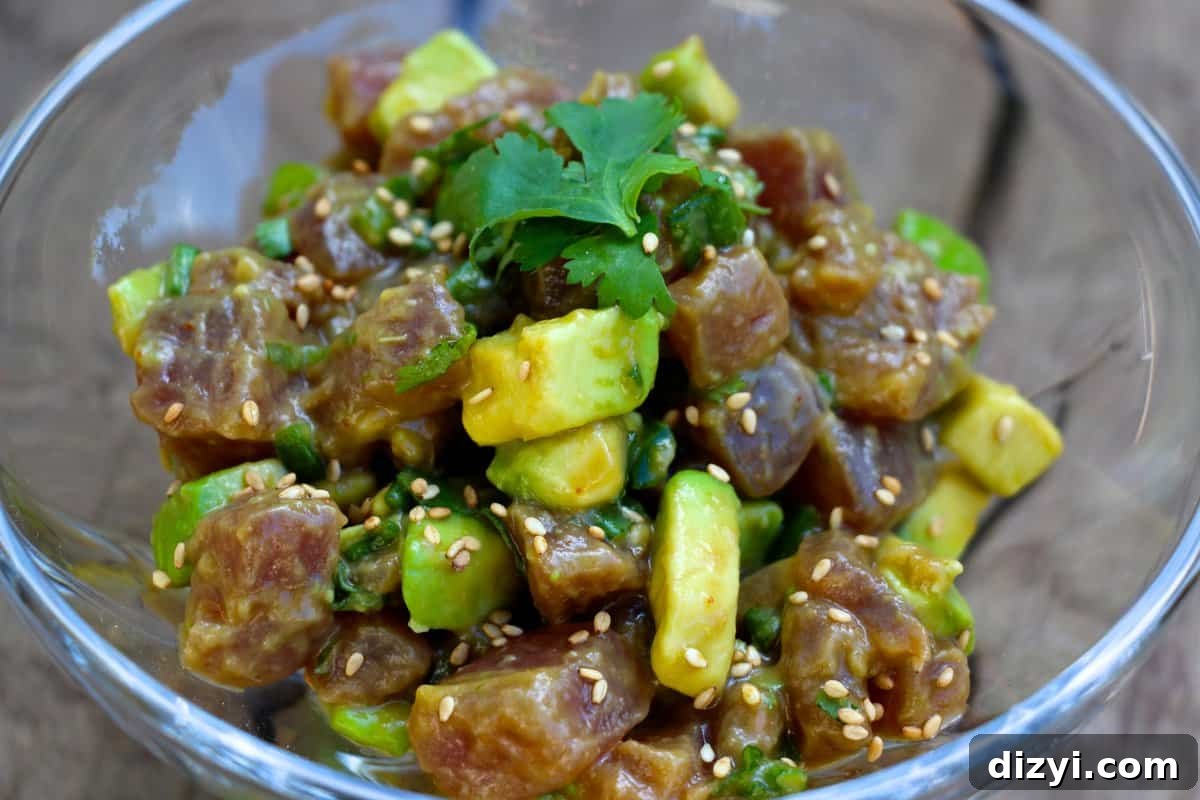
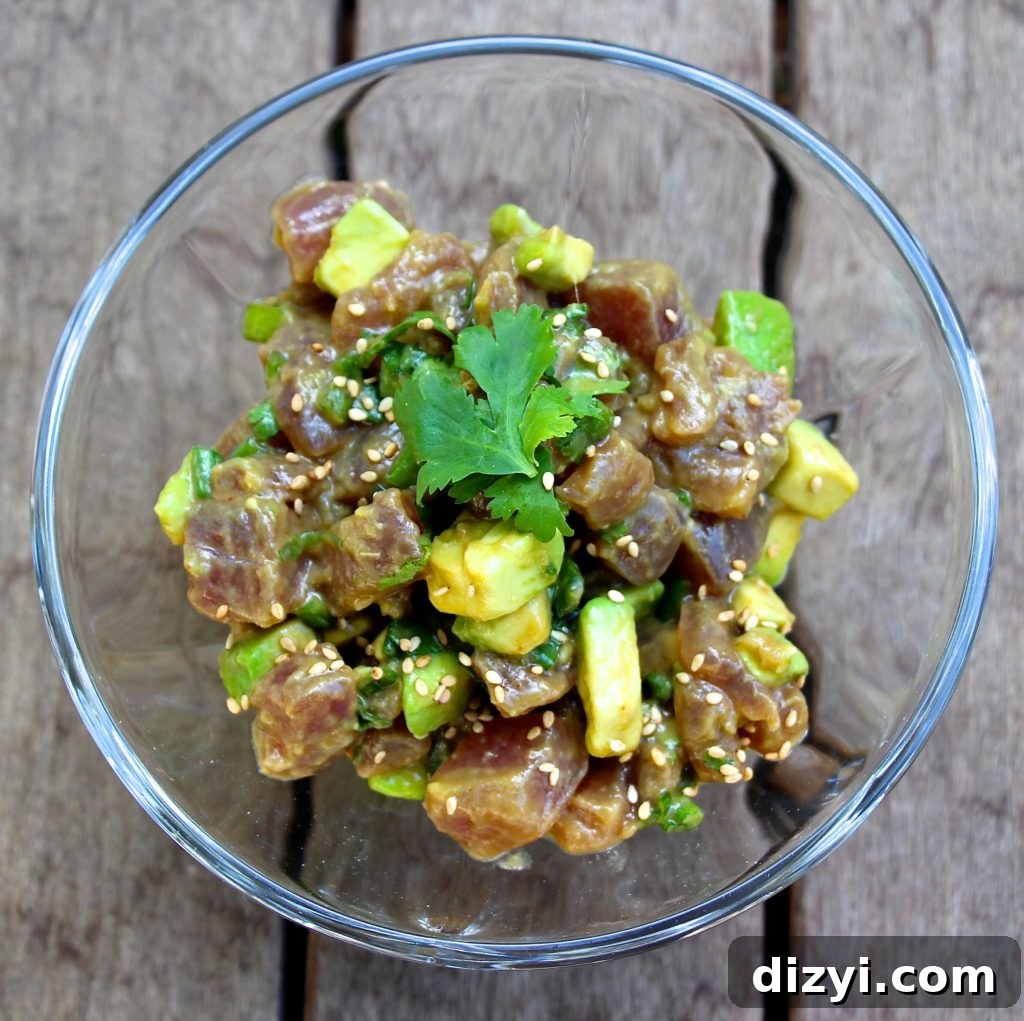
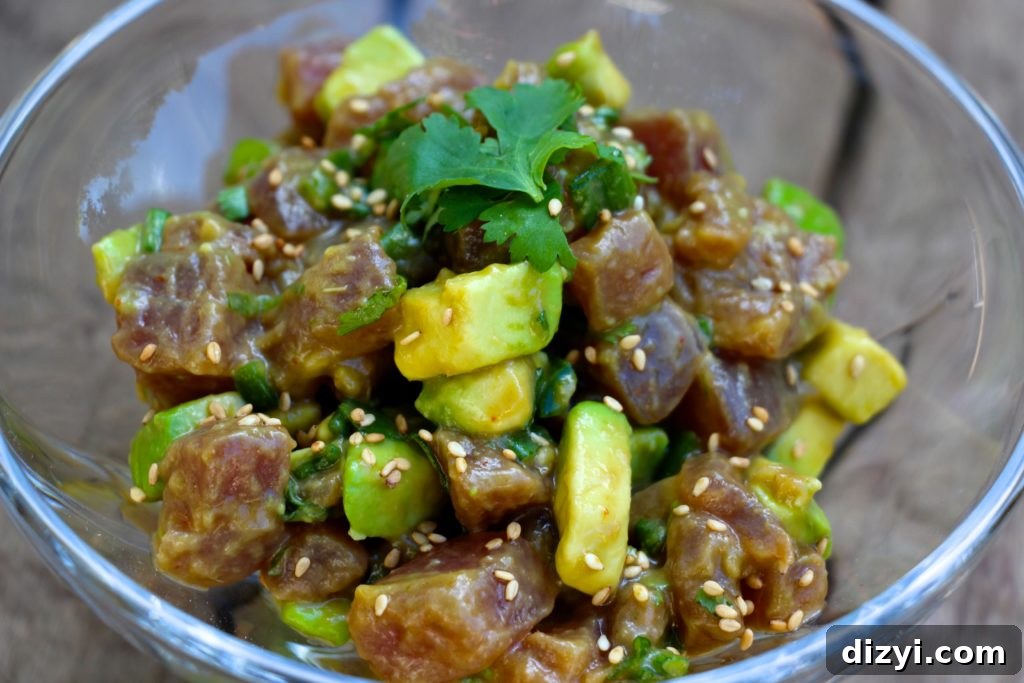
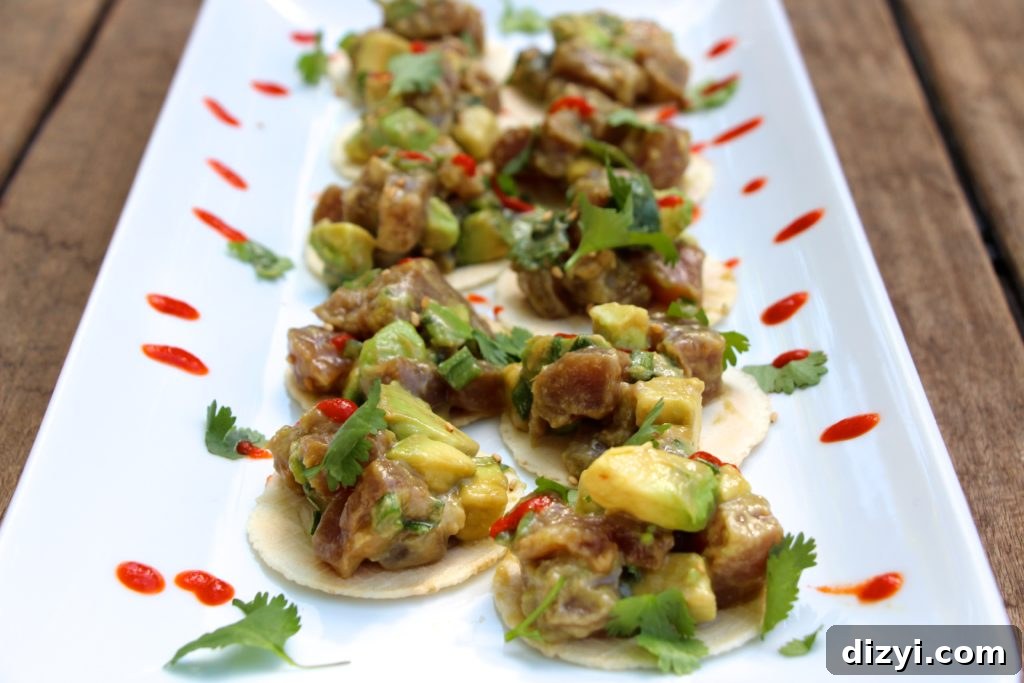
Ahi Tuna Tartare is a deceptively simple yet elegant appetizer that’s perfect for entertaining or a special weeknight dinner. While the name can sound intimidating, the recipe relies on a few fresh ingredients and straightforward knife work. The most important factor is sourcing sushi-grade tuna—if you can find it in the freezer section at stores like Central Market or Whole Foods, you’re already ahead. This version balances citrus, ginger, tamari, and a touch of sesame for a bright, savory tartare finished with creamy avocado and fresh cilantro.
Ingredients:
- Approx. 1 lb. sushi-grade ahi tuna steaks (buy frozen or fresh, if available; thaw fully in the refrigerator if frozen)
- 1/4 cup extra-virgin olive oil (or a neutral oil if preferred)
- 1 tsp freshly grated ginger
- 3 tbsp fresh lime juice (about 1–2 limes)
- 2 tbsp organic tamari (or low-sodium soy sauce)
- 1 tsp sesame oil
- 2 cloves garlic, minced very fine
- 1/2 tsp fine sea salt, adjust to taste
- Zest of 1/2 lime for brightness
- 1 tsp sriracha (optional, adjust for heat)
- 1 jalapeño, seeds removed and finely chopped (leave seeds in for more heat)
- 1/4 cup thinly sliced scallions (white and green parts)
- 1 ripe avocado, cut into small cubes just before serving
- 1/4 cup freshly chopped cilantro, for garnish
Method:
- Prepare the tuna: Pat the tuna steaks dry with paper towels. Using a very sharp knife held at a slight angle, trim any sinew and cut the fish into even 1/4-inch cubes. Uniform pieces create a pleasing texture and appearance. Place the diced tuna into a large, chilled mixing bowl.
- Make the dressing: In a small bowl whisk together the olive oil, grated ginger, lime juice, tamari, sesame oil, minced garlic, salt, lime zest, and sriracha until well combined. Taste and adjust the balance—more lime for acidity, more tamari for saltiness, or additional sriracha for heat.
- Combine and marinate: Pour the dressing over the cubed tuna and gently fold to coat without breaking up the pieces. Fold in the finely chopped jalapeño and scallions. For best texture, refrigerate the tartare, covered, for 15–60 minutes to let the flavors meld. Avoid marinating much longer than two hours, as the lime will begin to alter the tuna’s texture.
- Add avocado and cilantro: Right before serving, gently fold in the cubed avocado and the chopped cilantro. Adding the avocado at the end keeps it from turning mushy and preserves its color and creaminess.
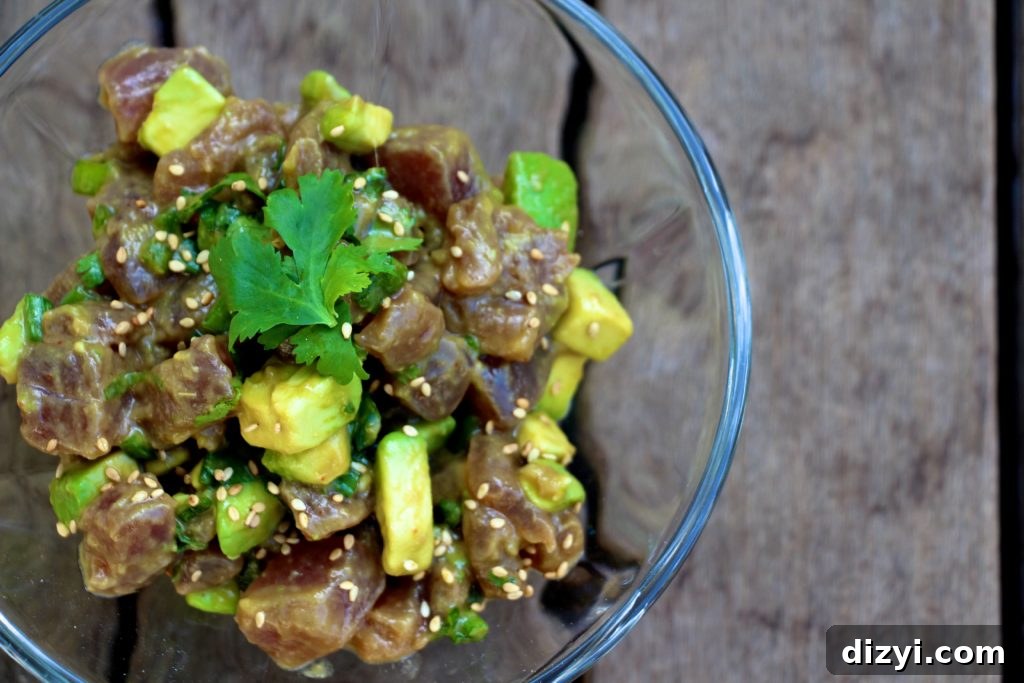
- Serve and garnish: Spoon the tartare onto chilled plates or use a ring mold for a refined presentation. Garnish with extra lime zest, a drizzle of sesame oil, or a few microgreens if desired. This tartare pairs beautifully with simple, thin crackers—Australian-style premium crackers, plain crostini, crispy wonton chips, or cucumber rounds are all excellent options.
Tips and variations: Use tamari or soy sauce to control the salt level—low-sodium versions offer more flexibility. If you prefer less heat, omit the sriracha and jalapeño or substitute with finely chopped cucumber for crunch. For a citrus twist, try a mix of lime and a splash of yuzu or lemon. If you don’t eat raw fish, you can adapt this concept using very lightly seared tuna (quickly sear each side for 15–20 seconds then chill) or finely diced cooked salmon.
Storage and make-ahead notes: Tuna tartare is best enjoyed the day it’s made. You can prepare the tuna and dressing separately and combine them shortly before serving. Once avocado is added, plan to serve immediately—the texture and color will be at their peak. Leftovers should be kept refrigerated and consumed within 24 hours, though texture and flavor may change.
Presentation and pairings: For a casual appetizer, serve the tartare with a stack of crisp crackers. For a more refined course, mold the tartare and serve with a small salad of mixed greens or shaved radish. Light, crisp white wines or citrus-forward beers complement the dish’s brightness; nonalcoholic options like sparkling water with lime also work well.
This Ahi Tuna Tartare recipe highlights the clean, bright flavors of fresh tuna while remaining simple to prepare. With a few thoughtful steps—sharp knife work, a balanced dressing, and the final addition of creamy avocado—you’ll have an impressive, restaurant-quality starter that’s surprisingly quick to assemble.