
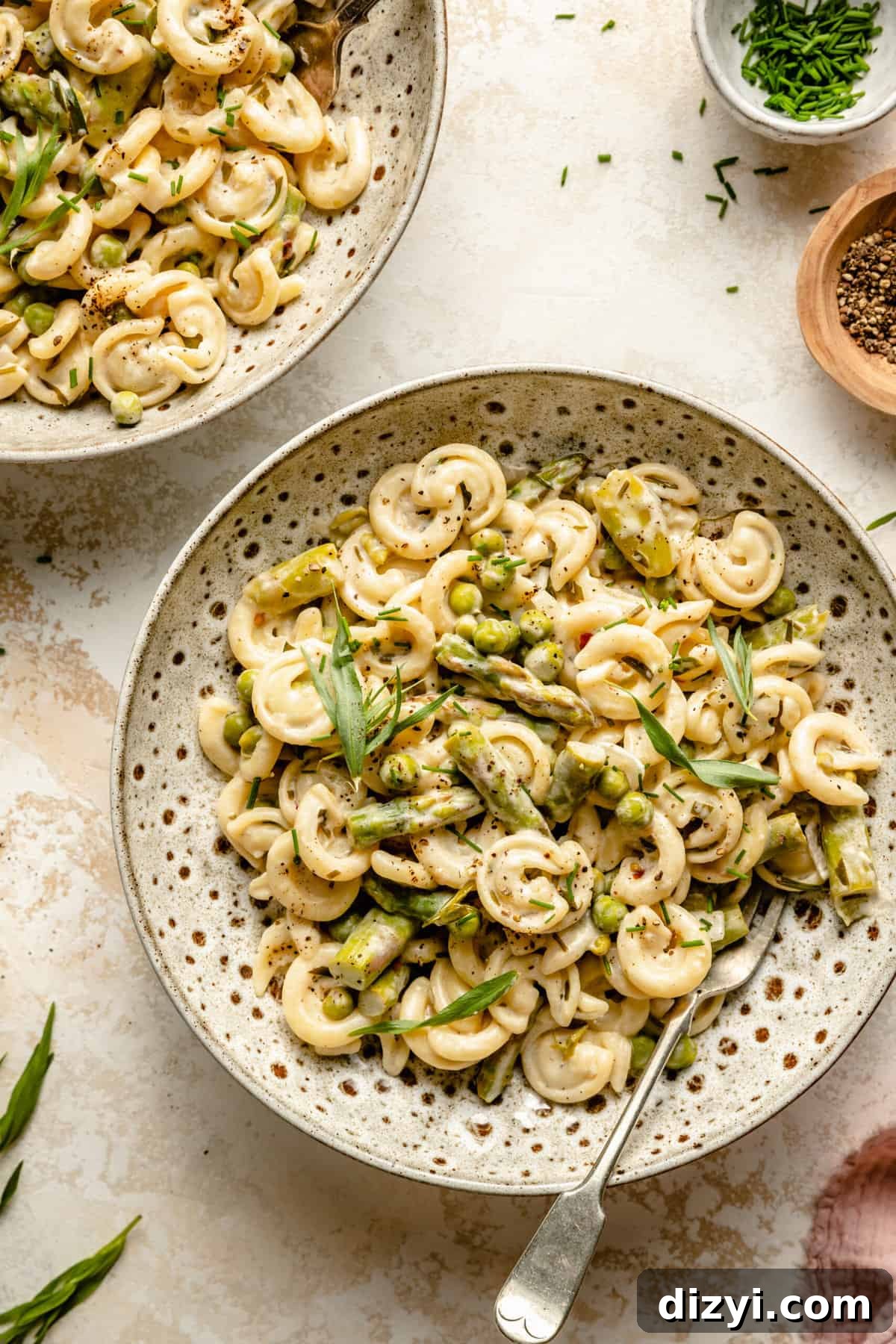
This Creamy Goat Cheese Pasta with Asparagus and Peas is a favorite spring and summer pasta—simple to make, bright in flavor, and comforting in texture. I first tasted a version of this dish at Easter when my mother-in-law, GoGo, prepared it for the family. Inspired by her recipe, I developed my own rendition that highlights tender asparagus, sweet peas, fresh herbs, and tangy creamy goat cheese tossed with curly pasta.
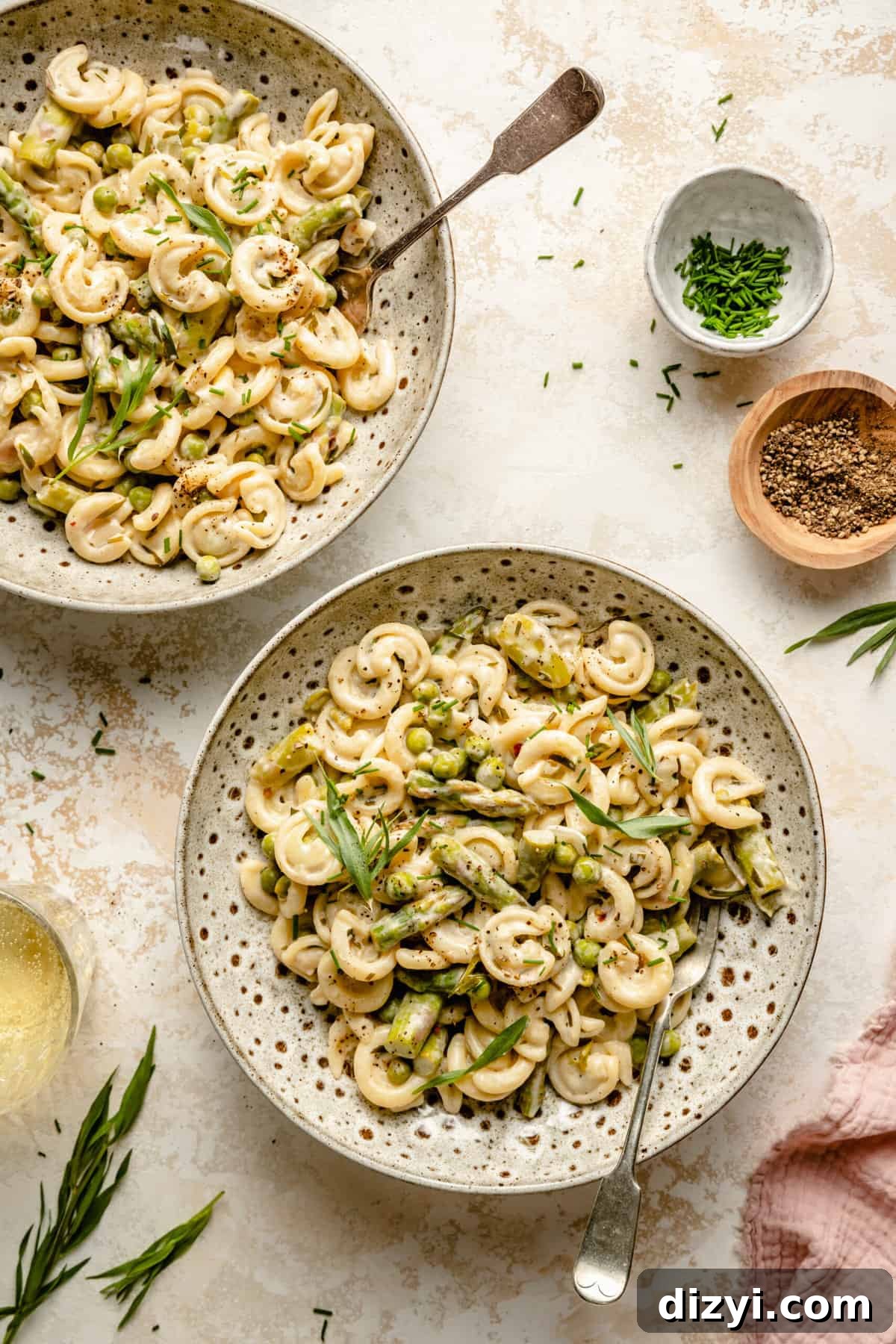
Bright lemon, fragrant tarragon and chives, and a touch of crushed red pepper lift the goat cheese sauce so it never feels heavy. The log-style goat cheese melts into a silky coating that clings to each piece of fusilli or trottole, while the asparagus and peas add color, texture, and a seasonal snap. This pasta is quick enough for weeknights but pretty enough for a relaxed weekend dinner or a spring gathering.
Ingredients
- 12 ounces curly pasta (trottole, fusilli, or similar)
- 1 tablespoon plus 1 teaspoon kosher salt, divided
- 2 cups frozen peas
- 1 bunch asparagus, woody ends removed, cut into 1-inch pieces
- 2 tablespoons unsalted butter
- 1 tablespoon extra virgin olive oil
- 1/4 cup roughly chopped shallots (about 1 large shallot)
- 2 garlic cloves, minced
- 1/4 teaspoon crushed red pepper flakes (optional, plus more for serving)
- 1/2 cup dry white wine
- 1/4 cup chopped fresh tarragon leaves, plus more for serving
- 1/4 cup chopped fresh chives, plus more for serving
- 6-ounce log goat cheese (do not use pre-crumbled)
- 2 tablespoons lemon juice
- 1/2 teaspoon freshly ground black pepper
Step-by-step instructions
Step one: Cook the pasta and vegetables
Bring a large pot of water to a rapid boil. Add 1 tablespoon of kosher salt and the pasta. Cook the pasta until it is just shy of al dente—about 2 minutes less than the package recommends. Add the frozen peas and the cut asparagus to the pot and cook for an additional 2 minutes, or until the pasta reaches al dente and the vegetables are tender but still bright. Reserve 1 cup of the starchy pasta water, then drain the pasta and vegetables and set aside.
Step two: Sauté aromatics
Return the empty pot to medium heat and add the butter and olive oil. Once the butter melts, add the chopped shallots, minced garlic, and the crushed red pepper flakes. Sauté, stirring frequently, until the shallots become tender and translucent—about 2 minutes. This builds the flavor base for the sauce.
Step three: Add wine and herbs
Pour in the white wine and add the chopped tarragon and chives. Continue to cook and stir until the wine reduces by about half, concentrating the flavors—this usually takes 1–2 minutes.
Step four: Build the creamy goat cheese sauce
Lower the heat and add the goat cheese, 1/4 cup of the reserved pasta water, the lemon juice, 1 teaspoon salt, and the black pepper. Stir steadily until the goat cheese fully melts and the sauce becomes smooth and silky. If the sauce feels too thick, add more reserved pasta water a little at a time until you reach the desired consistency.
Step five: Combine pasta and sauce
Remove the pot from the heat and add the cooked pasta, peas, and asparagus back into the sauce. Toss gently to coat the pasta evenly. If needed, add another 1/4 cup of reserved pasta water to loosen the sauce and help it cling to the noodles.
Step six: Garnish and serve
Finish with extra chopped tarragon and chives and a sprinkle of crushed red pepper flakes for a little heat. Serve immediately while warm. Leftovers keep well in the refrigerator for a day or two—reheat gently with a splash of water or milk to revive the sauce.
Tips, substitutions, and serving ideas
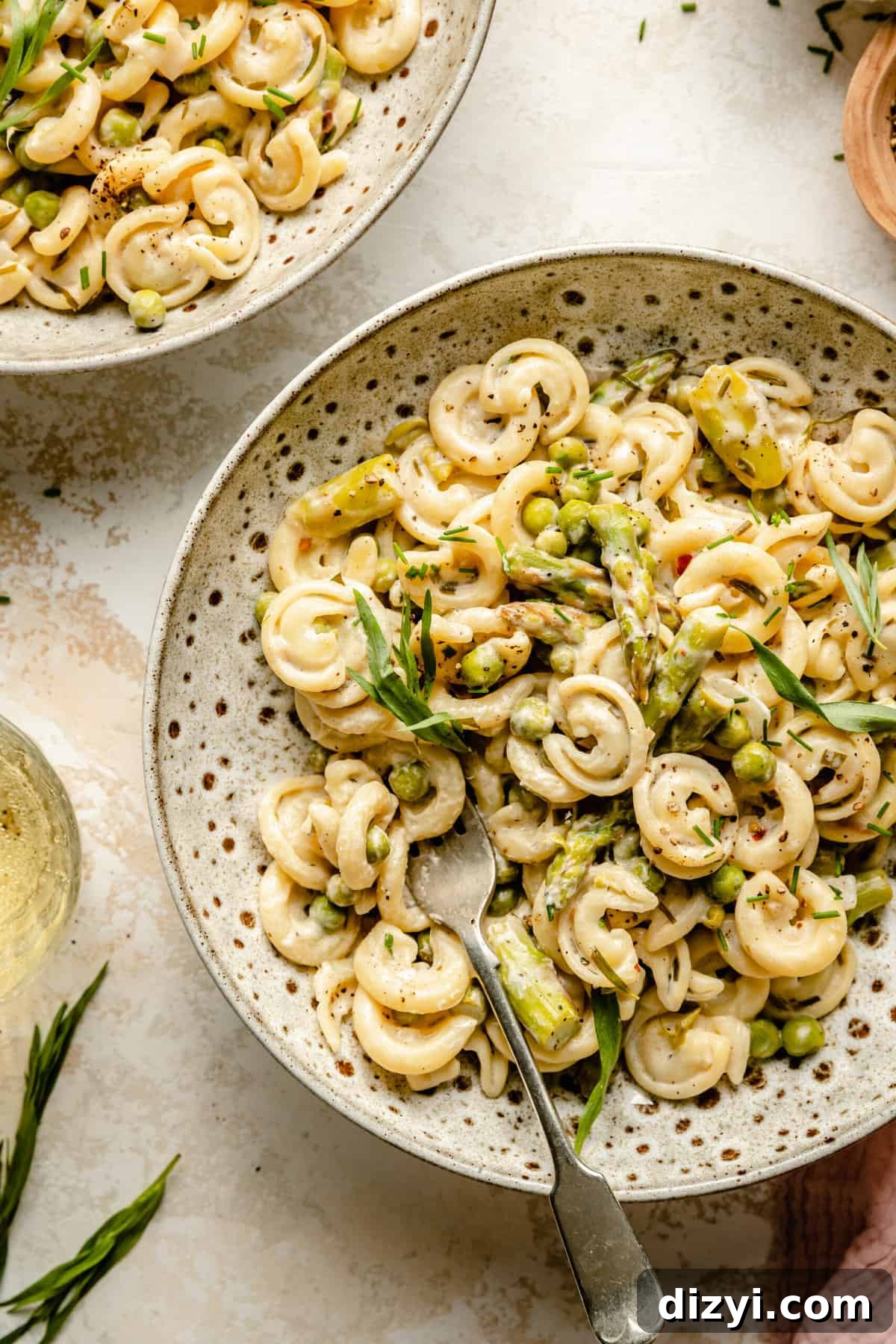
If you don’t like goat cheese, swap an equal amount of cream cheese plus a splash of lemon juice to mimic the tang, or use ricotta with extra lemon zest for a milder, creamier sauce. For added protein, serve this pasta topped with grilled shrimp or sliced grilled chicken. Use a log of goat cheese rather than pre-crumbled goat cheese—the log melts much more smoothly and creates a creamier sauce.
Notes
Reserve pasta water before draining: the starchy water loosens the sauce and helps it cling to the pasta. Taste and adjust salt and lemon at the end—fresh lemon juice brightens the dish and can balance the creaminess of the cheese. If you prefer no alcohol, substitute vegetable or chicken broth for the white wine and simmer until slightly reduced.
Nutrition (approximate per serving)
Calories: 412 kcal; Carbohydrates: 54 g; Protein: 16 g; Fat: 13 g; Saturated Fat: 7 g; Sodium: 1279 mg; Fiber: 5 g. Nutrition is automatically calculated and should be used as an approximation.
Frequently asked questions
What if I don’t like goat cheese? You can use cream cheese with a squeeze of lemon or ricotta with extra lemon zest. Both create creamy sauces but will change the flavor profile slightly.
Can I add protein? Yes—grilled shrimp, pan-seared chicken, or even pan-fried tofu work well as additions for a more substantial main course.
I hope you and your family enjoy this Creamy Goat Cheese Pasta with Asparagus and Peas. It’s a quick, seasonal pasta that balances tangy cheese, fresh herbs, and spring vegetables for a satisfying meal. If you try it, let me know how it turned out and any variations you loved.
Photography credit: Eat Love Eats.