
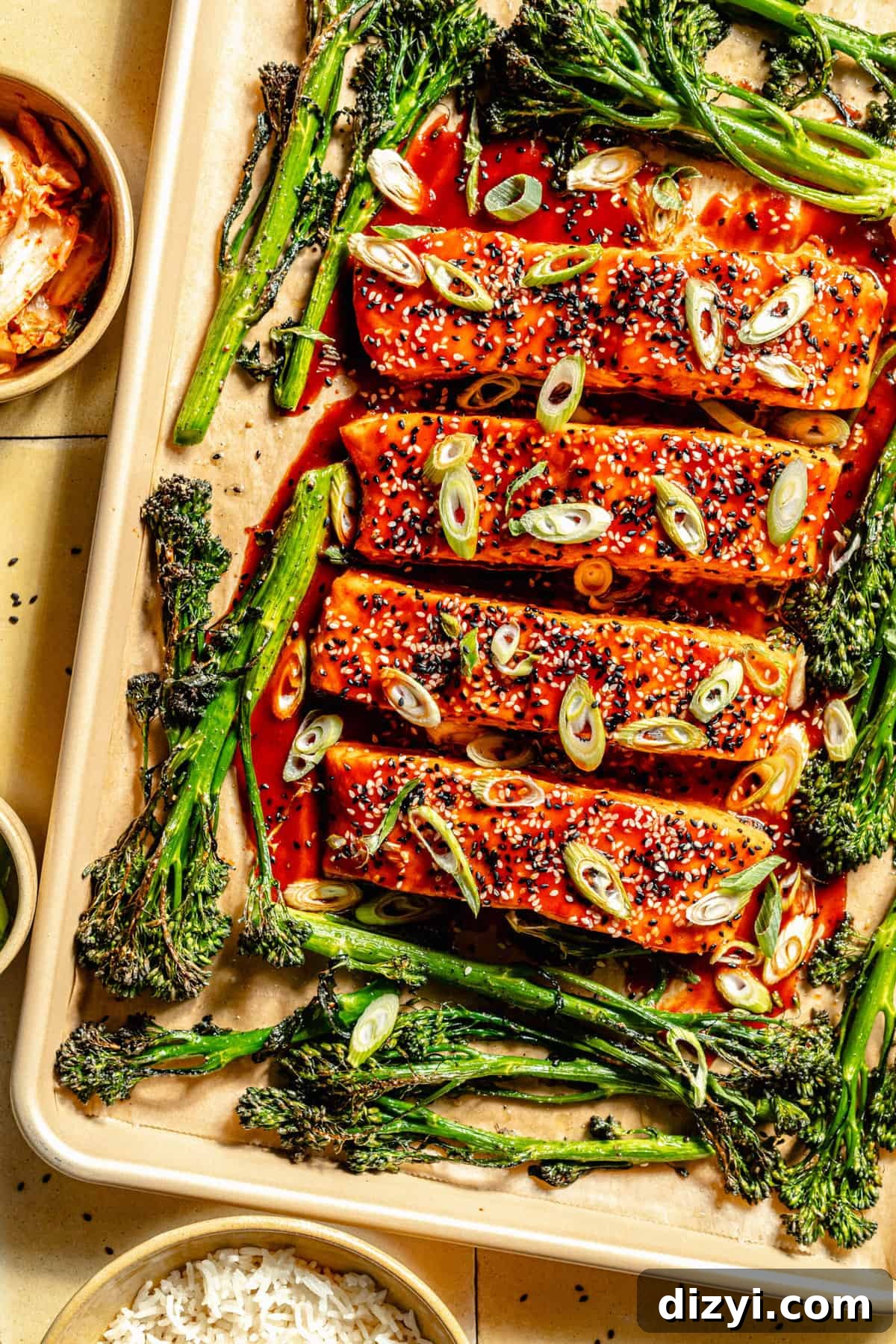
Here’s a flavorful recipe to add to your weeknight rotation: Sheet Pan Gochujang Glazed Salmon. This easy sheet-pan meal delivers a perfect balance of sweet, savory, and mildly spicy with a sticky gochujang glaze, crisp-tender broccolini, and simple serving options like rice and kimchi. It’s an effortless, crowd-pleasing main that comes together quickly and requires minimal cleanup—ideal for busy evenings or low-effort entertaining.
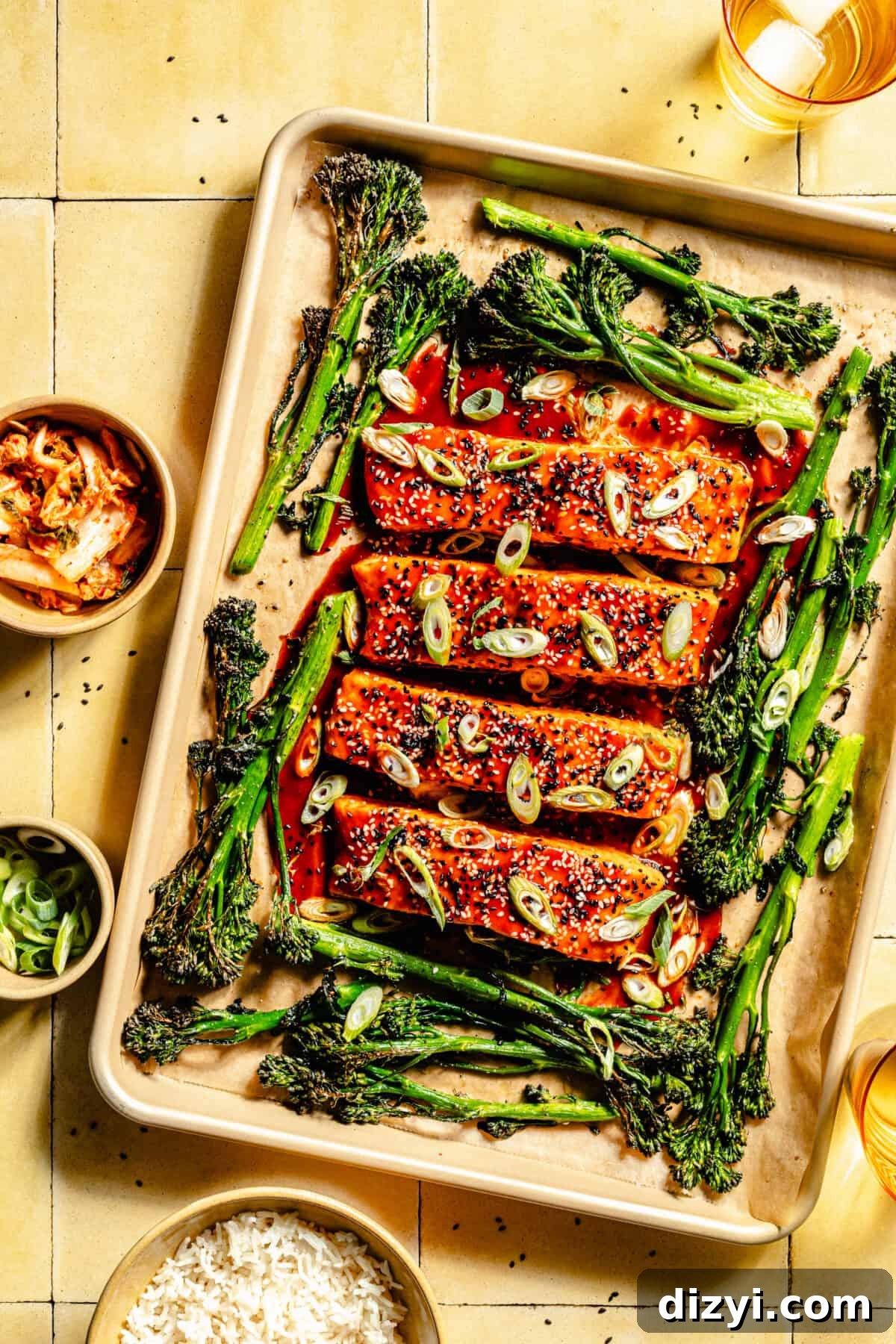
Salmon is a versatile, nutrient-packed fish that cooks beautifully in the oven. Baking fillets on a sheet pan keeps the texture tender and consistent while allowing you to roast vegetables at the same time. Gochujang paste—a Korean fermented chili paste made from red chili powder, fermented soy, rice, and salt—adds deep umami and a subtle heat. A quick glaze of gochujang, maple syrup, rice vinegar, sesame oil, and coconut aminos transforms ordinary salmon into a richly flavored dish with an appealingly glossy finish.
This recipe is naturally adaptable: swap broccolini for asparagus or green beans, use honey instead of maple syrup, or serve the salmon over cauliflower rice for a lower-carb option. Leftover gochujang keeps well in the refrigerator and can be used for marinades, dressings, or quick stir-fries.
Ingredients
- 2 tablespoons gochujang paste
- 2 tablespoons maple syrup
- 1 tablespoon rice vinegar
- 1 teaspoon sesame oil
- 1 tablespoon coconut aminos (or low-sodium soy sauce)
- 12 ounces broccolini, trimmed (about 2 bunches)
- 2 tablespoons avocado oil (or olive oil)
- 1 teaspoon kosher salt, divided
- 1/2 teaspoon freshly ground black pepper
- 4 center-cut salmon filets (about 6 ounces each), pin bones removed
- 2 green onions, thinly sliced on the diagonal
- 1 teaspoon white sesame seeds
- 1 teaspoon black sesame seeds
- Cooked rice or cauliflower rice, for serving (optional)
- Kimchi, for serving (optional)
Step-by-step Instructions
Step 1: Preheat and prepare
Preheat the oven to 400°F (200°C). Line a large rimmed baking sheet with parchment paper for easier cleanup and even roasting.
Step 2: Whisk the glaze
In a small bowl, whisk together the gochujang paste, maple syrup, rice vinegar, sesame oil, and coconut aminos until smooth. Taste and adjust sweetness or tang as desired. Set the glaze aside.
Step 3: Dress the broccolini
Arrange the broccolini on the prepared sheet pan. Drizzle with avocado oil and season with 1/2 teaspoon kosher salt and 1/2 teaspoon black pepper. Toss or turn the broccolini so each stalk is lightly coated, then push the vegetables to the edges of the pan to make space for the salmon.
Step 4: Add and season the salmon
Place the salmon filets in the center of the sheet pan, skin-side down if applicable. Season the tops with the remaining 1/2 teaspoon kosher salt.
Step 5: Glaze and bake
Spoon roughly 1 tablespoon of the gochujang glaze over the top of each filet and use a brush or the back of the spoon to spread it into an even layer. Transfer the sheet pan to the preheated oven and bake for 10 minutes.
Step 6: Finish and garnish
Remove the sheet pan from the oven and drizzle the remaining glaze over the salmon and broccolini. Sprinkle with white and black sesame seeds and the sliced green onions. Return the pan to the oven and bake until the salmon is just cooked through and flakes easily with a fork, about 4–6 more minutes depending on thickness. Remove from the oven and let rest for a minute.
Step 7: Serve
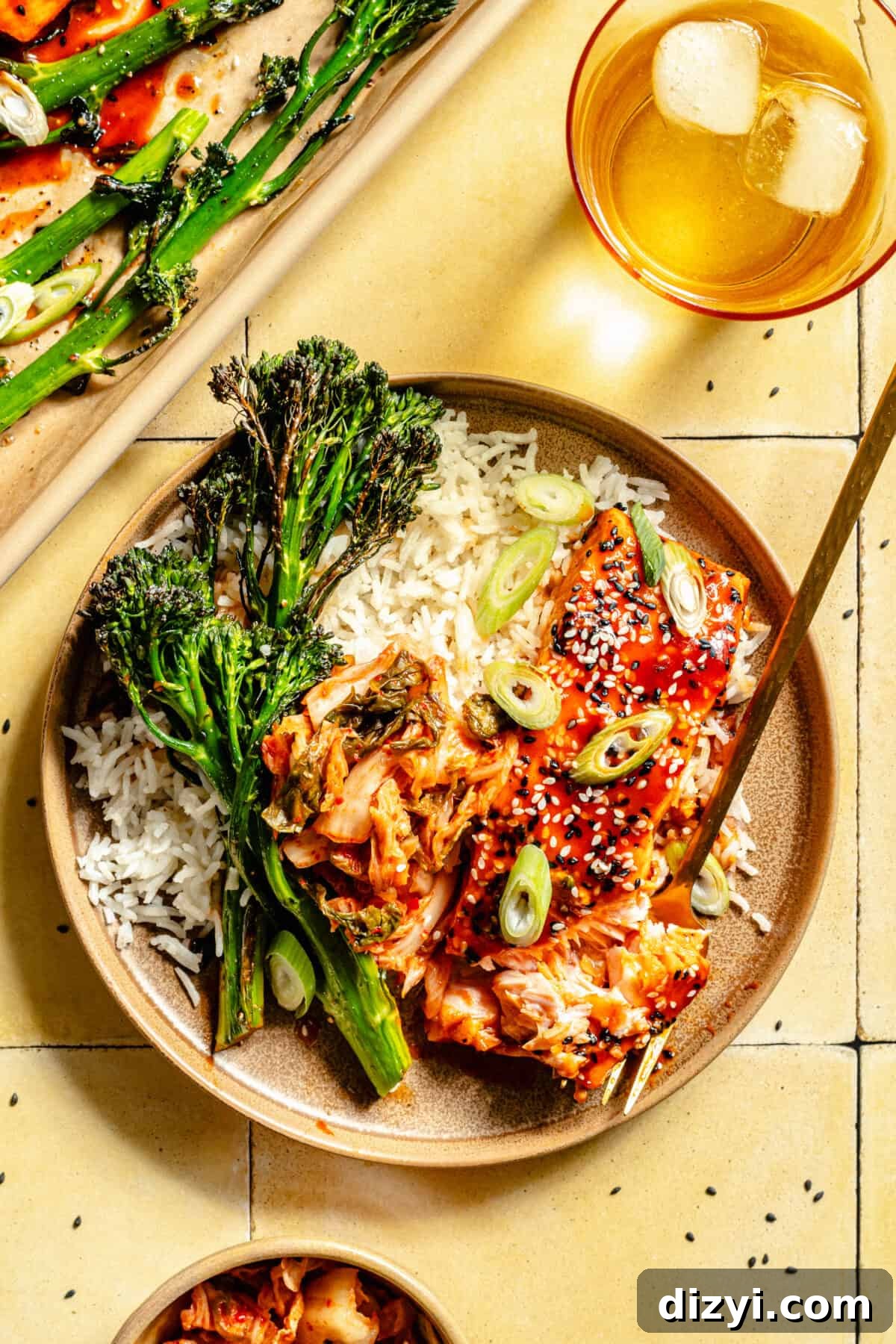
Serve the glazed salmon and roasted broccolini with cooked rice or cauliflower rice and a side of kimchi, if desired. Spoon any pan juices over the salmon for extra flavor.
Tips and Variations for Best Results
- For even cooking, choose salmon filets of similar thickness.
- If you prefer a milder glaze, reduce the gochujang by half and increase maple syrup slightly.
- To get crisper vegetable edges, leave space between broccolini stalks on the sheet pan and avoid overcrowding.
- Swap broccolini for asparagus, green beans, or broccolini mixed with thinly sliced carrots for a colorful tray bake.
- Make this recipe gluten-free by using a certified gluten-free gochujang and ensuring coconut aminos or tamari are gluten-free.
Recipe FAQs
Not always. Traditional gochujang often contains a small amount of wheat. Look for brands labeled gluten-free or made with rice-only fermentations; alternatives like coconut-amino–based pastes are also available for a gluten-free option.
This salmon is delicious served simply with steamed rice or cauliflower rice and a side of kimchi or quick cucumber salad. You can also serve it in bowls with grains, pickled vegetables, and extra green onions for a bibimbap-style bowl.
Nutrition (Per Serving—Approximate)
Calories: 395 kcal • Carbohydrates: 17 g • Protein: 37 g • Fat: 19 g • Sodium: 770 mg. Nutrition information is an estimate and will vary based on specific ingredients and portion sizes.
Additional Info
Total time: about 35 minutes • Servings: 4 • Author: Alex Snodgrass
Photography by Eat Love Eats.