
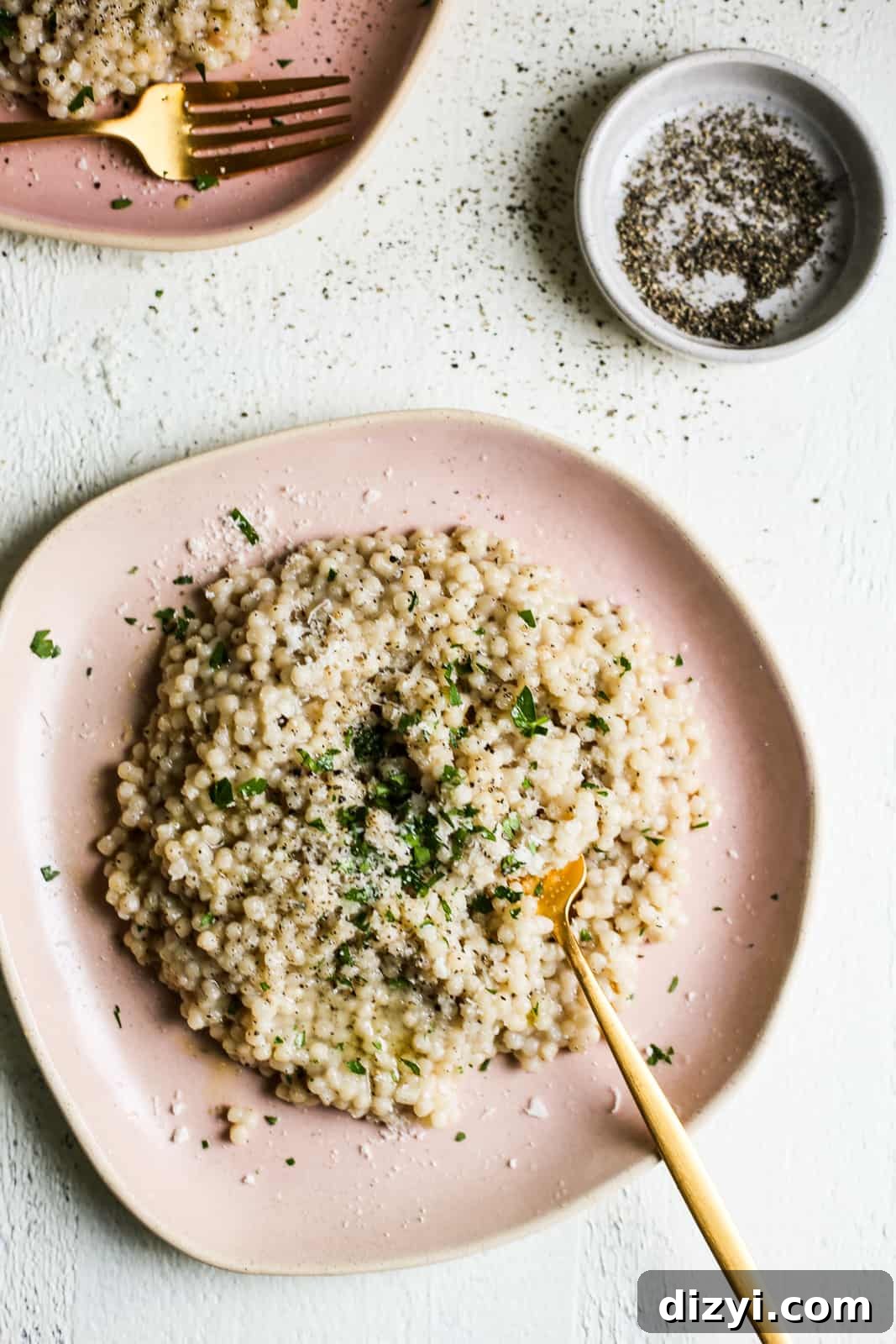
Cacio e Pepe is one of those deceptively simple dishes that delivers huge flavor with just a few ingredients. Literally translating to “cheese and pepper,” this classic Roman preparation tastes rich and creamy, even though it relies on technique rather than butter or cream. This One Pot Cacio e Pepe Israeli Couscous adapts that technique to pearl (Israeli) couscous, using the starchy cooking water and freshly grated cheese to create a silky, pepper-forward sauce in a single pot.
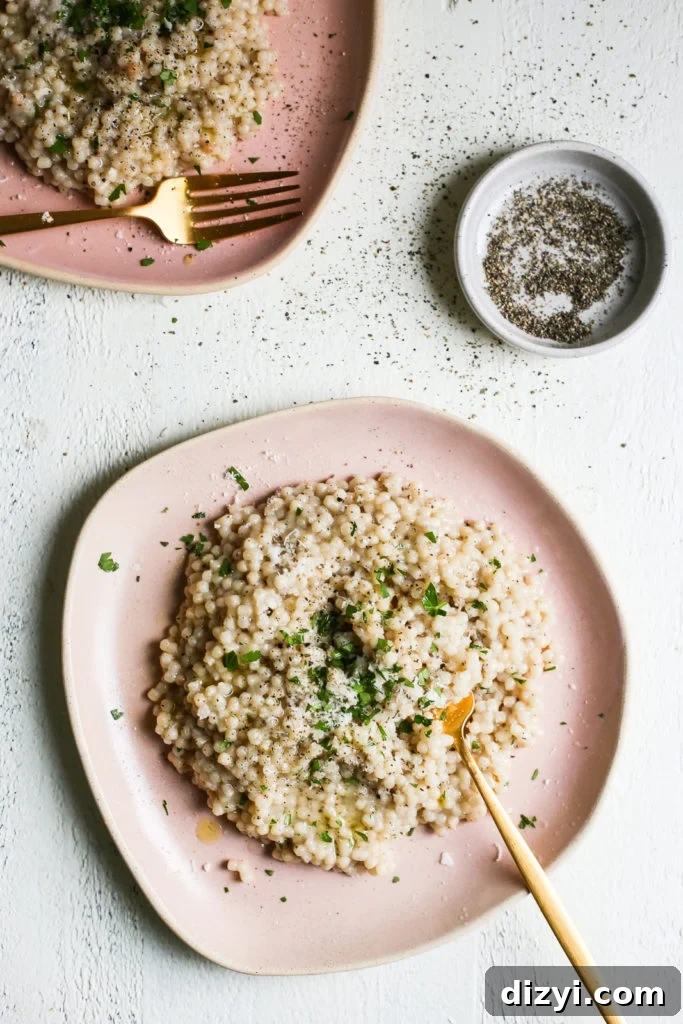
Israeli couscous, also called pearl couscous, has a tender yet slightly chewy texture that suits pan-sauced preparations exceptionally well. Because it’s made from wheat flour it is not gluten-free, but it is a satisfying vegetarian base. When cooked in measured water, the couscous releases starches that thicken the cooking liquid into a naturally creamy base—perfect for a faux cacio e pepe where grated pecorino or Parmigiano-Reggiano melts into that starchy, peppery broth.
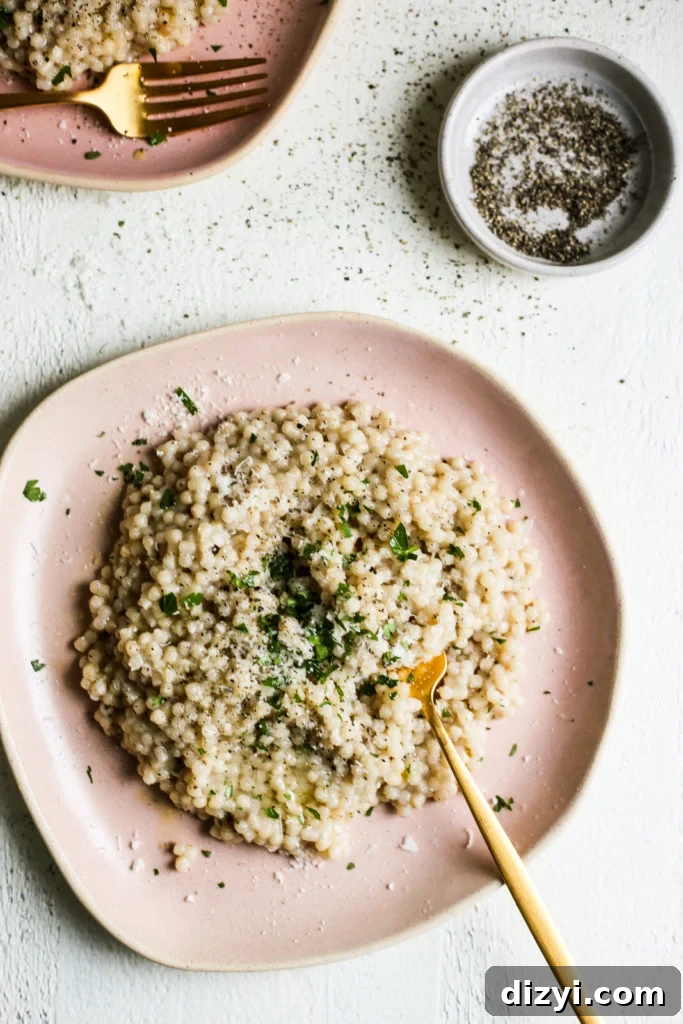
This recipe keeps the ingredient list short and focuses on timing and technique: cook the couscous until the liquid is absorbed but still a touch glossy, then quickly stir in the cheese and cracked black pepper so the cheese emulsifies into the starchy liquid instead of clumping. The result is a luscious, comforting side or light main that captures the spirit of cacio e pepe while being forgiving and weeknight-friendly.
Serve it simply as written to showcase the classic flavors, or elevate the plate by pairing it with grilled steak, roasted vegetables, seared shrimp, or scallops. A sprinkle of extra grated cheese and a few fresh turns of cracked black pepper at the table will sharpen the profile and make it feel special.
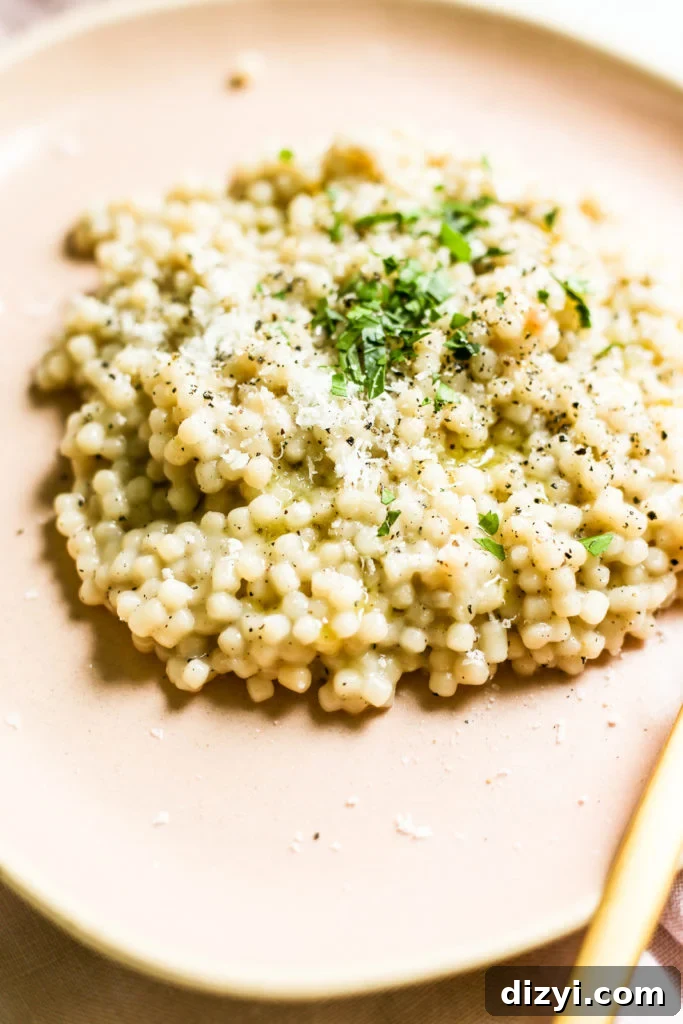
One Pot Cacio e Pepe Israeli Couscous
Prep: 10 mins • Cook: 15 mins • Total: 25 mins • Servings: 2
Ingredients
- 1 1/2 cups Israeli (pearl) couscous, uncooked
- 3 cups water
- 1 tsp kosher salt
- 1 tsp freshly cracked black pepper, plus more for serving
- 1/3 cup freshly grated pecorino (or Parmigiano-Reggiano), plus extra for topping
- 1 tsp fresh parsley, finely chopped (optional, for garnish)
Instructions
- In a medium saucepan over high heat, combine the Israeli couscous and water. Bring to a boil, then reduce the heat to a gentle simmer.
- Cook uncovered, stirring occasionally, until the couscous has absorbed most of the liquid and is tender—about 10 minutes. The cooking time can vary slightly by brand; stop when the couscous is cooked through but the surface still has a slight gloss from the starchy liquid.
- Remove the pot from the heat. Immediately season with the kosher salt and the freshly cracked black pepper. Stir thoroughly to distribute the seasoning.
- While the couscous is hot, add the grated pecorino and stir briskly until the cheese melts into the starchy cooking liquid and coats the pearls. Work quickly so the cheese emulsifies into a creamy coating rather than clumping.
- Adjust texture if needed: if the mixture seems too thick, add a tablespoon of warm water and stir to loosen. If it’s too loose, let it sit off the heat for a minute so the residual starch firms the sauce slightly.
- Serve immediately, finishing each portion with 2–3 additional turns of freshly cracked black pepper, a scatter of extra grated pecorino, and a sprinkle of chopped parsley if desired.
Tips: Use freshly grated cheese rather than pre-grated varieties—the texture and meltability are far superior. Freshly cracked pepper gives the best aroma and flavor; adjust the quantity to taste. Work while the couscous is hot so the cheese melts smoothly into the starchy liquid for a silky finish.
Nutrition & Serving Notes
Nutrition information is automatically calculated and should be used as an approximation. This dish makes an excellent vegetarian main for two or a hearty side for four when paired with protein or a salad. For a non-vegetarian option, top with seared shrimp or scallops; for more richness, finish with a drizzle of high-quality olive oil or a few toasted pine nuts.
Author & Additional Info
Author: Alex Snodgrass
Servings: 2
Like this recipe? Leave a comment below with your variations or serving ideas — we love hearing how you make it your own.