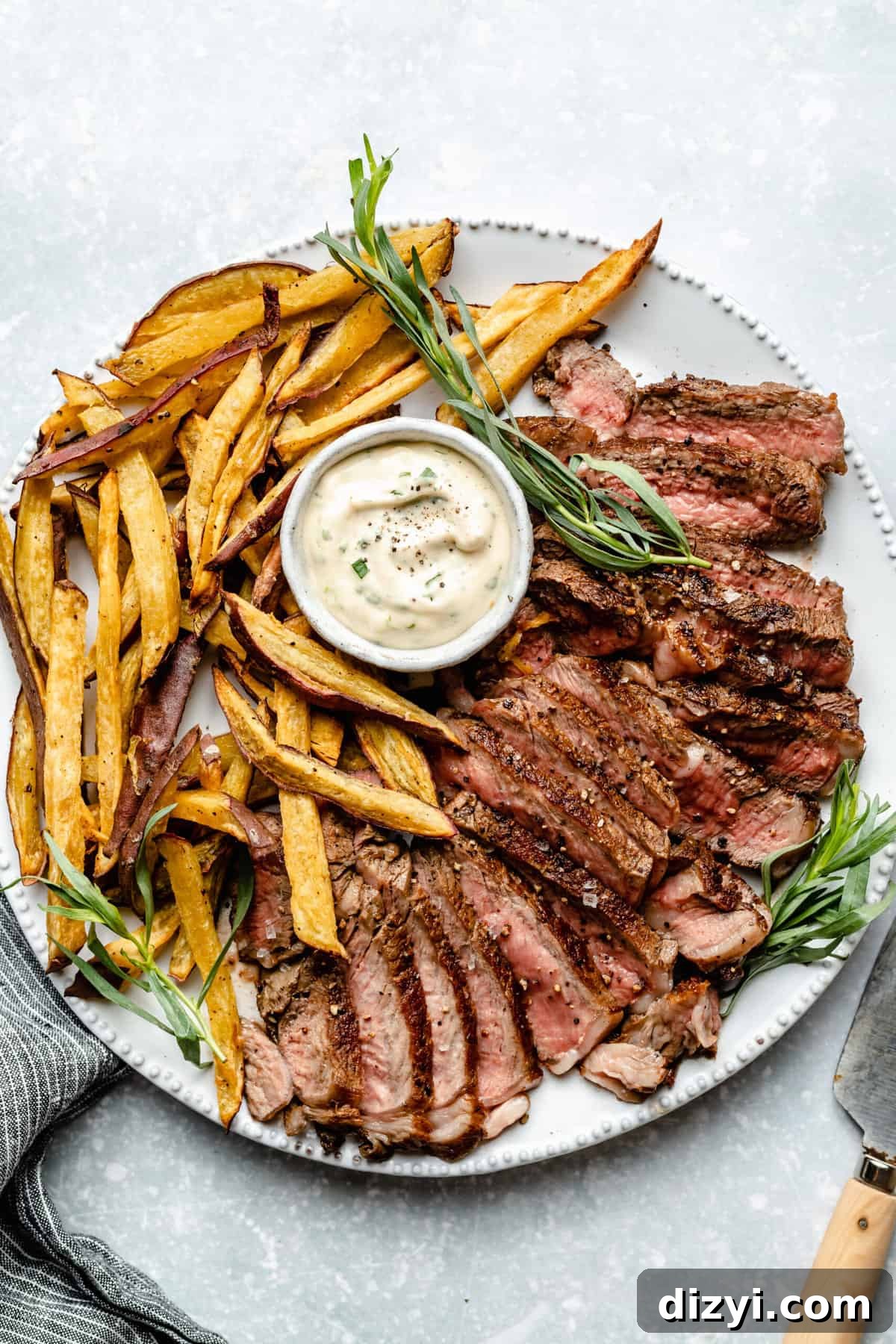
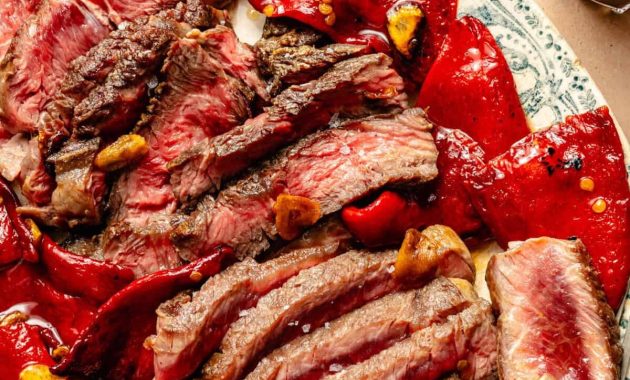
During our visit to Spain’s Basque region, piquillo peppers seemed to appear on every menu—served simply beside grilled meats or stuffed with cheese or meat. Back home in Dallas I wanted to recreate those bright, smoky-sweet flavors. The result: Basque-style roasted piquillo peppers served with a perfectly seared ribeye. It’s an elegant, unfussy dish that relies on good ingredients and straightforward technique.
We took a cooking class in San Sebastián and, although we didn’t prepare this exact plate, our instructor explained how piquillo peppers are typically treated: gently warmed, kissed with garlic and olive oil, and finished with a little acid for balance. Basque cooking values quality produce and simple preparations that let each ingredient shine—this recipe follows that philosophy.
Piquillo peppers are not the same as ordinary roasted red bell peppers. They’re smaller, more concentrated in flavor, and prized for their sweet, slightly smoky profile and firm texture. If you want an authentic result, use jarred piquillos rather than swapping in generic roasted red peppers—the difference is noticeable.
Ingredients
- Extra-virgin olive oil
- Garlic cloves, thinly sliced
- Jarred roasted piquillo peppers (drained)
- Kosher salt
- Granulated sugar
- Splash of sherry vinegar (optional)
- Thick-cut ribeye steak (1½–2 inches)
- Unsalted butter
- Fresh thyme sprigs
- Flaky salt, for finishing
- Fresh parsley, finely chopped (optional)
Step-by-Step
Step 1: Let the ribeye come to room temperature
Remove the steak from the refrigerator about 30 minutes before cooking so it cooks more evenly.
Step 2: Sauté the garlic
Set a large skillet over medium-low heat. Add a tablespoon or so of extra-virgin olive oil and the thinly sliced garlic. Cook just until the garlic becomes golden and fragrant—about 1–2 minutes—being careful not to burn it.
Step 3: Warm the peppers
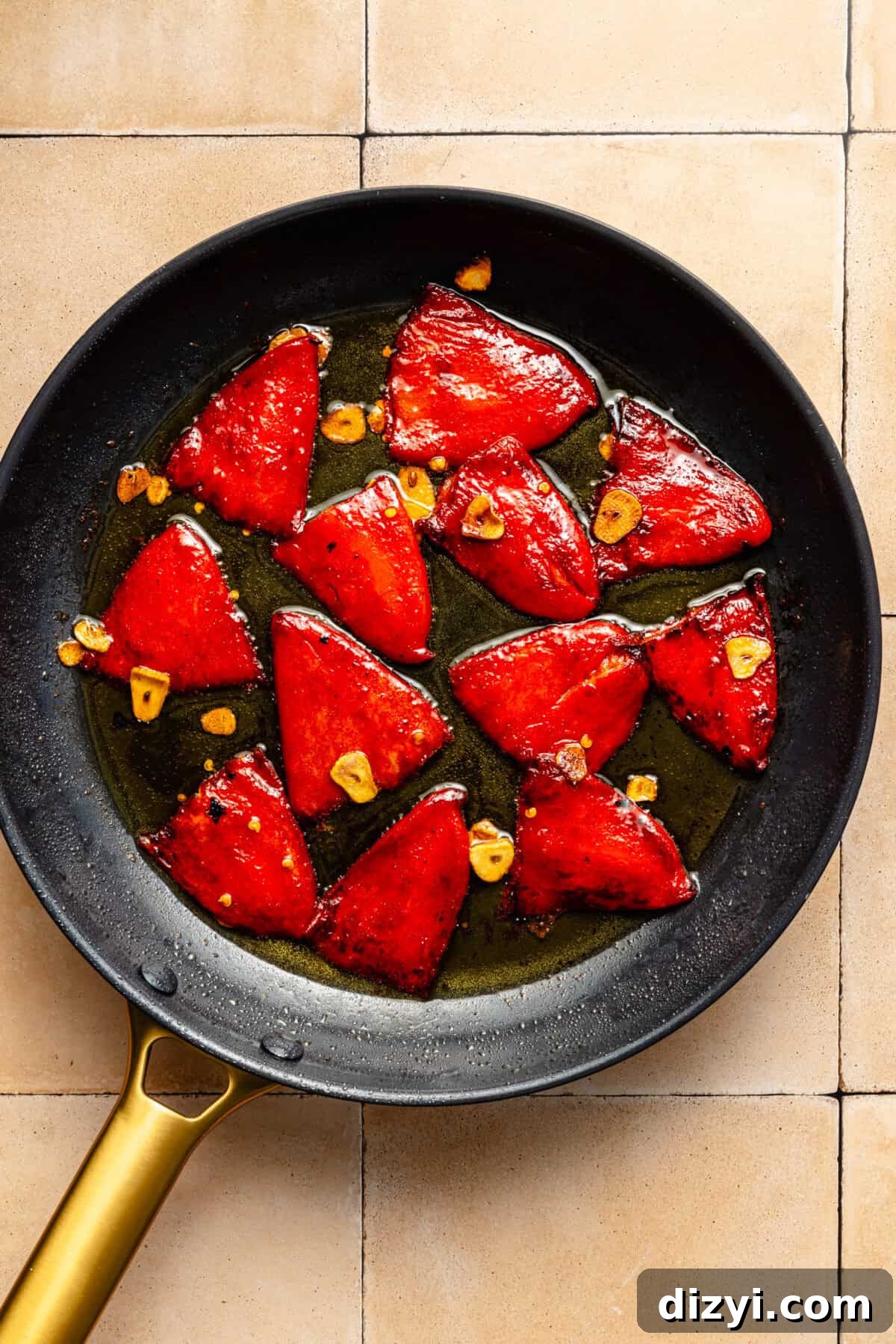
Add the drained piquillo peppers to the skillet with 1/2 teaspoon kosher salt and 1/2 teaspoon granulated sugar. Cook gently, turning the peppers once or twice, until they’re warm and lightly caramelized around the edges—about 8–10 minutes. The sugar helps develop a little color without overpowering the pepper’s natural sweetness.
Step 4: Brighten with vinegar
Just before serving, add a splash of sherry vinegar to the peppers for brightness. Reduce the heat to low and keep them warm while you cook the steak.
Step 5: Season the steak
Pat the ribeye dry with paper towels, then season generously with kosher salt and freshly ground black pepper if you like.
Step 6: Heat the skillet
Place a heavy cast-iron skillet over medium-high heat and let it get very hot. Add a little oil, then carefully lay the steak in the pan—you should hear a loud sizzle.
Step 7: Sear the steak
Sear the first side without disturbing it for 3–4 minutes, until a deep golden crust forms. Flip and sear the other side for another 3–4 minutes.
Step 8: Baste with butter and thyme
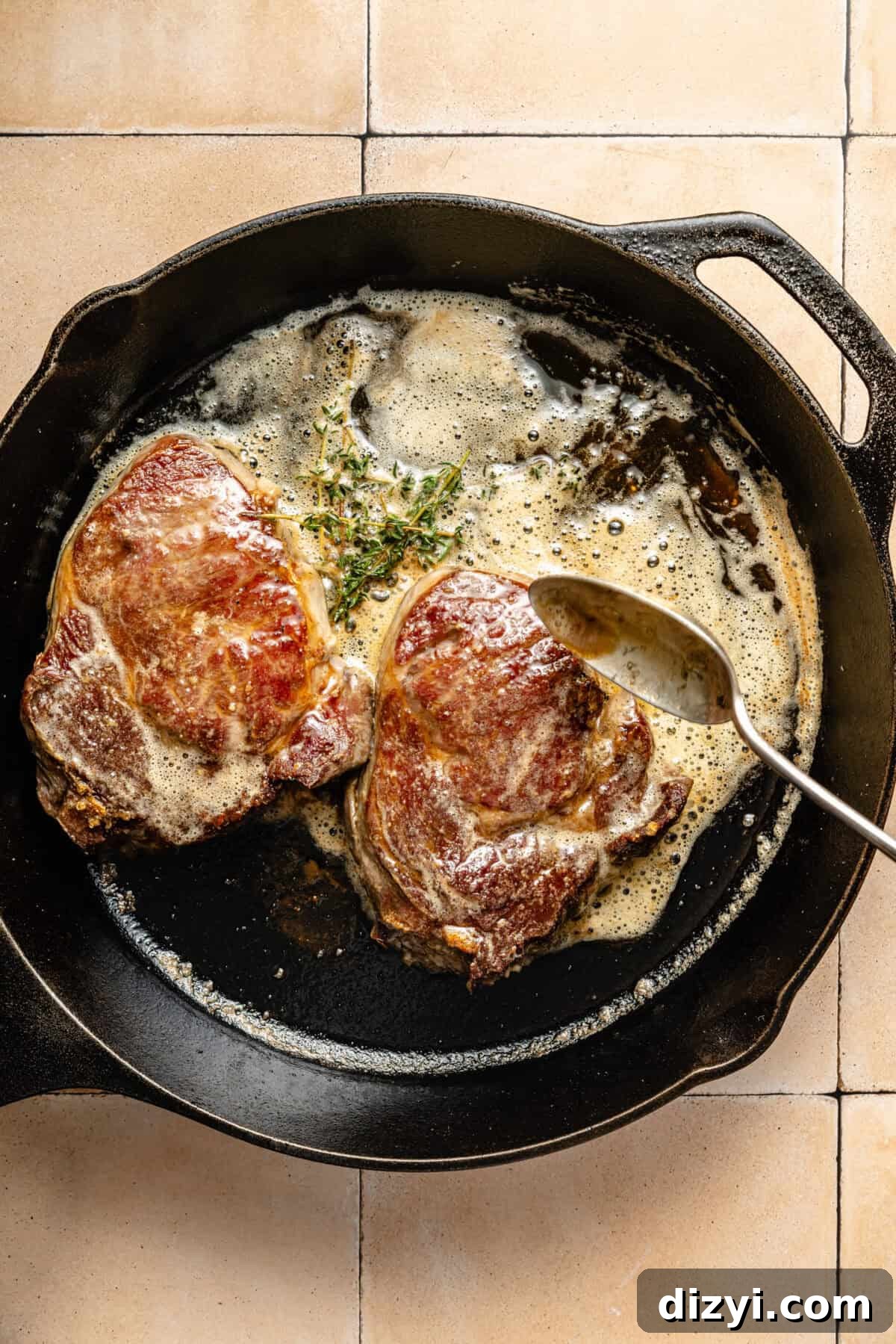
Lower the heat to medium-low and add 2 tablespoons of unsalted butter and a few sprigs of fresh thyme to the pan. As the butter foams, tilt the skillet slightly and spoon the melted butter over the steak for 1–2 minutes to baste. Continue cooking until the internal temperature reaches about 130°F for medium-rare.
Step 9: Rest the steak
Transfer the steak to a cutting board and let it rest for 10 minutes. Resting allows the juices to redistribute, keeping the meat tender and juicy.
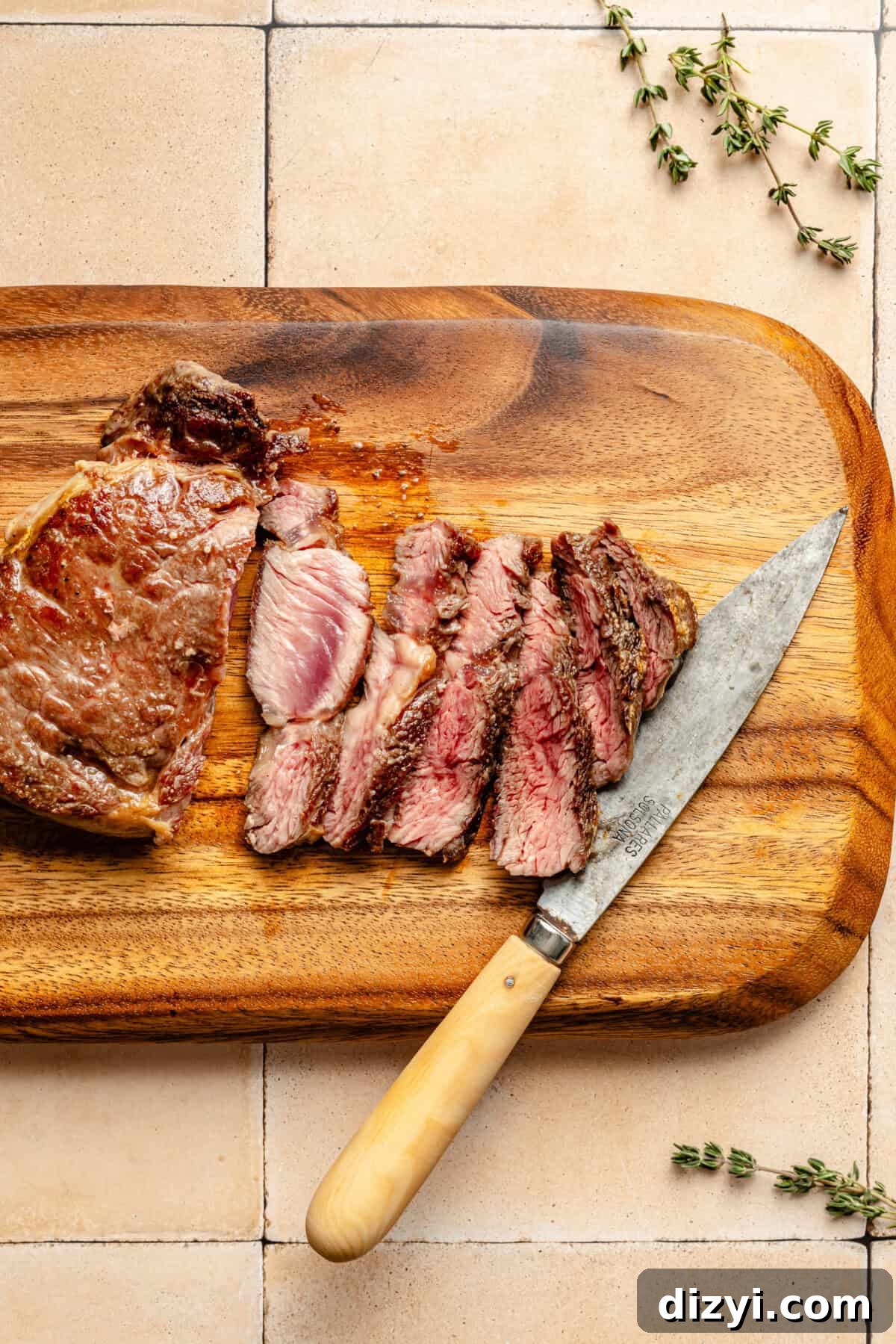
Step 10: Slice and serve
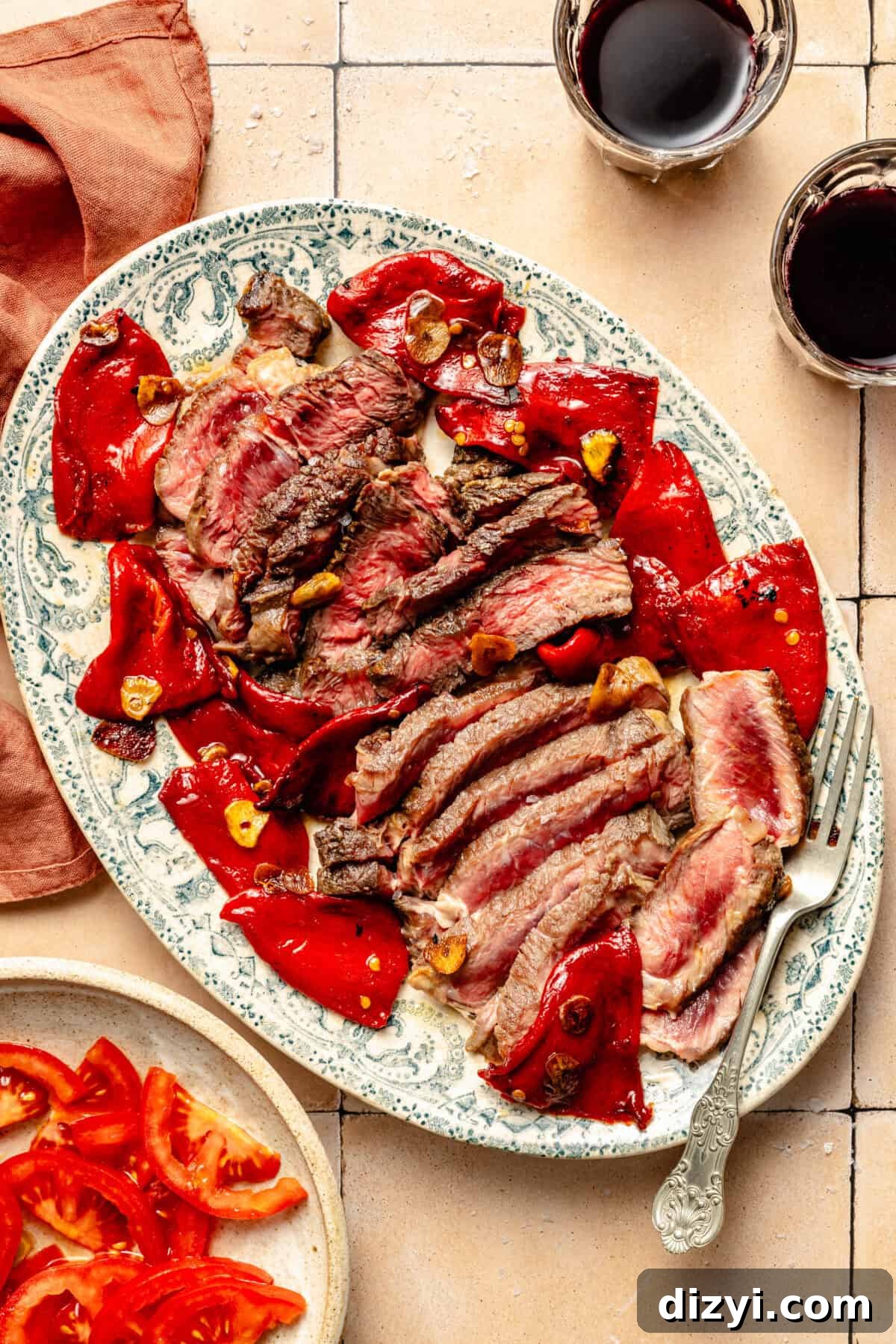
Slice the ribeye against the grain and arrange the slices on a platter. Scatter the warm Basque-style piquillo peppers around the steak, spoon some of the garlicky pepper oil over the meat, and finish with flaky salt and a sprinkle of chopped parsley if desired.
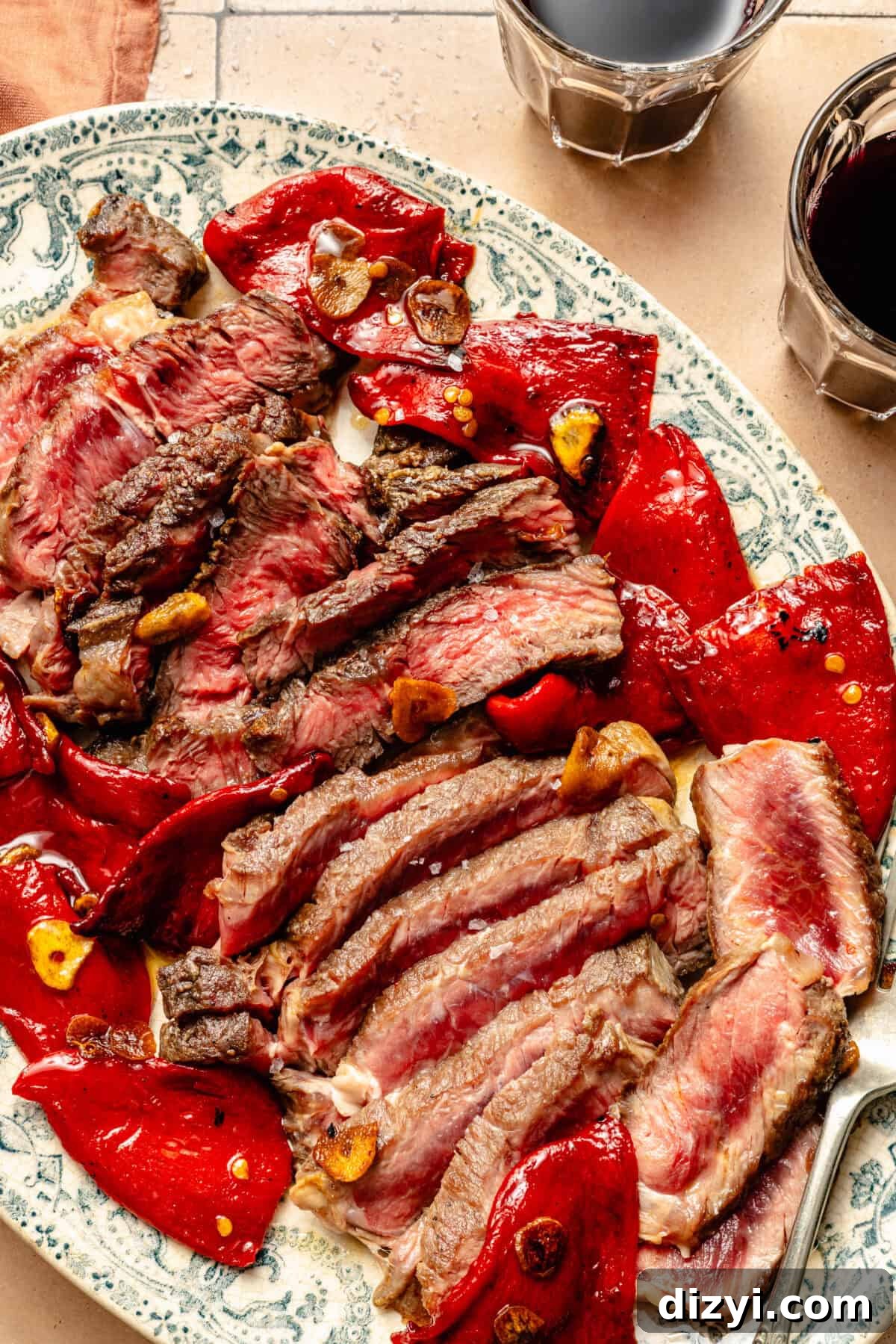
Recipe FAQs
Can I use a different cut of steak?
Yes. Cuts with good marbling—like strip steak, skirt steak, or a well-marbled chuck—work beautifully with these peppers.
Can I grill the steak instead?
Absolutely. Grill the ribeye to your preferred doneness; skip the pan-basting step if grilling to avoid flare-ups. The warm piquillos pair nicely with any preparation.
Notes & Nutrition
This recipe is built around great ingredients and simple technique. Serves about 2. Cook time is roughly 30 minutes from start to finish. Estimated nutrition per serving (approximate): 535 kcal, 23 g protein, 48 g fat, 3 g carbs. Use these numbers only as a guideline.
Food photography and styling by Eat Love Eats.
Author: Alex Snodgrass