
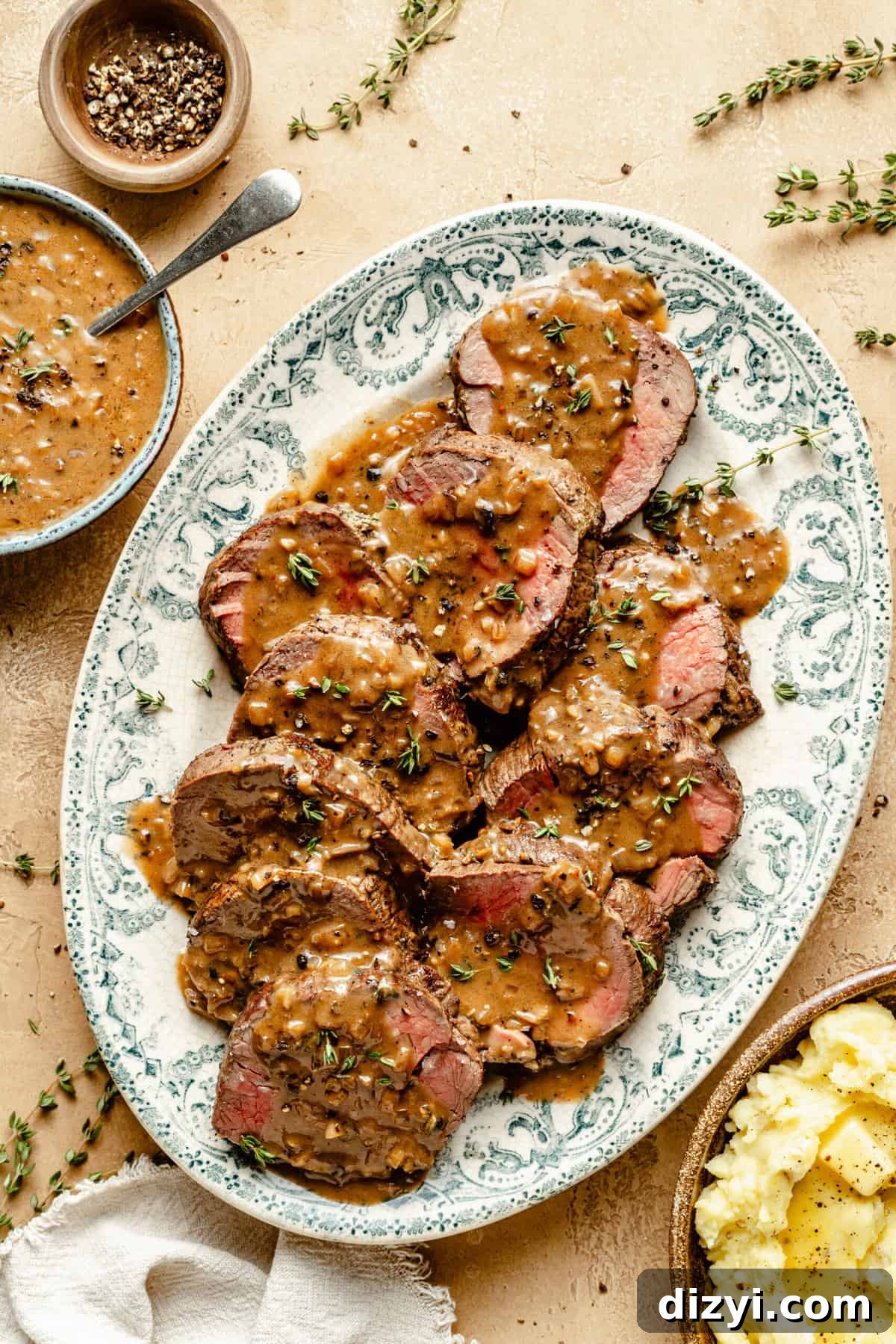
The holiday season is here, and this Thyme Crusted Beef Tenderloin Au Poivre is an elegant, crowd-pleasing main course that will impress guests without requiring hours in the kitchen. A perfectly seasoned, seared beef tenderloin finished in the oven and served with a creamy, peppery au poivre sauce makes a stunning centerpiece for any festive dinner.
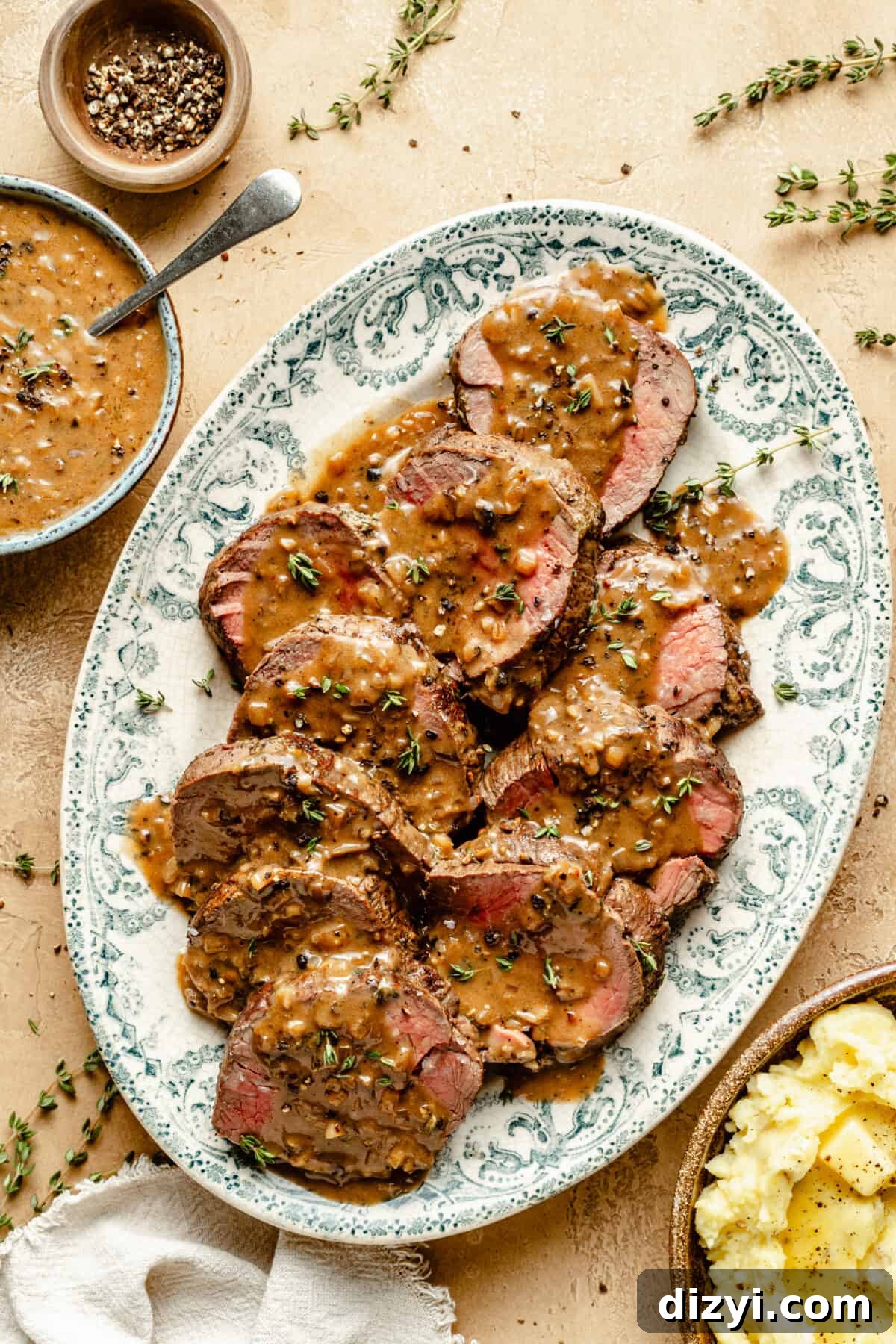
This recipe uses a small list of high-impact ingredients—olive oil, Dijon, fresh thyme, coarse pepper, and a splash of white wine—to build bright, savory flavors. The tenderloin itself is simple to prepare: tie if needed, season, sear in an oven-safe skillet to develop a golden crust, then roast until the internal temperature reaches your preferred doneness. While the meat rests, the au poivre comes together quickly on the stovetop: shallot and garlic are softened in butter, then combined with mustard, sherry vinegar, broth and coconut milk for a rich, slightly tangy sauce finished with crushed peppercorns and thyme.
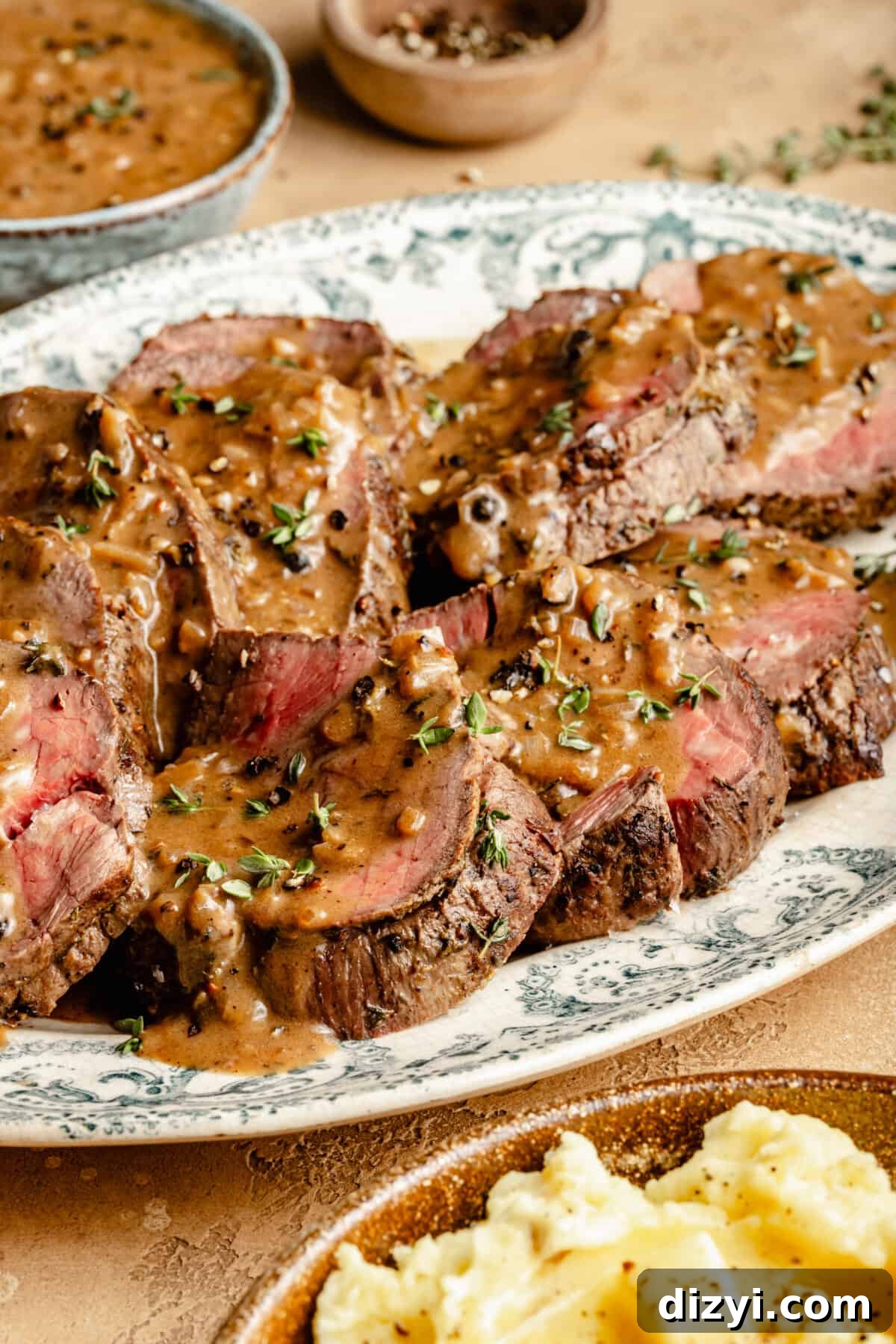
Thyme Crusted Beef Tenderloin Au Poivre — Ingredients
- For the herb mixture:
- 1 tablespoon extra-virgin olive oil
- 1 tablespoon Dijon mustard
- 2 tablespoons fresh thyme leaves, roughly chopped
- For the beef tenderloin:
- 4 lb beef tenderloin, trimmed
- Kitchen twine (to tie the tenderloin into an even shape)
- 3 teaspoons kosher salt
- 2 teaspoons coarse black pepper
- 2 tablespoons olive oil for searing
- 1/4 cup dry white wine
- For the au poivre sauce:
- 2 tablespoons butter (or vegan butter for dairy-free)
- 3/4 cup minced shallot
- 4 garlic cloves, minced
- 1 tablespoon Dijon mustard
- 2 tablespoons sherry vinegar
- 1/2 cup low-sodium beef broth
- 1 cup unsweetened full-fat coconut milk
- 2 teaspoons finely chopped fresh thyme, plus extra for garnish
- 1 teaspoon black peppercorns, crushed
Step-by-Step Instructions
1. Make the herb mixture
In a small bowl, whisk together the olive oil, Dijon mustard, and the roughly chopped fresh thyme. Set aside so the flavors meld while you prepare the tenderloin.
2. Prepare the beef tenderloin
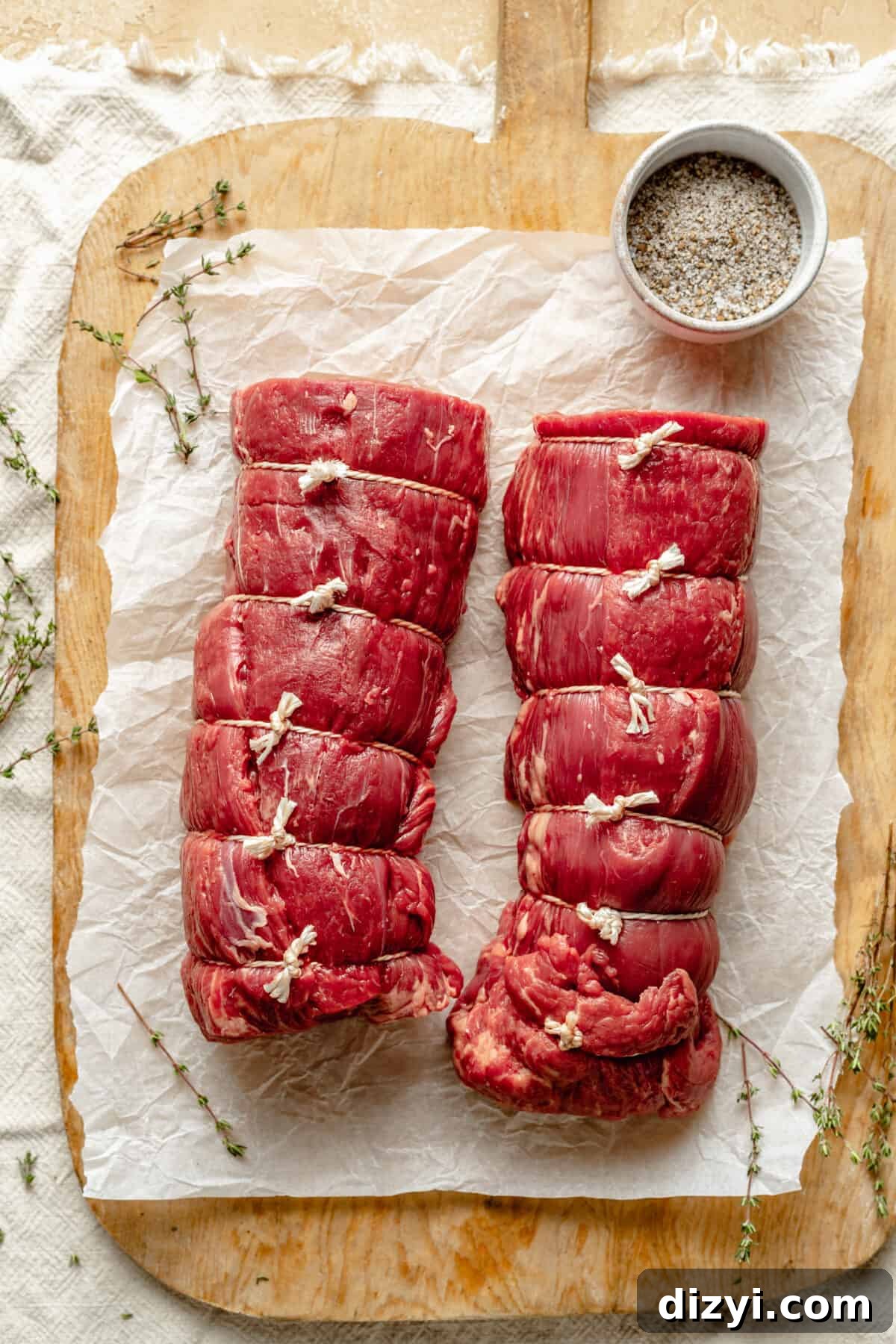
Preheat the oven to 425°F (220°C). If your tenderloin is long, cut it crosswise into two shorter pieces so it fits comfortably in your skillet. If the tenderloin is tapered at one end, use kitchen twine to tie it at roughly two-inch intervals to create a uniform thickness; this promotes even cooking.
3. Season and sear
Pat the tenderloin dry with paper towels and rub all over with kosher salt and coarse black pepper. Heat a large, oven-safe skillet over medium-high heat and add the olive oil. When the oil shimmers, carefully add one tenderloin piece and brown on each side for about 2–3 minutes per side, until a deep golden crust forms. Remove and brown the second piece. When both are seared, turn off the heat.
4. Brush with herb mixture and add wine
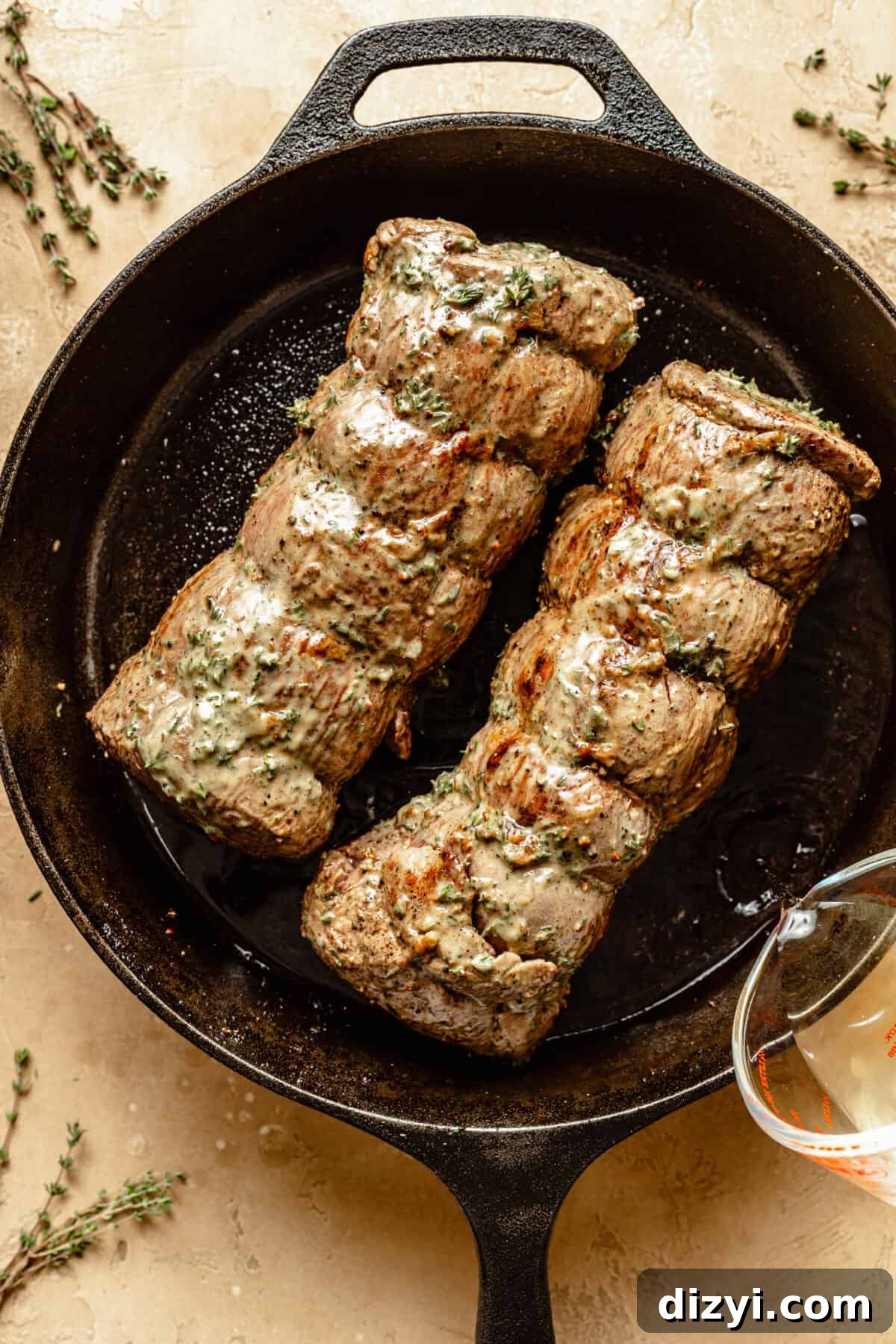
Use a pastry brush to coat all sides of each tenderloin piece with the herb mixture. Return the tenderloins to the skillet and pour 1/4 cup of dry white wine into the pan around the meat.
5. Roast to desired doneness
Transfer the skillet to the preheated oven and roast for 18–25 minutes, flipping the tenderloins once about halfway through cooking. The exact time will depend on thickness and your target internal temperature. Remove the skillet when the thermometer reads your preferred temperature, then transfer the meat to a cutting board and let it rest for 10 minutes before slicing. Resting allows juices to redistribute and yields a juicier result.
6. Make the au poivre sauce while the meat rests
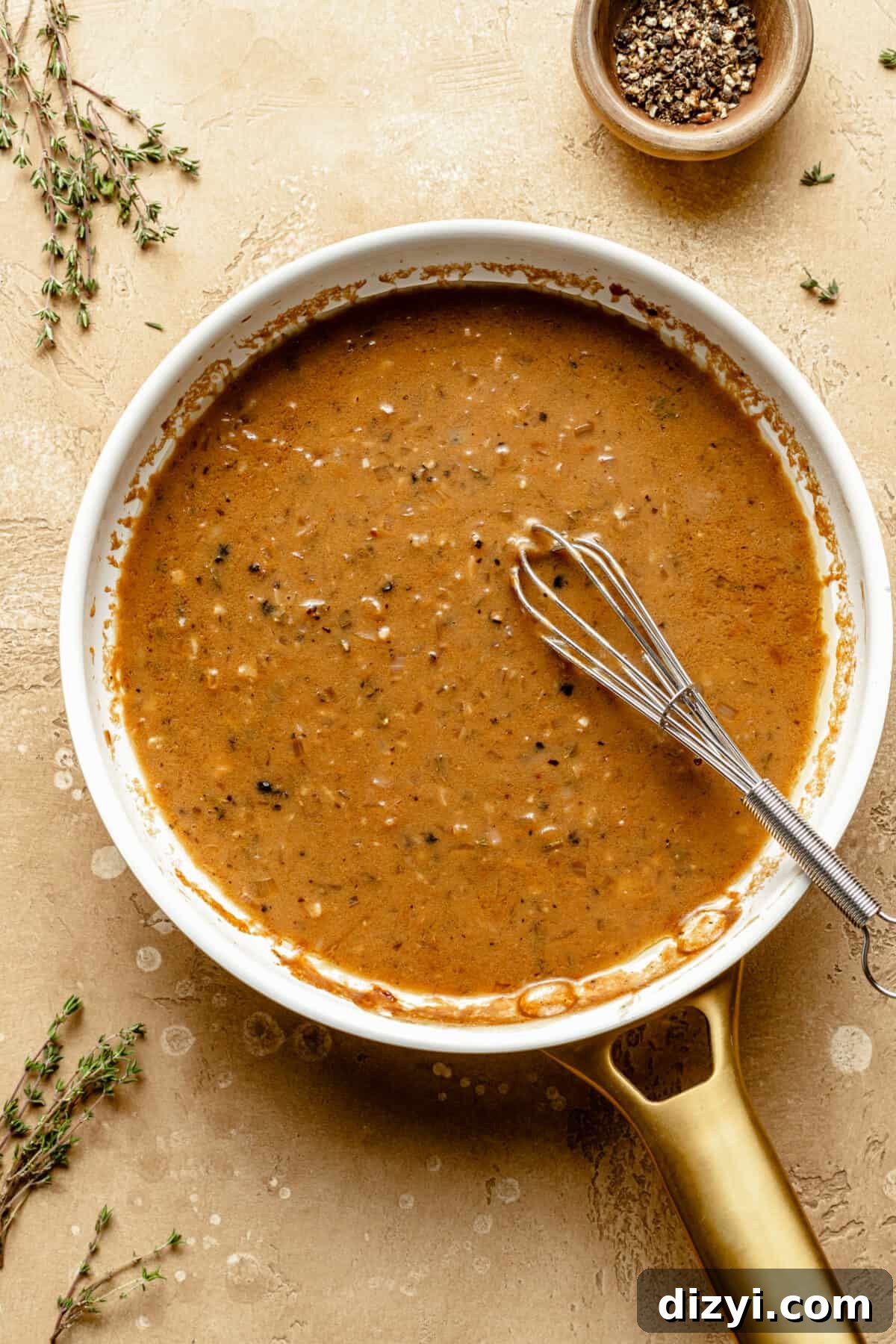
Place a small saucepan over medium heat and melt the butter. Add the minced shallot and garlic and cook, stirring often, until the shallot softens, about 1–2 minutes. Stir in the Dijon mustard, sherry vinegar, and beef broth, and bring to a rapid simmer. Whisk in the coconut milk, chopped thyme, and the crushed peppercorns. Reduce the heat to maintain a gentle simmer and whisk frequently until the sauce reduces by about half and thickens to the consistency of an Alfredo-style sauce, roughly 6–9 minutes. Taste and adjust seasoning if needed.
7. Slice and serve
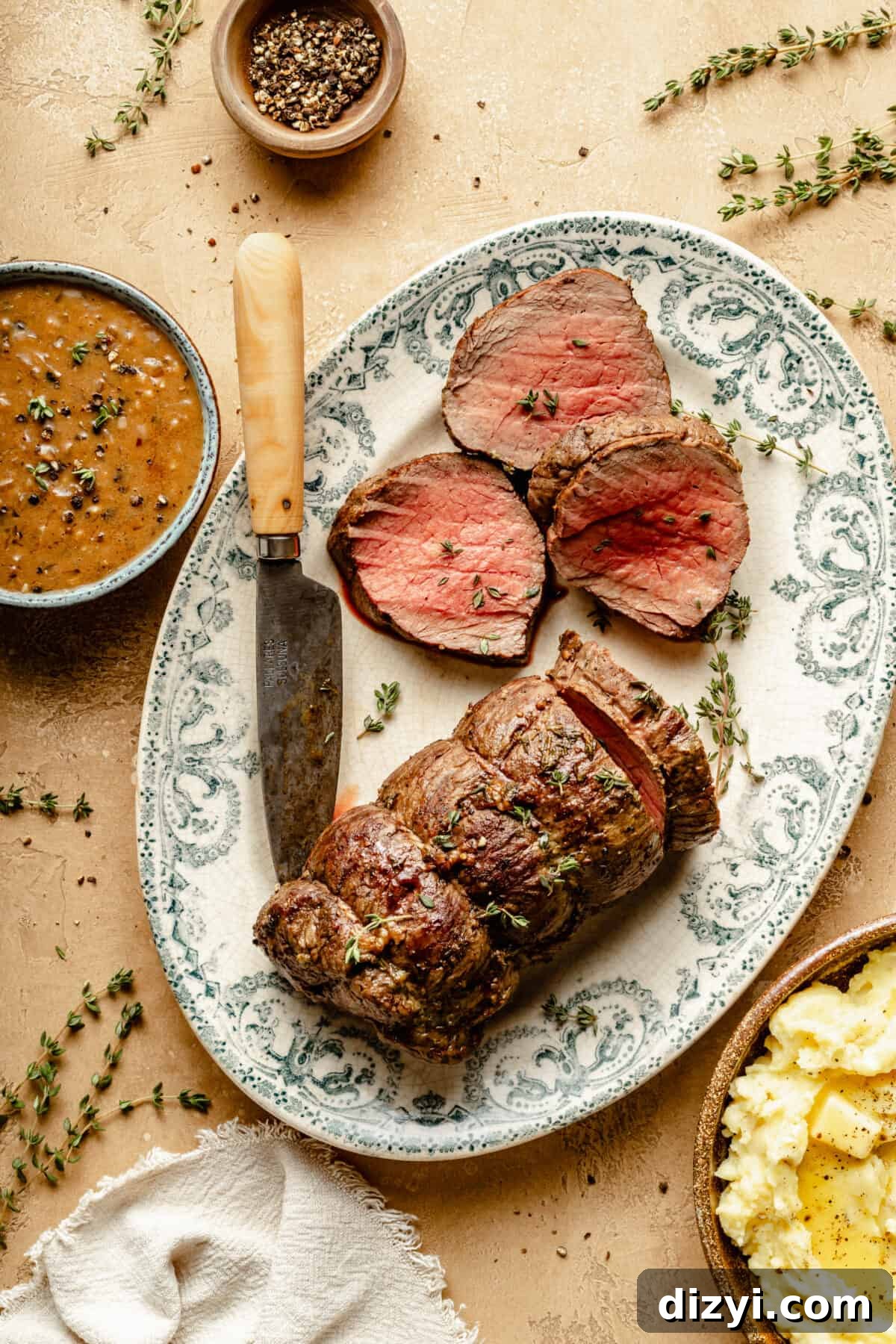
Slice the rested tenderloin into medallions, arrange on a warmed platter, and spoon the au poivre sauce alongside or over the slices. Garnish with extra fresh thyme leaves for color and aroma. Serve immediately so guests can enjoy the contrast of the seared crust, tender interior, and creamy pepper sauce.
Recipe FAQs
What white wine should I use? Use any dry white wine that isn’t sweet; Sauvignon Blanc or a dry Pinot Grigio work well.
Why tie the tenderloin with kitchen twine? A tenderloin tapers at one end and can cook unevenly. Tying it into a uniform shape helps the meat roast evenly and creates a consistent crust.
How do I crush peppercorns? Place peppercorns in a resealable plastic bag and gently crush them with the back of a spoon, a rolling pin, or a meat mallet. Leave some larger pieces for texture and flavor.
How do I know when the tenderloin is done? Use an instant-read thermometer for accuracy. A general internal temperature guide: Rare 125°F, Medium-Rare 135°F, Medium 145°F, Medium-Well 155°F. Remember the meat will rise a few degrees while resting.
Notes
Beef tenderloin note: Because the tenderloin is naturally uneven, tying it at two-inch intervals produces a more uniform roast. Some butchers will trim and tie the tenderloin for you—ask when purchasing.
Crushed peppercorns: Aim for a mix of coarse and slightly crushed pieces rather than a fine powder to retain texture and avoid a harsh, overly spicy sauce.
Temperature scale
- Rare: 125°F
- Medium-Rare: 135°F
- Medium: 145°F
- Medium-Well: 155°F
I hope this Thyme Crusted Beef Tenderloin Au Poivre becomes a holiday favorite at your table—it’s impressive, flavorful, and surprisingly straightforward to prepare. Enjoy the celebration and the delicious meal!
Photography and styling by Eat Love Eats.