
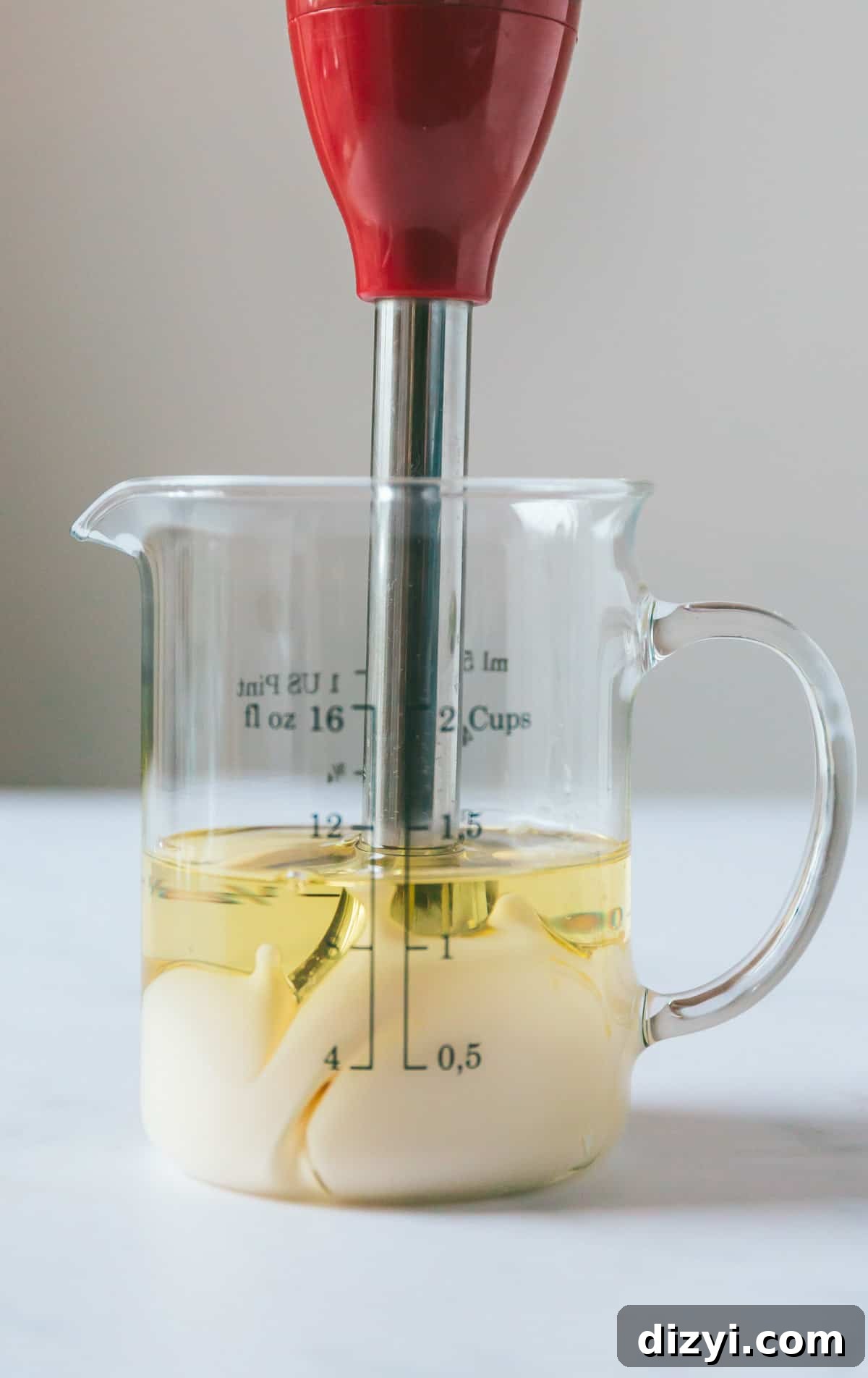
Let’s talk about homemade mayonnaise. It’s become a staple in my kitchen — and once you try making your own, it will likely become one in yours too. I wasn’t always a mayonnaise person, but using fresh, homemade mayo as a base for dressings, spreads, and sauces completely changed my mind. Don’t be intimidated: this is an easy, five-ingredient recipe that takes about five minutes of active time and yields rich, creamy homemade mayo you can customize any way you like.
Making mayonnaise at home opens up many possibilities. It’s simple to make, economical, and lets you control the ingredients and flavor. Below are practical uses and a few creative ideas for turning this basic mayonnaise into something special:
- Mix into tuna or chicken salads for quick, satisfying lunches.
- Use as the base for salad dressings—Ranch or Caesar-style dressings start with mayo.
- Turn it into an aioli by adding garlic, lemon, or spices. Aioli is great as a dip for roasted fries, a sauce for grilled vegetables, or as a creamy drizzle over tacos.
- Make a quick tartar-style sauce by folding in chopped pickles, capers, and a squeeze of lemon to elevate pan-fried or roasted fish.
The basic homemade mayo recipe below gives you a neutral, silky mayonnaise that you can leave plain or season to taste. If you want flavored spreads, blend in garlic, mustard, lemon, herbs, smoked paprika, or chipotle to suit the dish.
Homemade Mayo
Ingredients
- 1 cup avocado oil or another light-flavored oil
- 1 large egg, at room temperature
Optional for a flavored mayo or spread
- 1 garlic clove, minced
- 1 teaspoon freshly squeezed lemon juice
- 2 teaspoons mustard powder (or 1 teaspoon prepared mustard)
- Kosher salt, to taste
Instructions
Immersion Blender Method
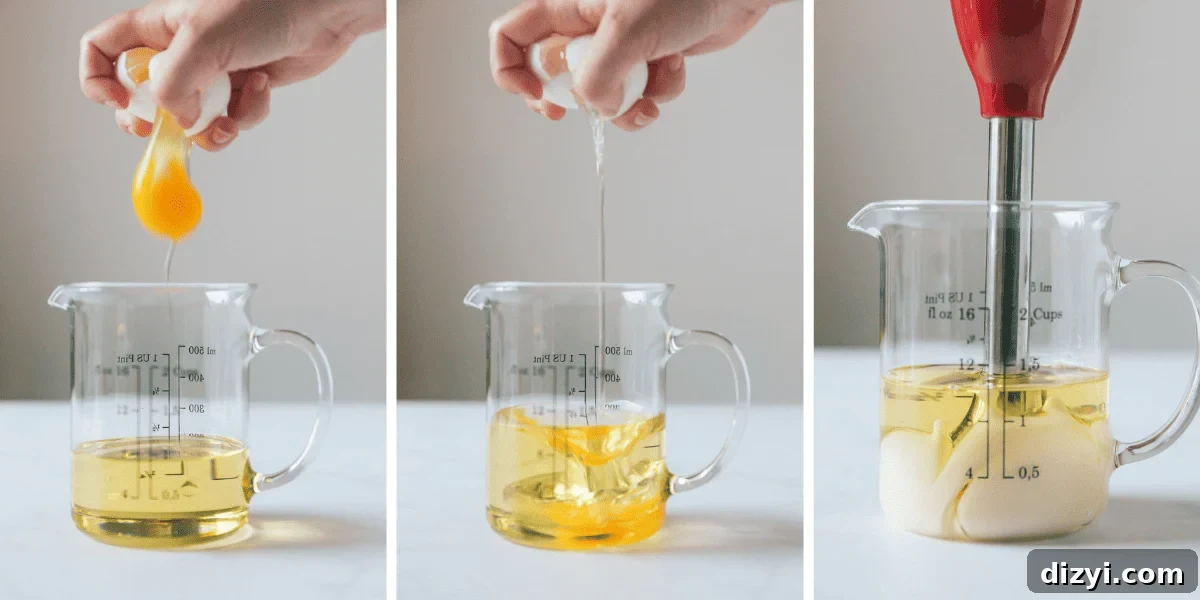
- Pour the oil into a wide-mouth glass jar. The opening should be slightly wider than the head of your immersion blender.
- Crack the egg into the oil and let it settle to the bottom of the jar. Position the immersion blender so the blade sits directly over the egg yolk.
- Turn the immersion blender on low and hold it steady. Within about 10 seconds the bottom of the jar will begin to thicken into a creamy emulsion.
- Once you see the emulsion form, slowly lift the blender and move it up and down to incorporate the oil above the mayo, gradually working your way to the top until the entire jar is emulsified.
- Use this plain base as-is for dressings, or stir in the optional ingredients (garlic, lemon, mustard, salt) to turn it into a classic mayonnaise spread or flavored aioli.
Food Processor or Blender Method
- If your egg is cold, place it briefly in warm water to bring it to room temperature. A room-temperature egg is important for successful emulsification.
- Combine the room-temperature egg, mustard powder, kosher salt, and 1/4 cup of the oil in a food processor or blender. Blend until well combined.
- With the motor running, very slowly drizzle in the remaining 3/4 cup of oil in a thin, steady stream. The slower you add the oil, the thicker and more stable the mayonnaise will be. Pour too quickly and the mixture may fail to emulsify.
- When the mayonnaise is thick and fluffy, squeeze in the lemon juice and pulse once or twice to combine. Adjust seasoning to taste.
Tips and Safety
For best results, use a room-temperature egg and a neutral-tasting oil such as avocado, light olive oil, or grapeseed oil. If you have concerns about raw egg, use a pasteurized egg or pasteurized egg product. Homemade mayonnaise is fresh and flavorful, but because it contains raw egg it should be refrigerated and used within about one week. Always store in a clean, airtight container.
Nutrition information is an approximation and will vary depending on the exact ingredients used.
Additional Info
Author: Alex Snodgrass