
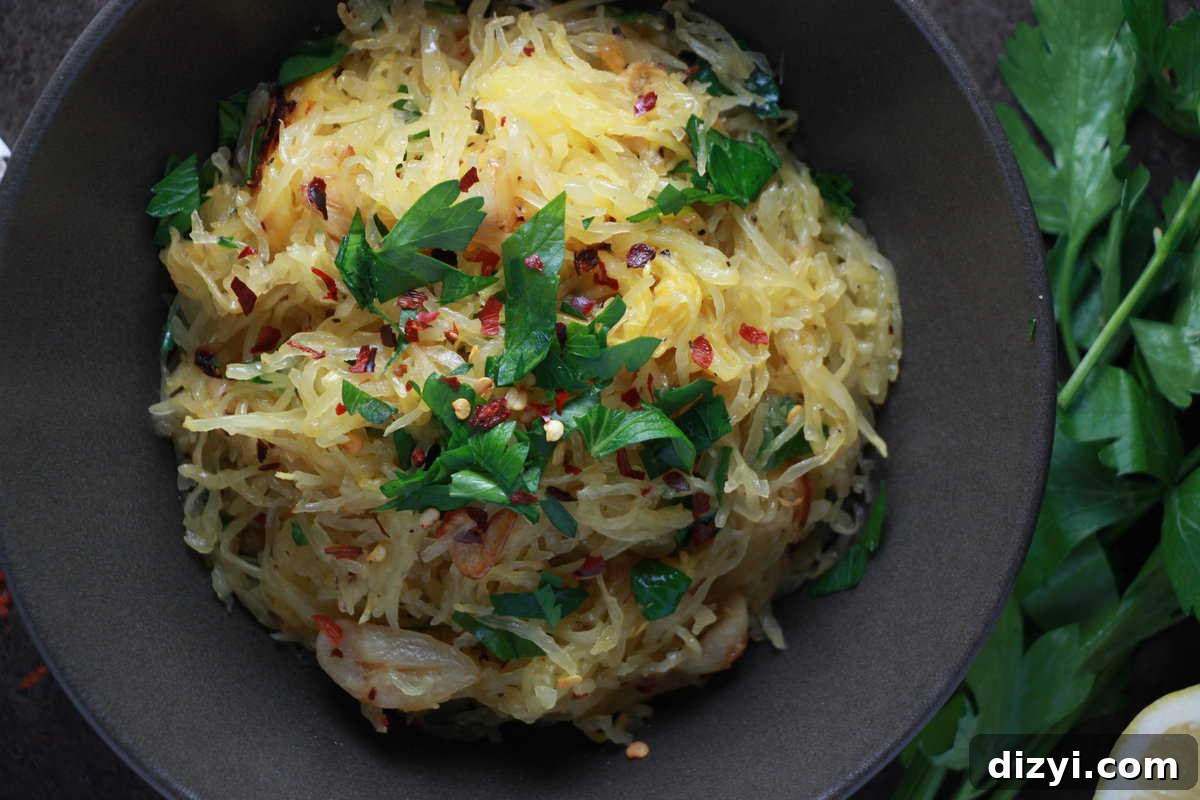
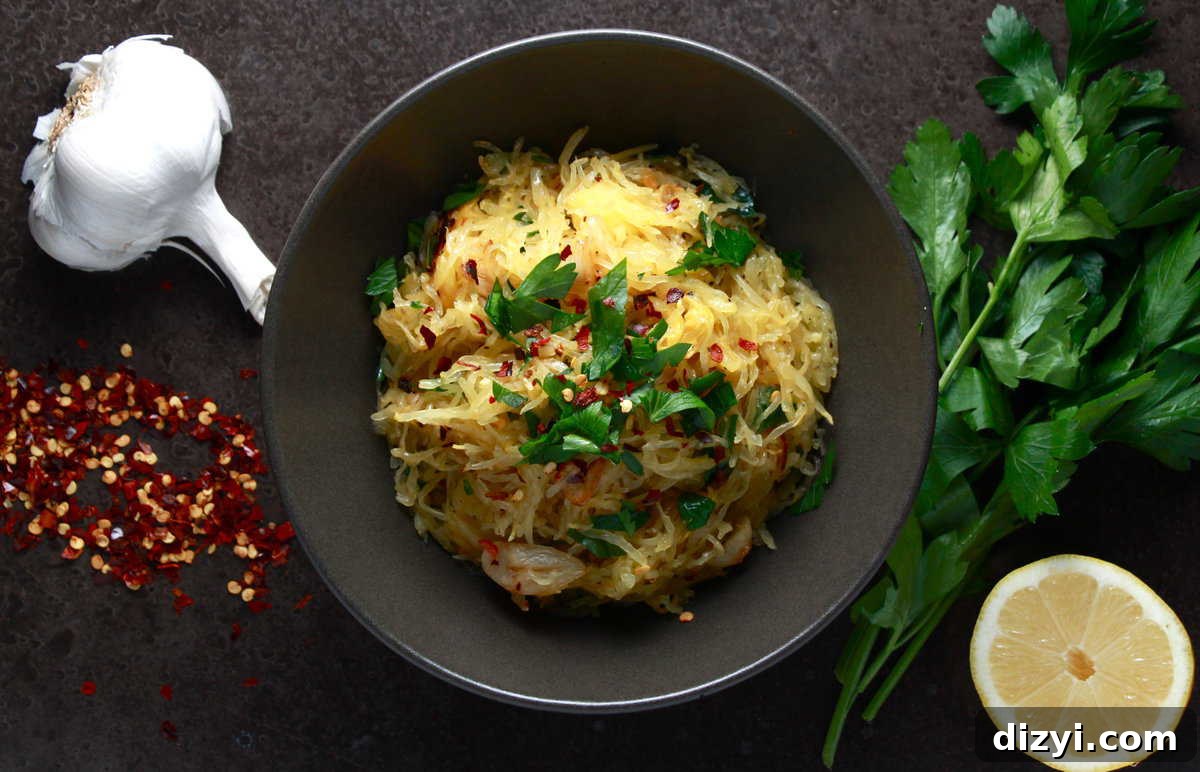
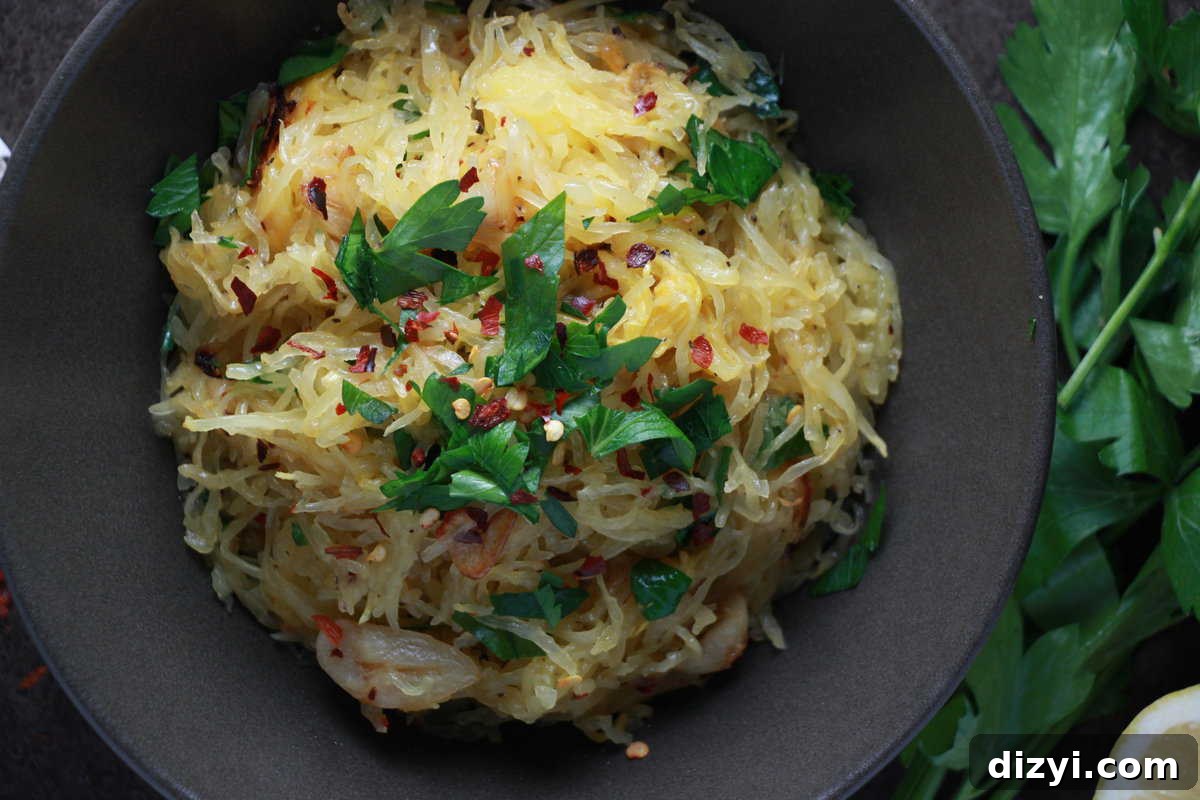
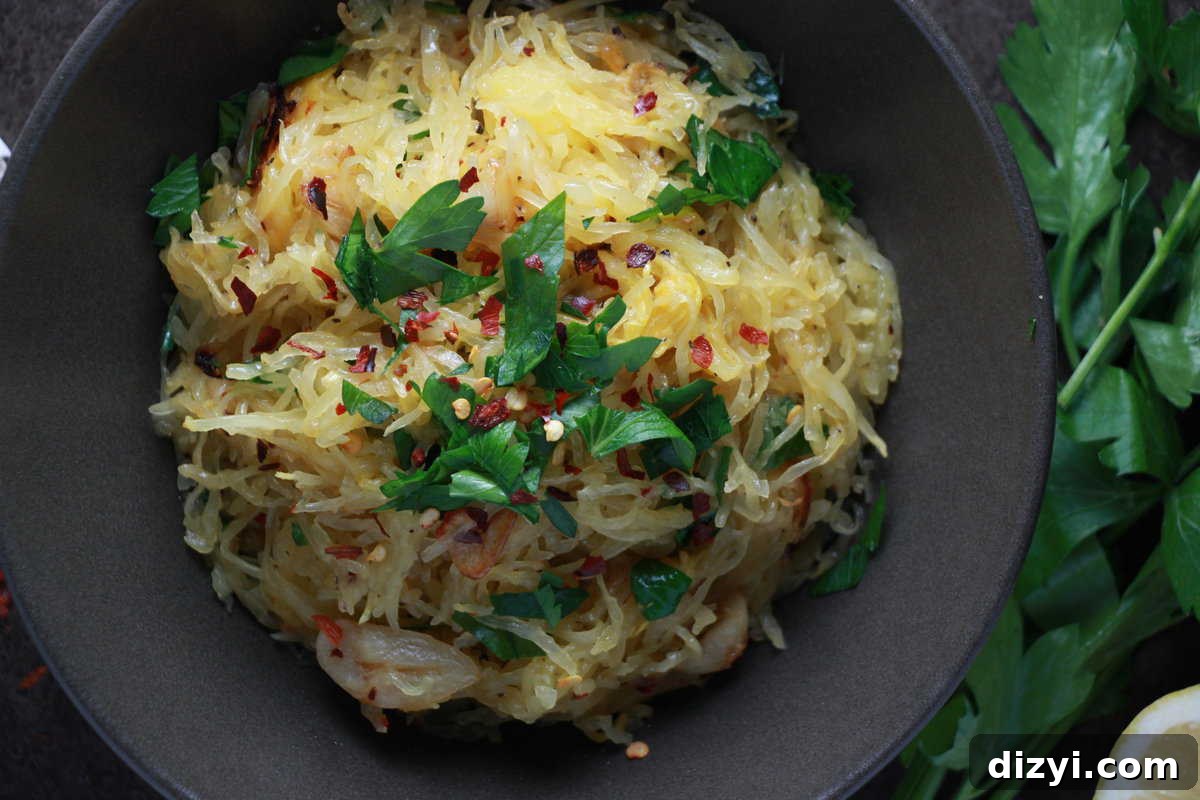
 Spaghetti Aglio e Olio—one of the simplest and most beloved pasta dishes, based on garlic and olive oil—has been reimagined here using spaghetti squash. This lighter, vegetable-forward take captures all the comforting flavors of the classic: a fragrant garlic-infused olive oil, a touch of heat from crushed red pepper, and bright freshness from chopped parsley. Though the ingredient list is short, the result is deeply satisfying: delicate strands of roasted squash coated in silky garlic oil that taste far more complex than their few components would suggest.
If you follow a Whole30 or simply prefer to limit grain-based pasta, spaghetti squash is an excellent stand-in. When roasted and shredded, its strands resemble long pasta and soak up the infused oil and seasonings beautifully. This version works well as a stand-alone main for one, or as a flavorful side to accompany seared fish, grilled chicken, or a simply cooked steak. It’s quick to prepare, uses pantry staples, and highlights the importance of gently toasting garlic so it imparts flavor without turning bitter.
Below you’ll find a straightforward recipe for Spaghetti Squash Aglio e Olio, followed by tips for roasting squash, variations to change the dish up, serving suggestions, and storage advice to keep leftovers tasting fresh.
- 2 cups packed roasted spaghetti squash (or 1 small spaghetti squash)
- 3 tablespoons extra virgin olive oil
- 4–5 large garlic cloves, very thinly sliced
- 1/4 teaspoon crushed red pepper (adjust to taste)
- 2 heaping tablespoons fresh parsley, finely chopped
- Salt and freshly ground black pepper, to taste
- Heat the olive oil in a skillet over medium-low heat. When the oil shimmers, add the thinly sliced garlic and crushed red pepper. Cook gently, stirring often, until the garlic softens and turns a light golden color—about one to two minutes. Watch closely to avoid browning, which can make garlic taste bitter.
- Add the roasted spaghetti squash to the pan. Season with salt and pepper, add the chopped parsley, and toss carefully so the squash strands are evenly coated in the garlic oil.
- Taste and adjust seasoning. Serve immediately with additional parsley and a pinch of crushed red pepper if desired. As a side this recipe serves two; as a main, it serves one.
Tips for Roasting Spaghetti Squash
To make the best spaghetti squash for this recipe, cut the squash in half lengthwise, scoop out the seeds, and roast cut-side down on a baking sheet until tender. Baking times vary with size, but a small squash typically takes about 30–45 minutes at 400°F (200°C). Once roasted and cooled slightly, use a fork to scrape the flesh into long strands. You can roast the squash ahead of time and store it refrigerated for a couple of days, which makes assembly fast when you’re ready to cook.
Variations and Add-Ins
- Add protein: Toss in cooked shrimp, sliced chicken, or pan-seared tofu for a heartier main.
- Brighten the dish: Finish with a squeeze of lemon juice or a small amount of lemon zest for freshness.
- Extra texture: Sprinkle toasted breadcrumbs or chopped toasted nuts for crunch.
- Herb swaps: Try basil or cilantro in place of parsley to change the flavor profile.
- Make it cheesy: If not following Whole30, a grating of Parmesan or Pecorino adds savory richness.
Serving Suggestions
This spaghetti squash version of Aglio e Olio pairs beautifully with simply prepared proteins and roasted vegetables. For a light dinner, serve alongside grilled fish or a green salad. For a more substantial plate, add a portion of roasted chicken or crispy pan-seared tofu. The mild, garlicky flavors complement many mains without overpowering them.
Storage and Reheating
Store any leftovers in an airtight container in the refrigerator for up to 2–3 days. When reheating, warm gently in a skillet over low heat to preserve the texture of the squash and prevent the garlic from overheating. Add a splash of olive oil or a little water if the squash seems dry.
Final Notes
Spaghetti Squash Aglio e Olio delivers the essential comfort of garlic-and-oil pasta with fewer carbs and a bright, vegetable-forward profile. Minimal ingredients highlight technique—especially the gentle cooking of the garlic—so take care in that step and you’ll be rewarded with a simple, elegant dish that’s quick to prepare and full of flavor. Enjoy this versatile recipe as a quick weeknight supper or as a flavorful side that complements many proteins and salads.