
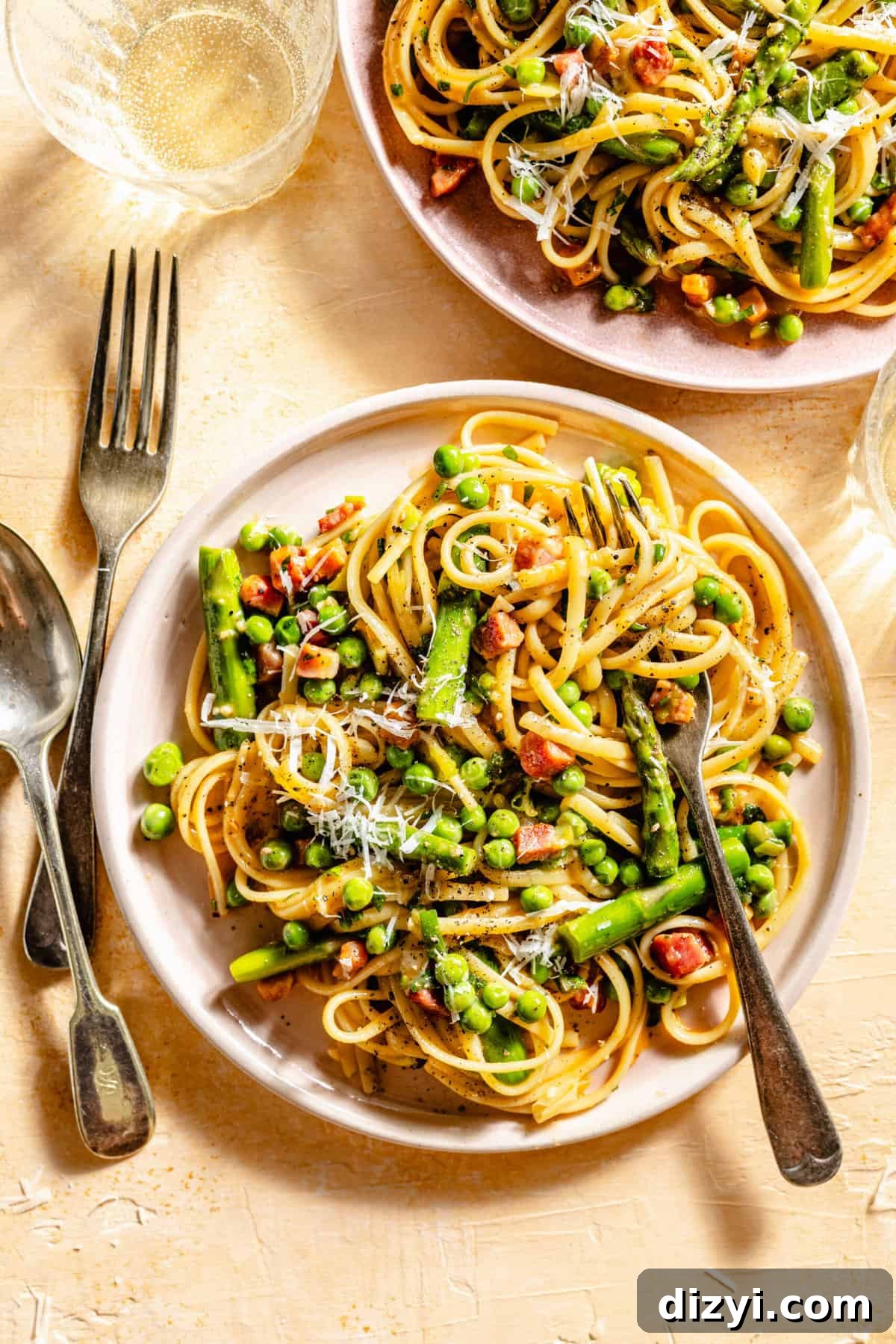
Spring Spaghetti Carbonara is what pasta dreams are made of: creamy, glossy noodles tossed with spring vegetables and crispy pancetta. This bright, comforting pasta feels light and fresh thanks to asparagus and peas, yet still indulgent from the silky egg-and-cheese sauce. It’s an easy, elegant dish that’s perfect for a cozy weekend dinner or a simple weeknight celebration.
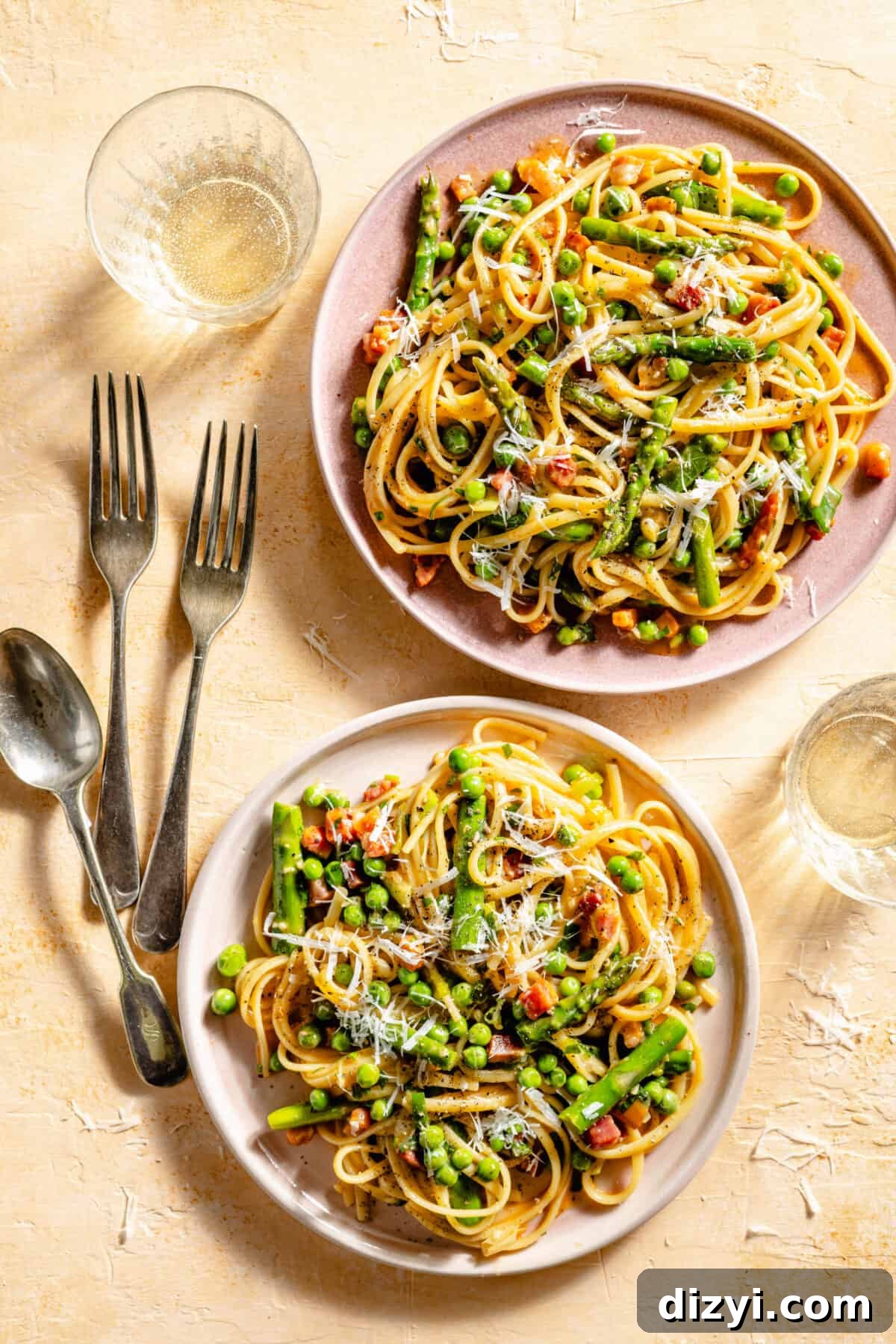
Pasta sometimes gets a bad reputation, but a well-made bowl is always a good idea. This version preserves the heart of a classic Roman carbonara—eggs, hard cheese, and black pepper—while introducing seasonal vegetables to add color, texture, and nutrition. The key to the creamy sauce is the temperature of the hot pasta and a little reserved starchy pasta water, which together transform raw eggs into a smooth coating without scrambling them.
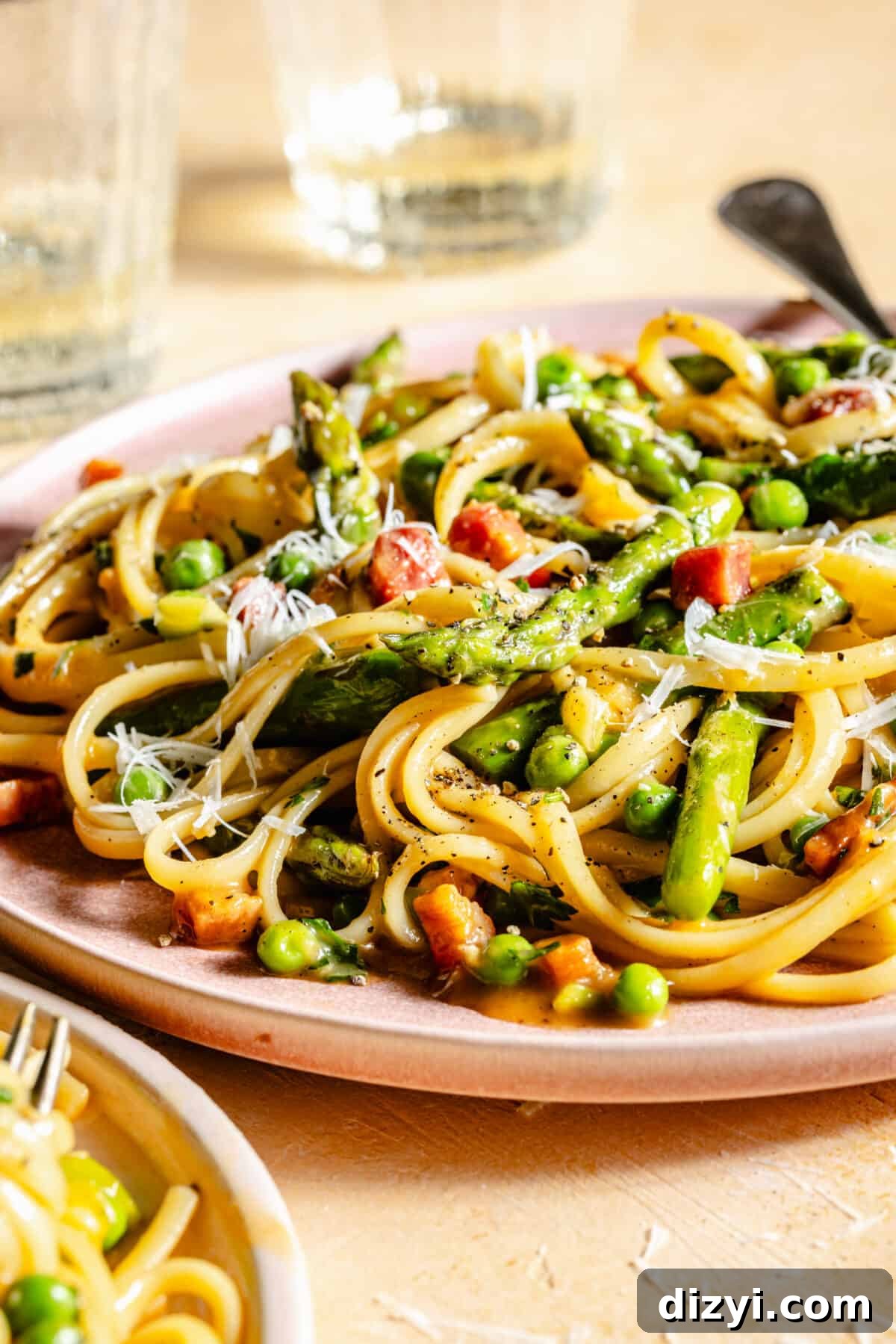
Ingredients
- 12 ounces linguine pasta (substitute gluten-free pasta if needed)
- 1/2 lb pancetta, cut into 1/4-inch cubes
- 1 bunch asparagus, woody ends removed and cut into 2-inch pieces
- 3/4 cup green onions, sliced
- 3 garlic cloves, minced
- 8 ounces fresh English peas (frozen works fine)
- 3 whole eggs
- 3 egg yolks
- 3/4 cup grated Pecorino Romano cheese, plus extra for serving
- 2 tablespoons finely chopped parsley, plus more for serving
- 1/2 teaspoon kosher salt
- 1 teaspoon freshly ground black pepper, plus extra for finishing
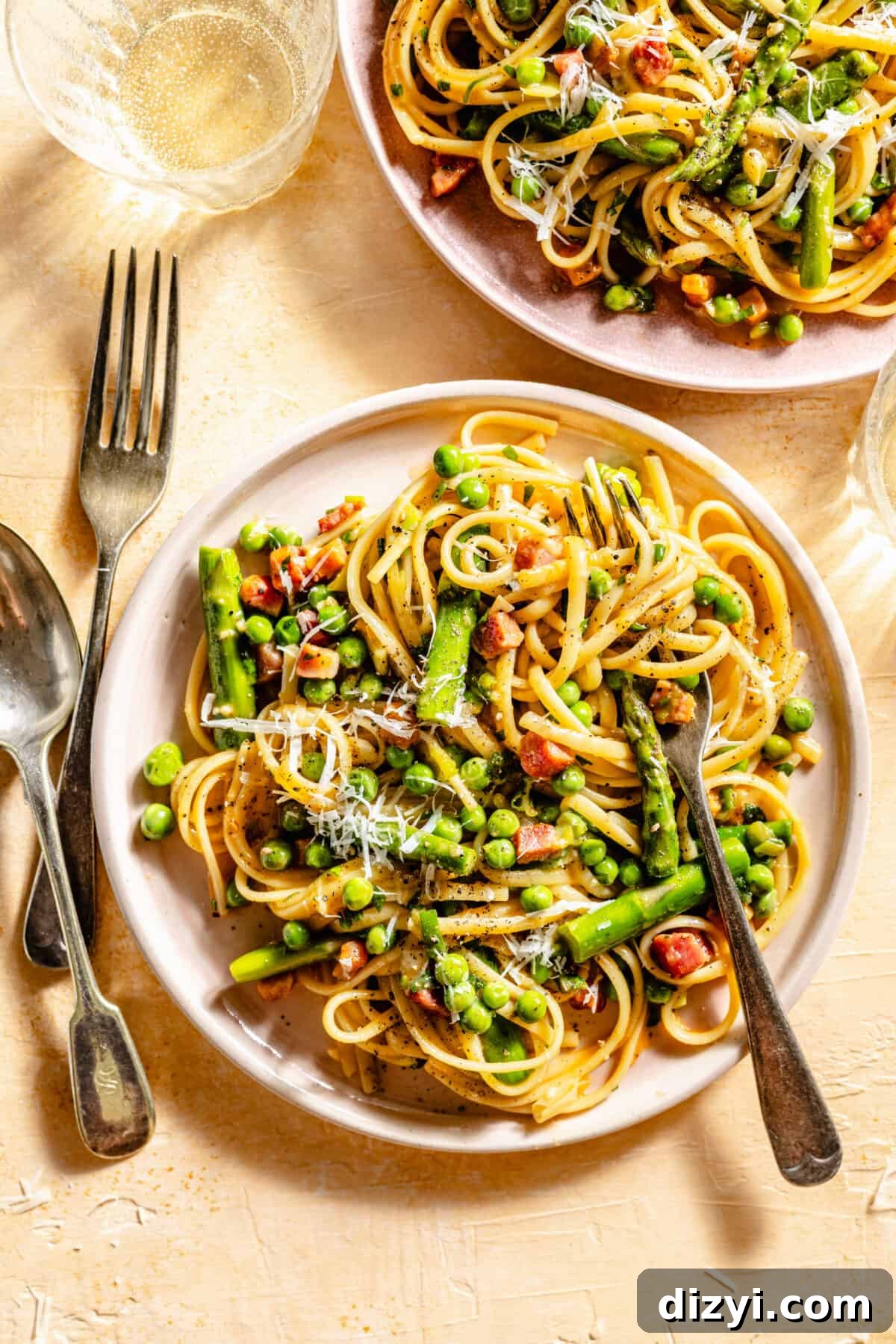
Step-by-Step
Step One: Cook the pasta
Bring a large pot of water to a rolling boil and salt it generously. Cook the linguine according to package directions until al dente. Before draining, reserve about 1 cup of the starchy pasta water; this helps form and loosen the sauce. Drain the pasta and set it aside while you finish the sauce and vegetables.
Step Two: Whisk the sauce
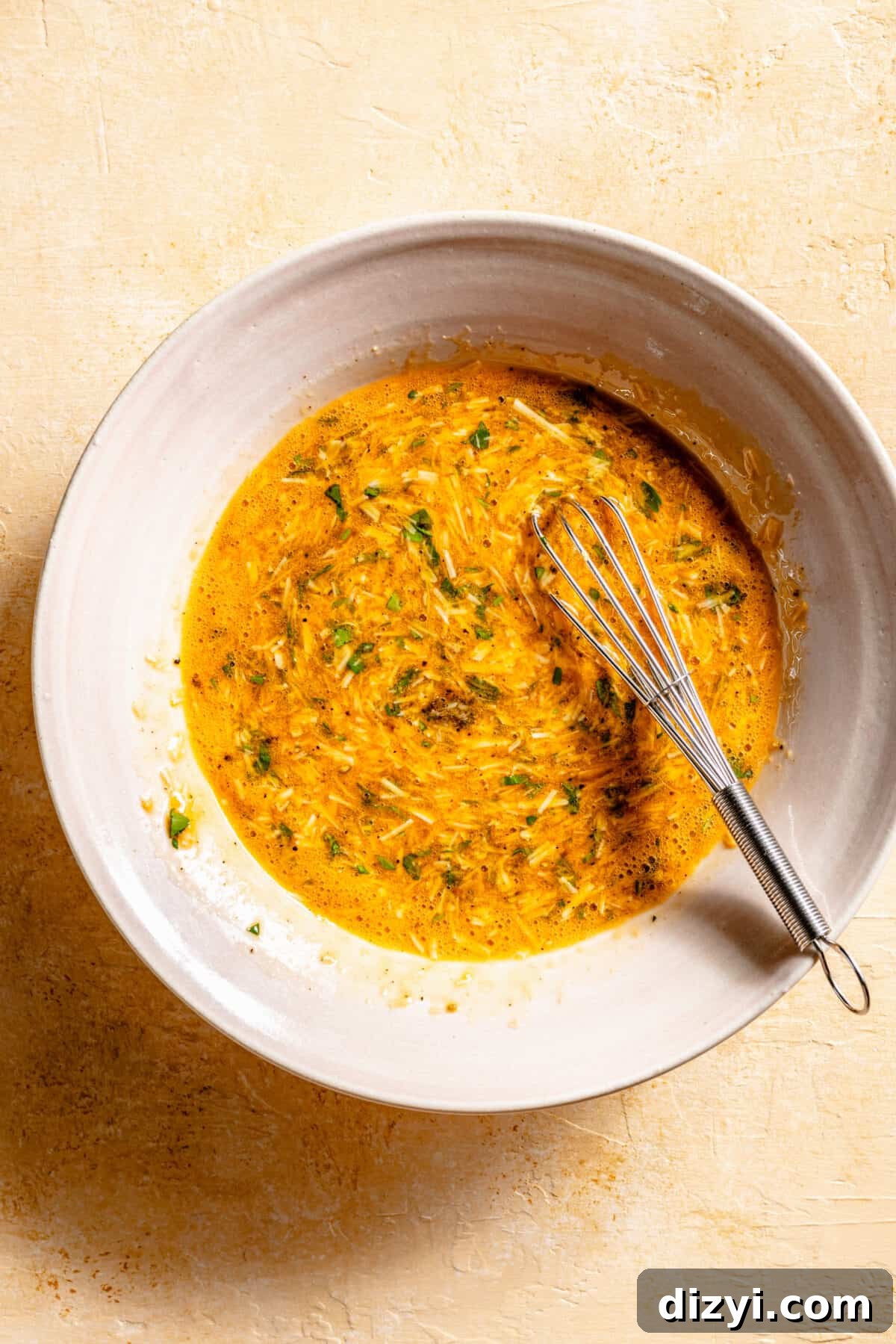
In a bowl, whisk together the 3 whole eggs, 3 egg yolks, 3/4 cup grated Pecorino Romano, chopped parsley, 1/2 teaspoon kosher salt, and 1 teaspoon freshly ground black pepper. The mixture should be smooth and slightly thick. Set aside.
Step Three: Crisp the pancetta
Heat a large skillet over medium-high. Add the cubed pancetta and cook, stirring occasionally, until it is lightly crisp and the fat has rendered, about 5–7 minutes. Use a slotted spoon to transfer the pancetta to a plate, leaving the fat in the skillet.
Step Four: Cook the asparagus
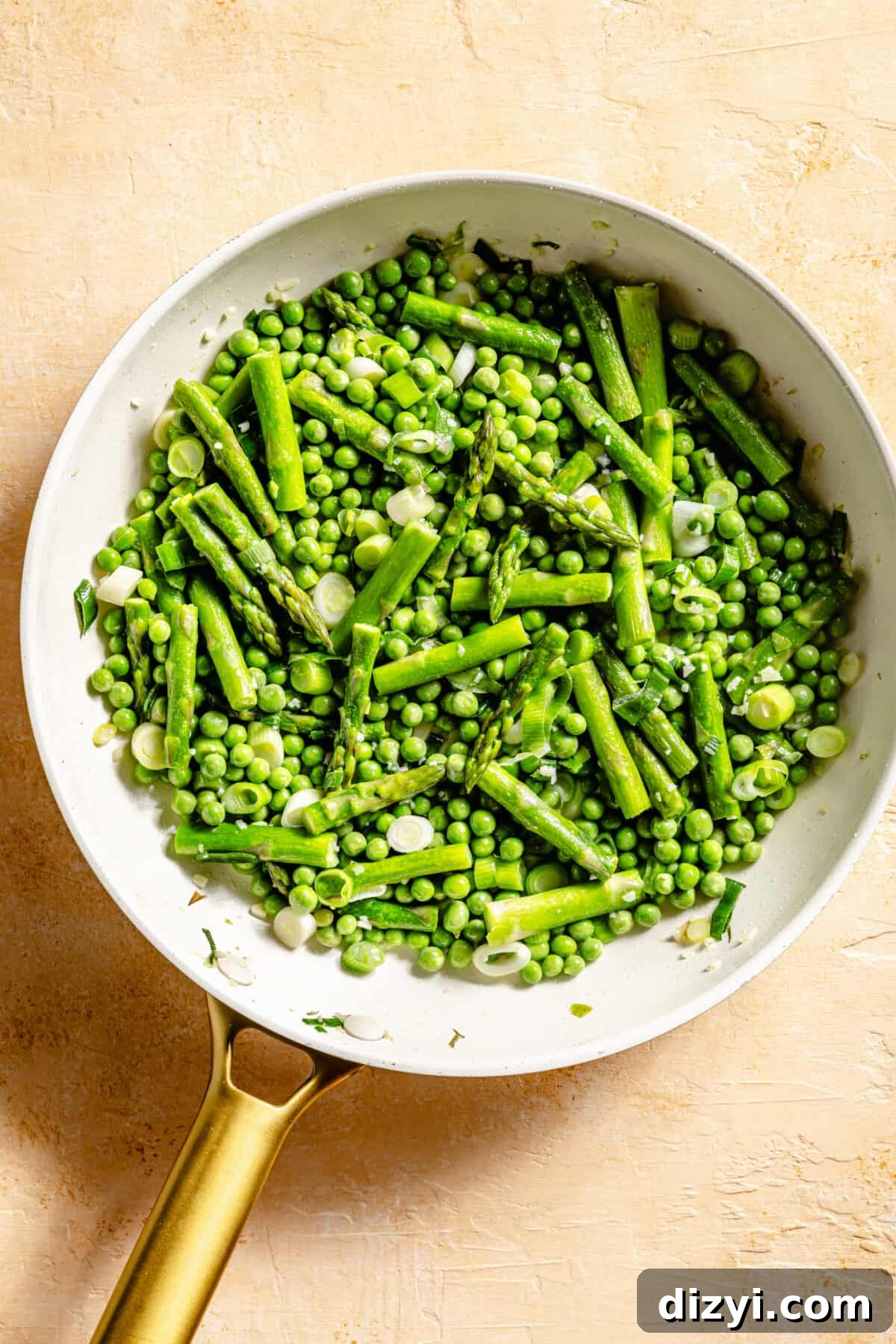
Reduce the heat to medium. Add the asparagus to the skillet with the pancetta fat and cook, stirring and scraping up any brown bits from the pan, until the asparagus is just tender, about 3–4 minutes.
Step Five: Add the green onions, garlic, and peas
Add the sliced green onions and minced garlic and cook for 1–2 minutes, stirring so the garlic softens without burning. Stir in the peas and add 1/4 cup of the reserved pasta water. Cook, stirring occasionally, until the peas are tender and the liquid has mostly evaporated, about 3–4 minutes.
Step Six: Combine pasta and pancetta
Add the crisp pancetta (and any accumulated juices) and the drained pasta to the skillet. Toss to combine with the vegetables. Add more reserved pasta water a little at a time—about 1/4 cup as needed—to rehydrate and loosen the pasta so it’s glossy and hot.
Step Seven: Toss with the egg mixture
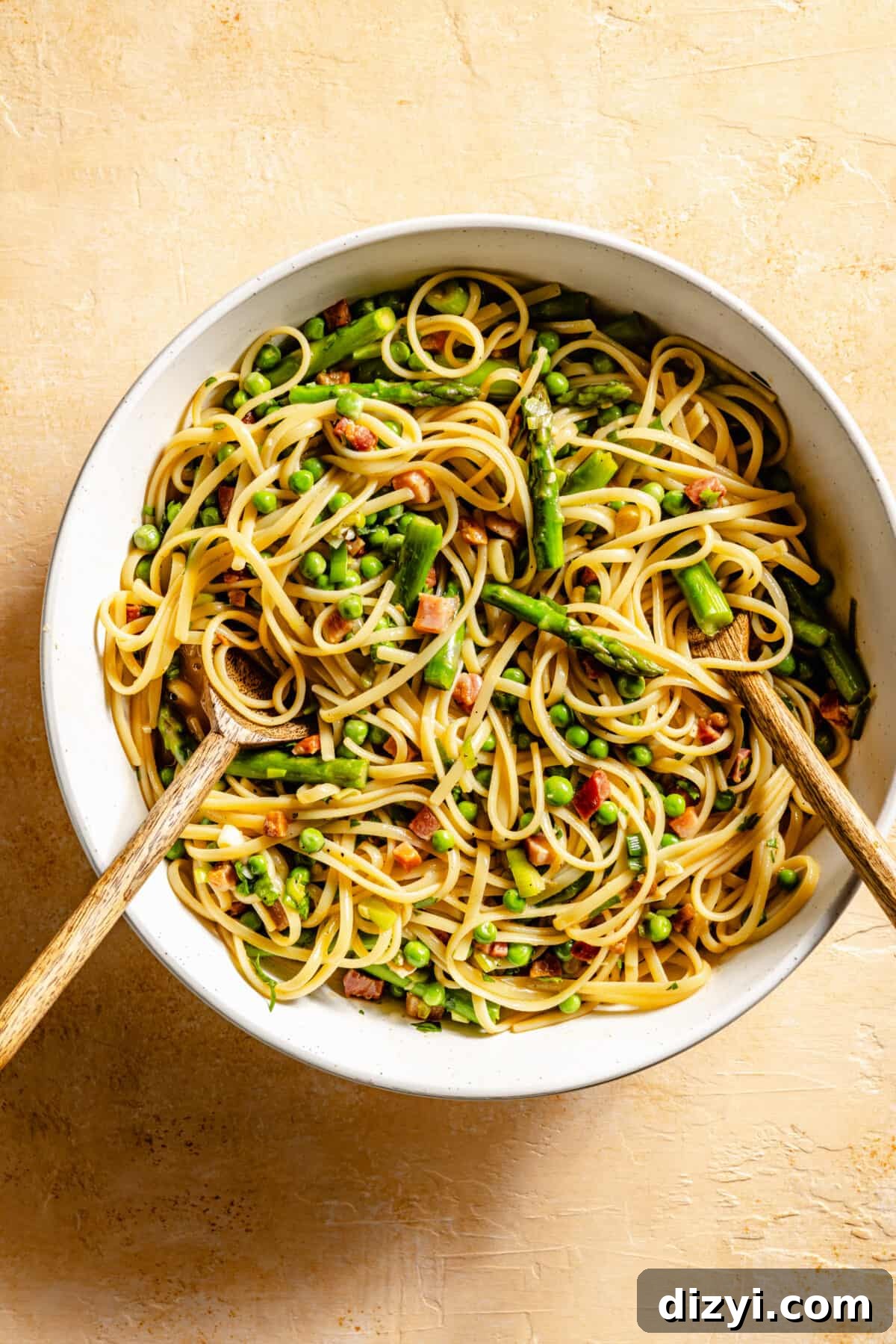
Remove the skillet from direct heat. Transfer the hot pasta to the bowl with the egg and cheese mixture and toss constantly until every strand is coated and the sauce becomes smooth and silky. The heat from the pasta and veggies will gently cook the eggs without scrambling them. If the sauce becomes too thick, thin it with small amounts of reserved pasta water until you reach the desired consistency.
Step Eight: Serve
Serve immediately, finishing each plate with an extra sprinkle of Pecorino Romano, a grind of black pepper, and a scattering of chopped parsley. This dish is best enjoyed fresh so the sauce stays silky and the vegetables keep their texture.
Recipe FAQs
The reserved starchy pasta water helps loosen and emulsify the sauce, making it creamy and glossy without adding cream. You also use a small amount to steam and cook the peas while sautéing the vegetables.
Transferring the hot pasta to the egg-and-cheese mixture and tossing away from the skillet prevents the eggs from overcooking and curdling. The residual heat from the pasta and vegetables gently cooks the eggs into a smooth sauce.
The sauce is made with raw eggs that are gently cooked by the heat of the hot pasta and vegetables. Using pasteurized eggs reduces risk. If you are pregnant or immune-compromised, avoid consuming undercooked eggs and choose a fully cooked alternative.
Nutrition (per serving)
- Calories: 520 kcal
- Carbohydrates: 52 g
- Protein: 23 g
- Fat: 24 g (Saturated fat: 9 g)
- Cholesterol: 215 mg
- Sodium: 707 mg
- Fiber: 5 g
Nutrition information is an approximation and will vary by ingredients and portion size.
Additional Info
- Author: Alex Snodgrass
- Servings: 6
- Prep time: 10 minutes
- Cook time: 20 minutes
- Total time: 30 minutes
More Pasta Recipe Ideas
Artichoke and Lemon Linguine
Creamy Linguine with Lemon and Pancetta
Oven-Roasted Shrimp Scampi
I hope you enjoy this Spring Spaghetti Carbonara for many meals to come—bright, satisfying, and simple to prepare.