
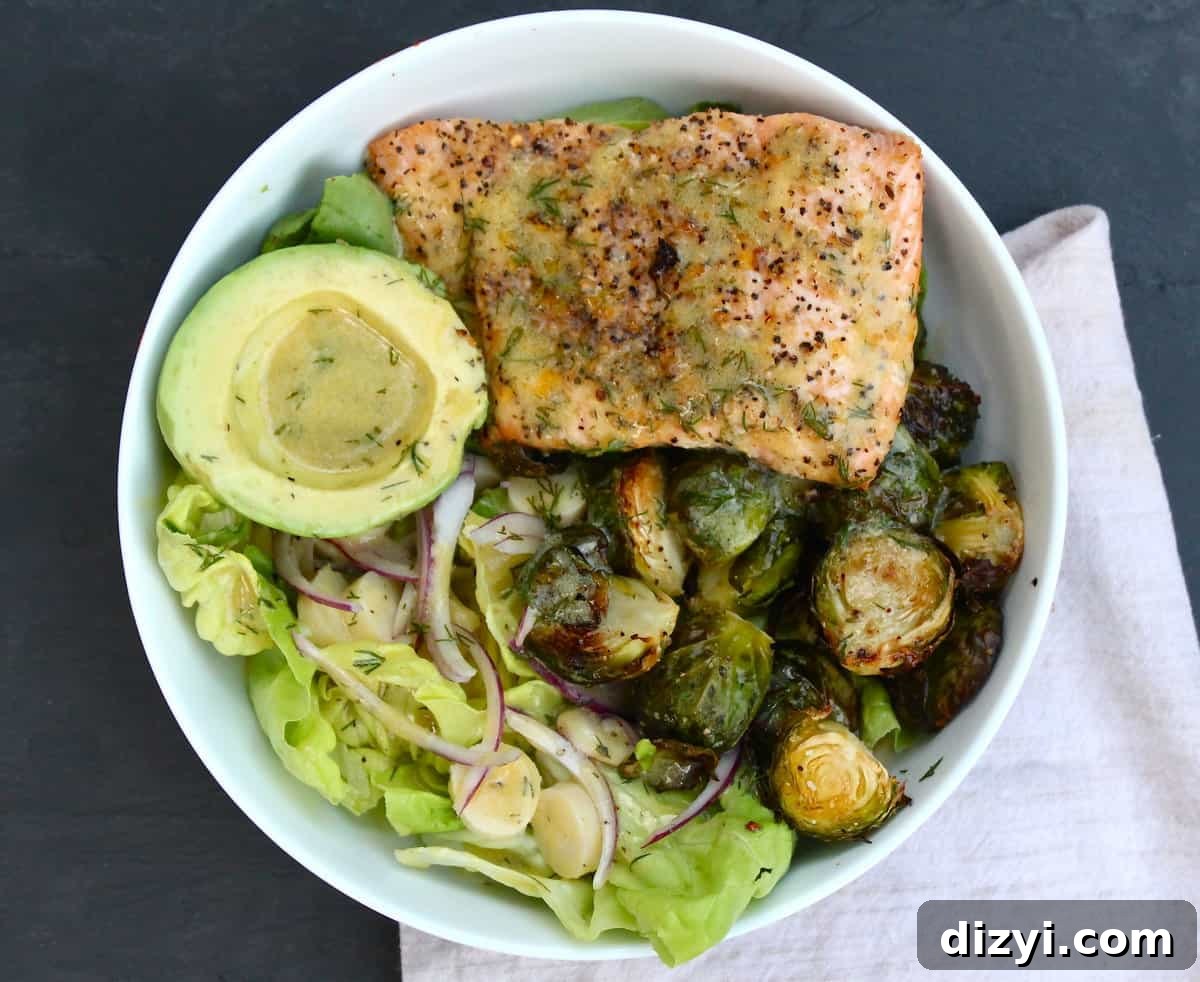
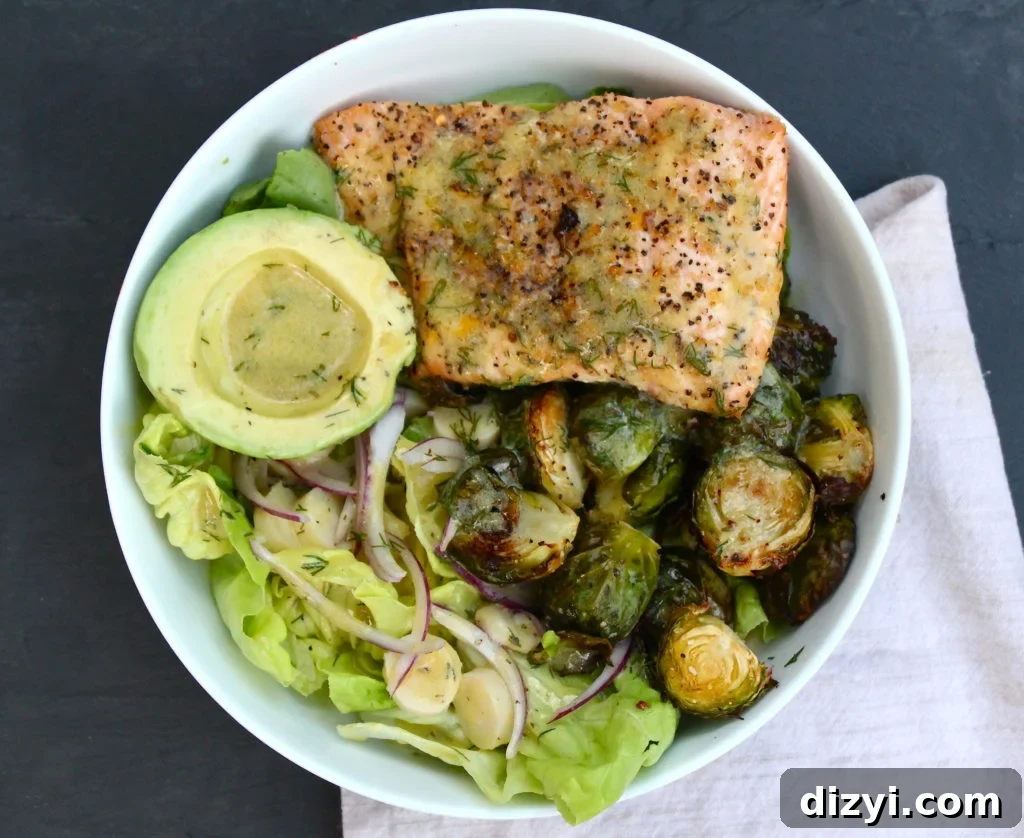
These Creamy Dijon Salmon Bowls bring together bright, fresh flavors and satisfying textures: flaky roasted salmon, caramelized Brussels sprouts, tender hearts of palm, creamy avocado, and a mustard-dill dressing that ties everything together. The result is a nourishing, Whole30- and paleo-friendly meal that’s simple to prepare and bursting with flavor. Ready in about 30–35 minutes from start to finish, this recipe is perfect for busy weeknights, meal-prep lunches, or an easy dinner that feels a little special. Follow the straightforward steps below for a balanced bowl with great contrasts of crisp, creamy, and tangy elements, and feel free to adapt to your tastes or what’s on hand.
- 1/4 cup good olive oil
- 1 heaping tablespoon freshly chopped dill
- 1 tablespoon Dijon mustard
- Juice of 1 lemon
- 2 teaspoons apple cider vinegar
- Pinch of kosher salt
- Pinch of black pepper
- 2 (6–8 oz) salmon fillets
- 2 tablespoons olive oil
- Kosher salt and black pepper, to taste (or Montreal steak seasoning for extra flavor)
- 1/2 lb. Brussels sprouts
- Olive oil (for roasting)
- Kosher salt
- Black pepper
- 1/2 head Bibb lettuce
- 1/4 cup hearts of palm, sliced
- 1/4 small red onion, thinly sliced
- 1 avocado, halved
- Preheat the oven to 375°F (about 190°C).
- Prepare the Brussels sprouts by trimming the woody ends and slicing them in half lengthwise. Toss with about 2 tablespoons of olive oil, a pinch of kosher salt, and freshly ground black pepper. Spread in a single layer on a baking sheet to allow even roasting.
- Place the tray of Brussels sprouts in the oven and roast for about 20 minutes, or until the edges are caramelized and the centers are tender.
- On a separate baking sheet lined with parchment paper, arrange the salmon fillets. Drizzle each fillet with 1 tablespoon of olive oil and season with kosher salt and black pepper (or your preferred seasoning).
- Roast the salmon in the oven for 20–25 minutes, depending on thickness, until the flesh is opaque and flakes easily with a fork.
- While the salmon and Brussels sprouts cook, combine the dressing ingredients in a small bowl: olive oil, chopped dill, Dijon mustard, lemon juice, apple cider vinegar, and a pinch each of salt and pepper. Whisk until the dressing is well emulsified and bright-tasting. Taste and adjust seasoning or acidity as desired.
- Tear the Bibb lettuce into large pieces and divide between two bowls. Top each bowl with sliced red onion, hearts of palm, and one half of the avocado.
- When the salmon and Brussels sprouts are done, divide them between the two bowls. For a neat presentation, place the salmon fillet whole on top or flake it into large pieces and arrange evenly over the salad.
- Drizzle each bowl with the mustard-dill dressing to taste. Serve immediately while the salmon is warm and the roasted Brussels sprouts are crisp-tender.
- Enjoy your Creamy Dijon Salmon Bowls—satisfying, nutritious, and full of layered flavors.
These bowls are highly adaptable. Swap Bibb lettuce for spinach or mixed greens, or add a handful of cooked quinoa for more substance. If you prefer a charred crust on the salmon, sear fillets in a hot skillet for 2–3 minutes per side before finishing them in the oven. For extra brightness, garnish with lemon wedges. To meal-prep, keep the dressing separate and store components in airtight containers in the refrigerator for up to 2 days; assemble just before serving to keep textures fresh.
Roasting the Brussels sprouts on a single layer ensures even browning. If you like more caramelization, increase oven temperature for the last 3–5 minutes and watch closely. For a milder onion flavor, soak the thin slices in cold water for 10 minutes before draining and adding to the bowl.
This recipe is naturally compliant with Whole30 and paleo guidelines when using compliant ingredients. It’s a flavorful way to enjoy salmon and vegetables in a balanced, nutrient-dense meal.